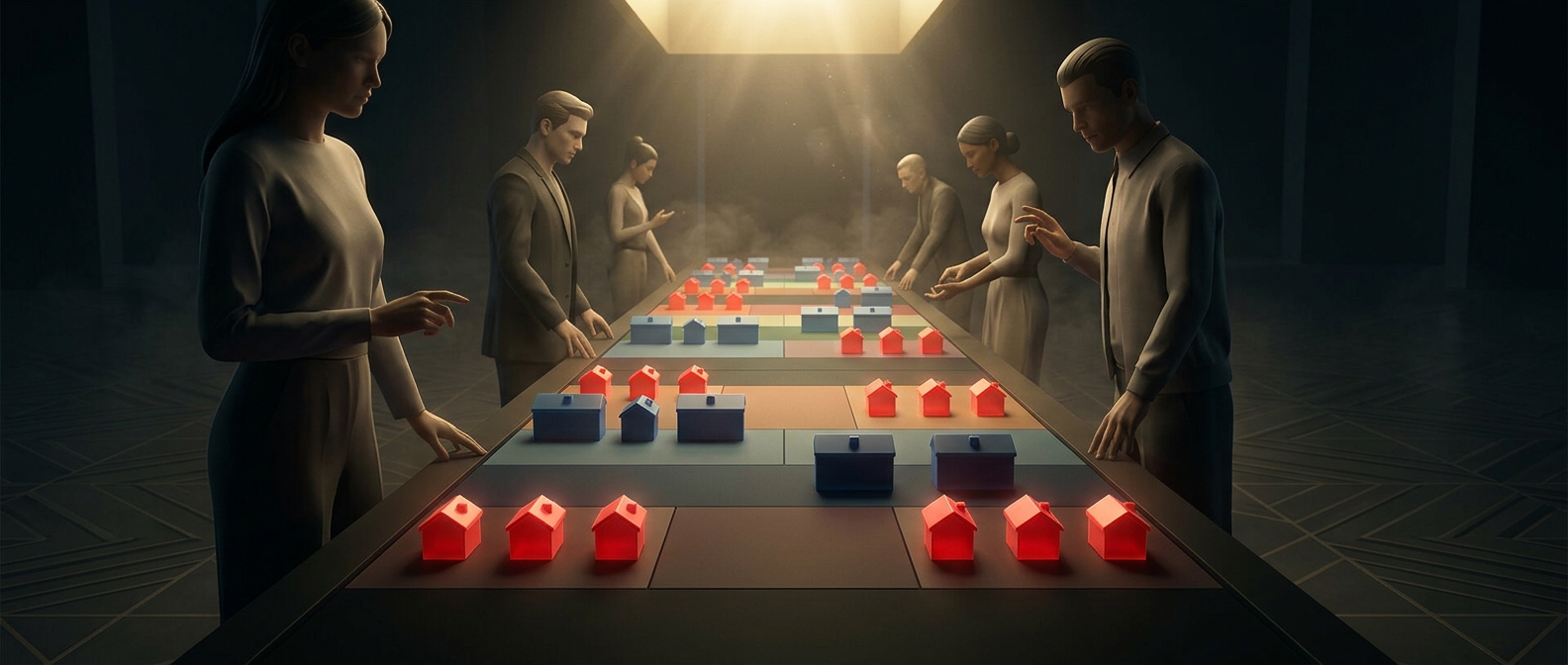
Monopoly has no built-in finish line
A game of Monopoly ends when every player but one has gone bankrupt. There is no fixed number of turns, and owning the most property—or passing Go a certain number of times—doesn’t end the game. Players can keep taking turns as long as they can pay what they owe, even when they are barely able to stay afloat.
That makes the finish depend on a chain reaction: one player must fall so deeply into debt that selling or mortgaging assets cannot cover a bill. A player who is short on cash may mortgage property or sell houses back to the bank, keeping the game alive while weakening their position. Meanwhile, the player they owe may have to wait for another rent payment or a costly landing to push them over the edge.
The rules include ways to speed things up
The board’s most consequential spaces are the properties players can build on. Once a player owns a full color group, they can add houses, making rent on those properties sharply more expensive. A single landing can then transfer a large sum and bring a struggling player closer to bankruptcy.
The official rules also send unbought property to auction when the player who lands on it declines to buy. That gives another player a chance to acquire it immediately, rather than leaving it idle until someone lands there again. Auctions can help properties—and the rent they generate—enter the game sooner.
Familiar house rules can stretch the game
At home, players often skip auctions or put taxes and fines into a “Free Parking” jackpot. Neither rule is part of the standard rules. Skipping auctions can leave more properties unowned, slowing the process of completing color groups and building houses. A jackpot, meanwhile, returns money to players instead of removing it from circulation, making it easier for cash-strapped players to keep paying.
So the long slog is not just about rolling dice. Monopoly lasts when money keeps circulating but nobody is forced into bankruptcy—and common house rules can make that balance persist for many more turns.