Carthage’s Harbor Was Built Around a Command Post
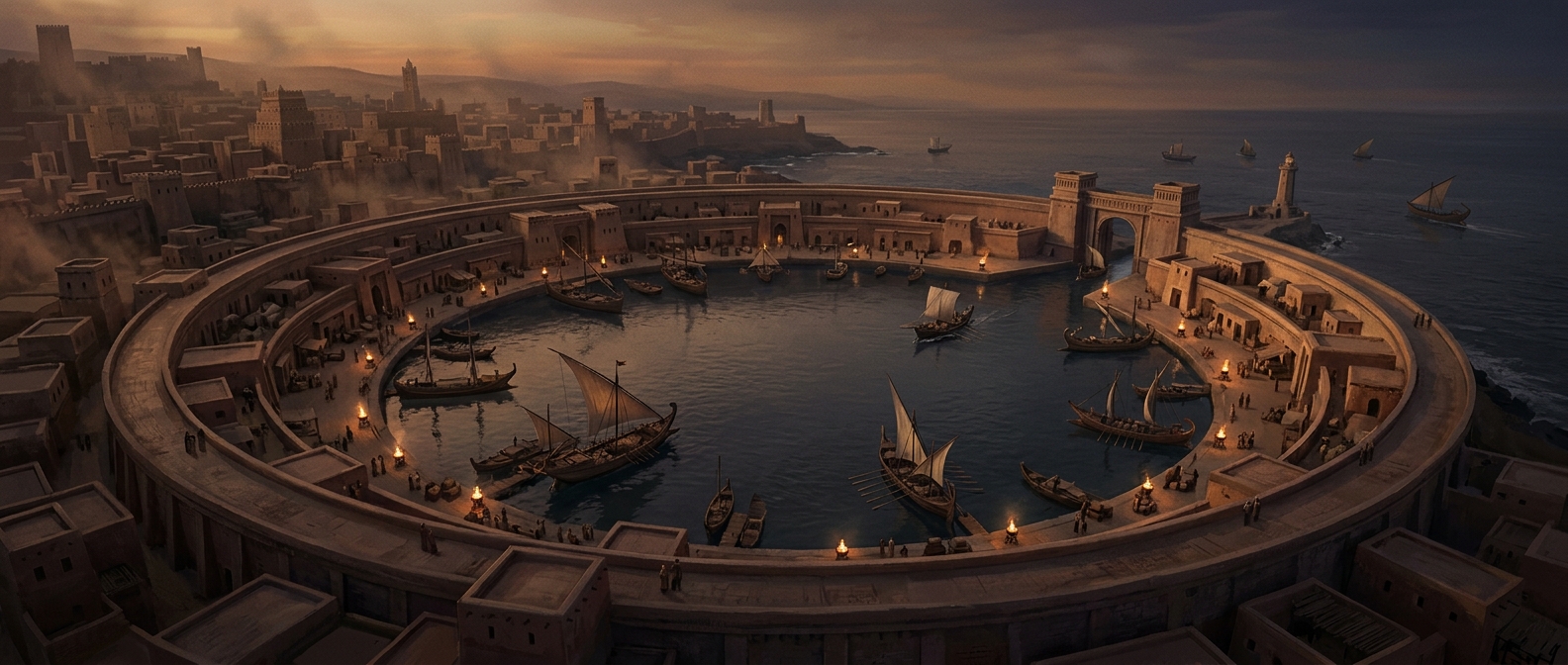
At Carthage, on the coast of present-day Tunisia, the circular harbor was more than a sheltered basin. Its defining feature was a central island that served as a working hub for the fleet. From there, commanders could oversee ships gathered around the ring and coordinate their movement toward the harbor entrance.
That arrangement mattered because a fleet is difficult to manage when its ships are scattered along a long shoreline. A central vantage point brought the vessels within view and made the harbor a place to organize, not merely store, them.
From Moorings to Movement
The circular basin let ships occupy positions around its edge, while the island sat at the center of the activity. In practical terms, crews could prepare vessels close to the command hub, and commanders could direct departures without first assembling the fleet elsewhere. The design joined protection and readiness: ships had a sheltered place to wait, but the harbor’s layout also supported getting them underway.
Carthage’s harbor complex included a separate commercial basin as well as the military harbor. That division reflects two different demands on a port: merchants needed room to load and unload goods, while a war fleet needed controlled space where vessels and command could be organized.
A Harbor That Shaped Naval Power
The circular plan turned the harbor itself into part of Carthage’s military infrastructure. Its central island made command visible and close at hand, while the surrounding basin concentrated ships in one place. The result was a strikingly practical idea: a fleet could be sheltered and coordinated in the same space, ready to move out when called.