When a Blast Became a Route-Planning Problem
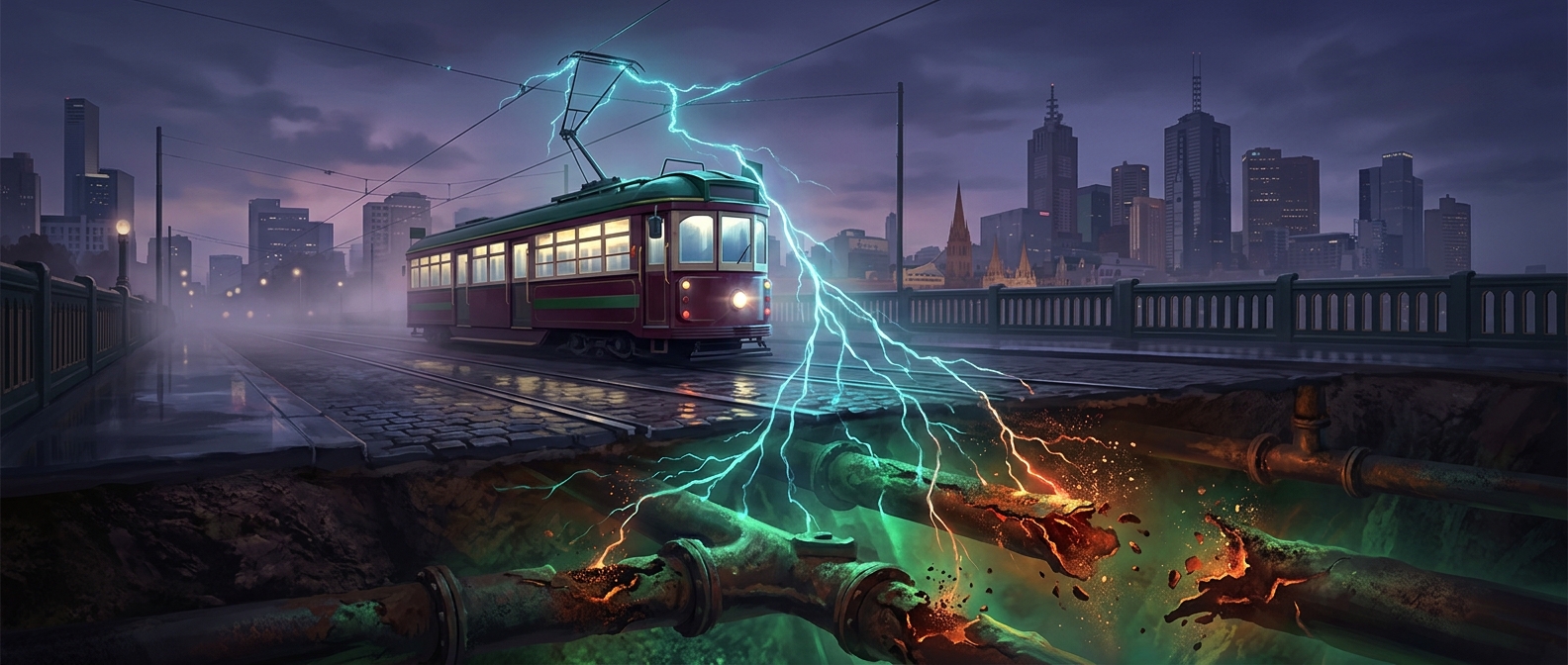
A tram route is more than a line drawn on a map. It depends on rails embedded in streets, junctions where tracks split, and road space that lets vehicles reach stops and turn around. Damage to any one of those pieces can break the usefulness of a much longer stretch of track.
After the explosion, the immediate problem was getting service around the damaged area. Detours could keep trams moving, but they could not restore the original network: that required repairing the streets and laying usable track again.
Rebuilding Changed the Network
Reconstruction offered a chance—or imposed a need—to arrange routes around the streets that could actually be reopened. A repaired road might not reproduce the old track alignment, and a changed junction could affect which trams could pass through or connect with other lines. The practical map of the tram system therefore depended on the shape of the rebuilt streets, not simply on the old route plan.
That is how one explosion could leave a lasting mark on public transport: not because a blast directly designed a new network, but because it destroyed the physical links that had made the old one work. The tram map’s “before” and “after” were written into the street itself.