Why a train shed could intensify a fire
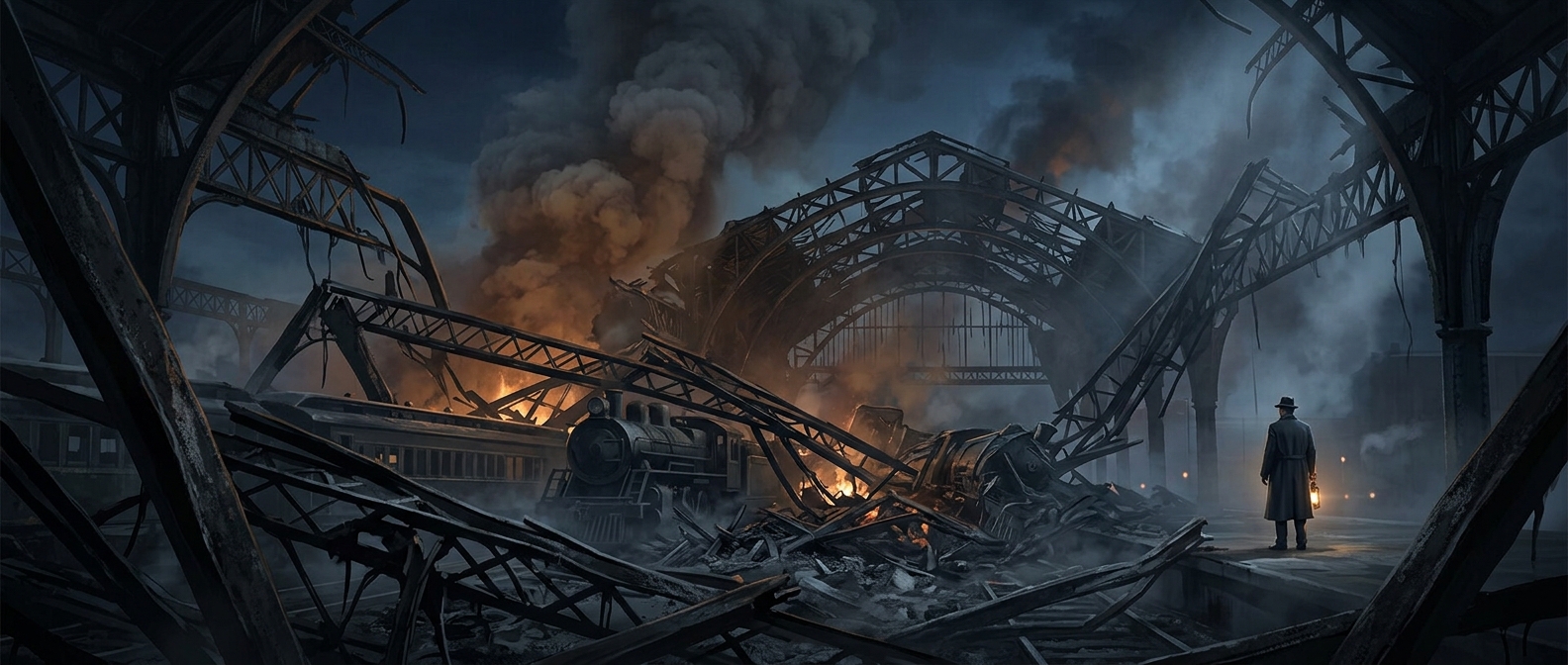
A train shed had to cover many tracks at once, leaving a large volume of air beneath its roof. That space offered shelter from weather, but once a fire took hold, it also gave hot smoke room to rise and collect overhead. The roof trapped heat instead of letting it disperse freely into the sky.
The shed was not sealed: its open bays let air move in and out. As flames heated the air, hot gases rose and escaped high in the structure, while cooler air could enter through lower openings. That circulation supplied oxygen to the fire, much as a draft helps a fireplace burn. The effect depended on the shed’s shape and openings, but a space built to shelter trains could also help heat and smoke spread above them.
A roof meant for shelter became part of the hazard
Smoke gathering near the roof is more than a visibility problem. Hot gases can heat nearby surfaces and expose a wide area to intense heat; smoke can also make it harder for people to see routes out or for crews to reach the source. In a shed spanning multiple tracks, the fire’s effects need not stay directly above the first burning train.
That is the uncomfortable design tradeoff: the broad cover that made a busy station usable in bad weather created a single shared space for smoke and heat to travel through. The roof did not need to move for the shed’s role to change; once fire filled the air beneath it, the shelter itself shaped how the danger spread.