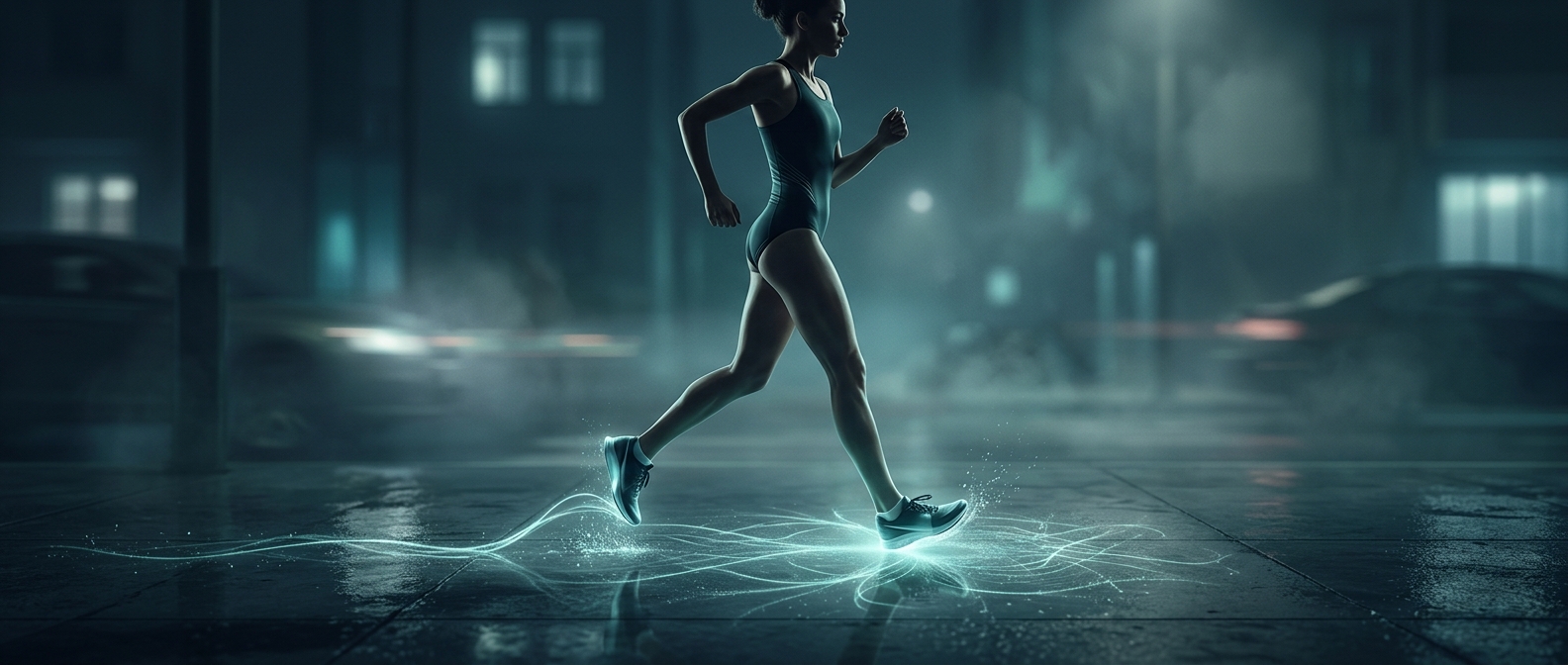
How Racewalking Turns a Gait Into a Judged Event
Racewalking is not simply fast walking. It is a competition in which athletes must move quickly while keeping their motion within two visible limits: they cannot appear to lose contact with the ground, and the knee of the advancing leg must remain straight from its first touch-down until the body passes over it. The rules preserve the recognizable mechanics of walking even as competitors push toward running speed.
The Challenge Is in the Transition
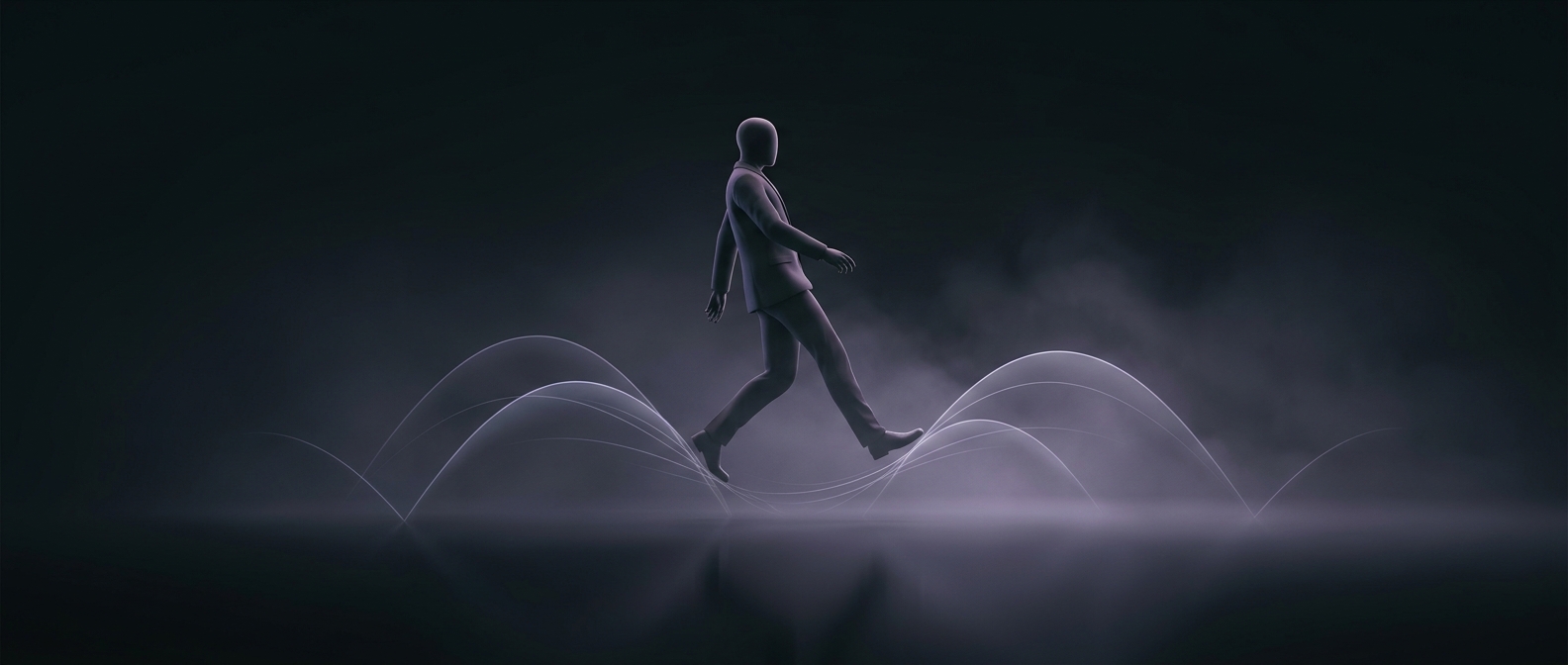
At ordinary speeds, walking alternates support between the legs: one foot lands before the other leaves the ground. As speed rises, people naturally tend to add a brief airborne phase—the defining feature of running. Racewalkers suppress that impulse by keeping their stride low and extending the legs forward rather than springing upward.
The straight-leg requirement shapes the stride, too. A runner can land with a bent knee and use it to absorb impact; a racewalker must bring the leg forward nearly straight, then carry the body over it before bending it for the next step. That makes efficient timing essential. Reaching too far ahead can slow the body, while pushing too hard can make the movement look like running.
Why Officials Watch What the Eye Can See
Judges assess whether an athlete appears to maintain contact and whether the supporting leg meets the straight-knee rule. Because a foot can leave the ground for an instant too brief for the naked eye to detect, racewalking is judged by visible form rather than by trying to identify every momentary loss of contact. Competitors can receive warnings and, after enough recorded infractions, be disqualified.
That leaves a narrow balance: walk fast enough to compete, but keep the motion visibly within the rules. The result is a sport where tiny changes in posture and timing can matter as much as raw speed.