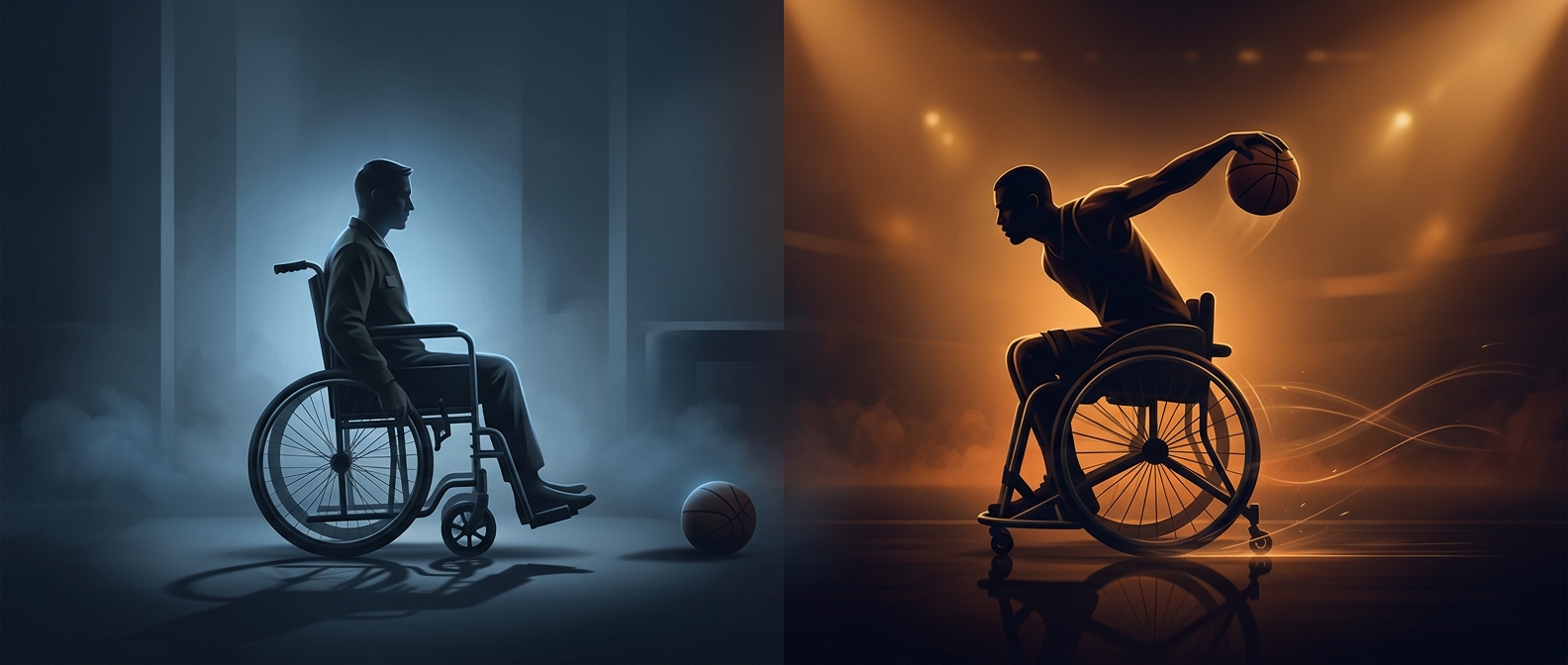
Rehabilitation needed a new measure of progress
For people with spinal cord injuries, recovery could not always be judged by whether they would walk again. A spinal injury can interrupt communication between the brain and parts of the body below the injury, affecting movement and sensation. In the 1940s, many patients with these injuries faced long hospital stays and serious medical risks. Rehabilitation therefore had to address more than mobility: strength, coordination, independence, and the ability to take part in daily life also mattered.
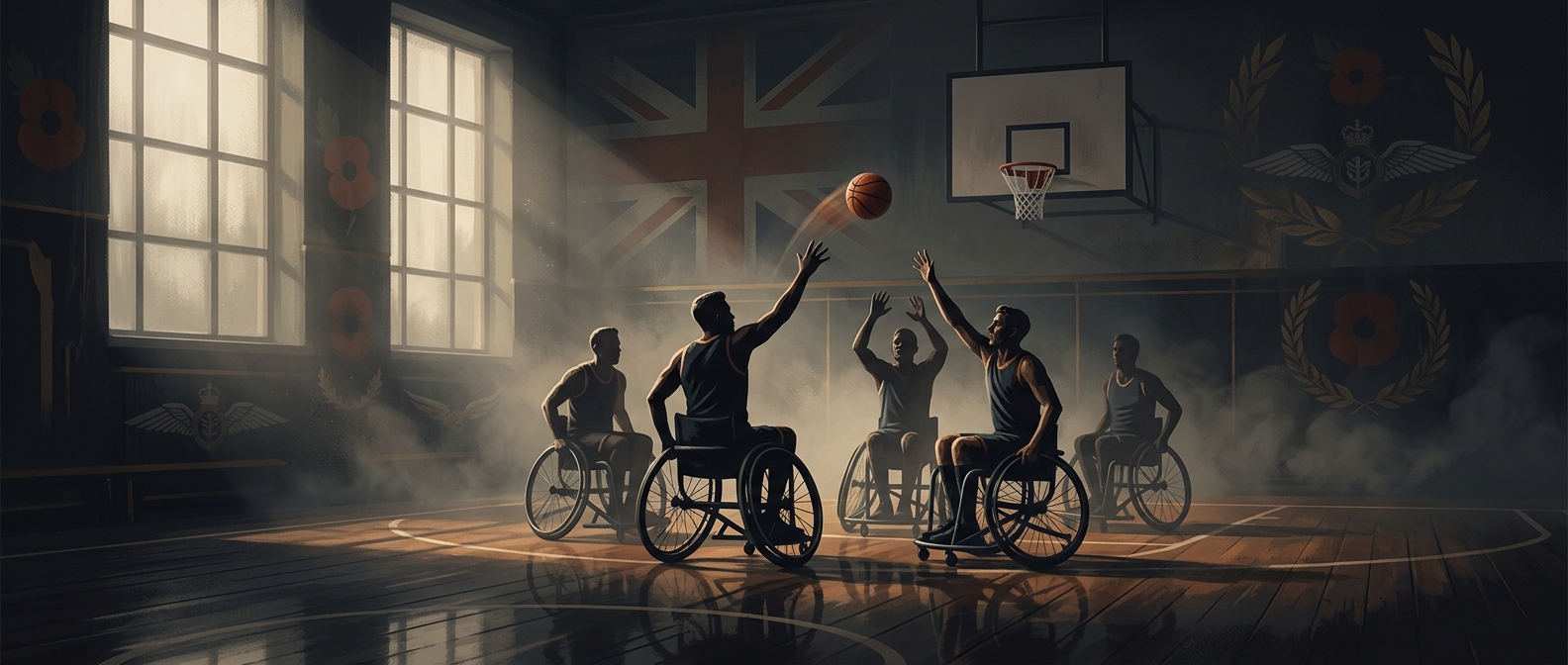
Ludwig Guttmann treated sport as a way to work on those goals. A game gave patients a reason to repeat movements, build stamina, and practice control. It also changed the setting: instead of being only recipients of care, participants became athletes with skills to develop and opponents to meet.
Competition changed what recovery could look like
A scoreboard made improvement visible in a different way from a hospital chart. A patient might not regain a particular physical function, yet could still become more accurate, faster, or more consistent at a sport. Competition supplied immediate, understandable feedback: a shot hit or missed; a team won or lost. That made effort feel directed toward a result, not just another exercise in a treatment routine.
The games also put disabled athletes in public view. Their performances challenged the assumption that a serious injury meant a life limited to care and convalescence. That shift in expectation mattered alongside the physical practice: rehabilitation could be about building an active future, not simply managing illness.
A hospital event became an international model
The Stoke Mandeville competition was small, but its format could travel. In 1952, athletes from the Netherlands joined the games, turning them into an international event. The movement later developed into the Paralympic Games, though the 1948 participants were not competing under that name.
The lasting change was not that sport replaced medical treatment. It was that sport offered another way to define what treatment was for: not only surviving an injury, but gaining abilities worth using beyond the hospital.