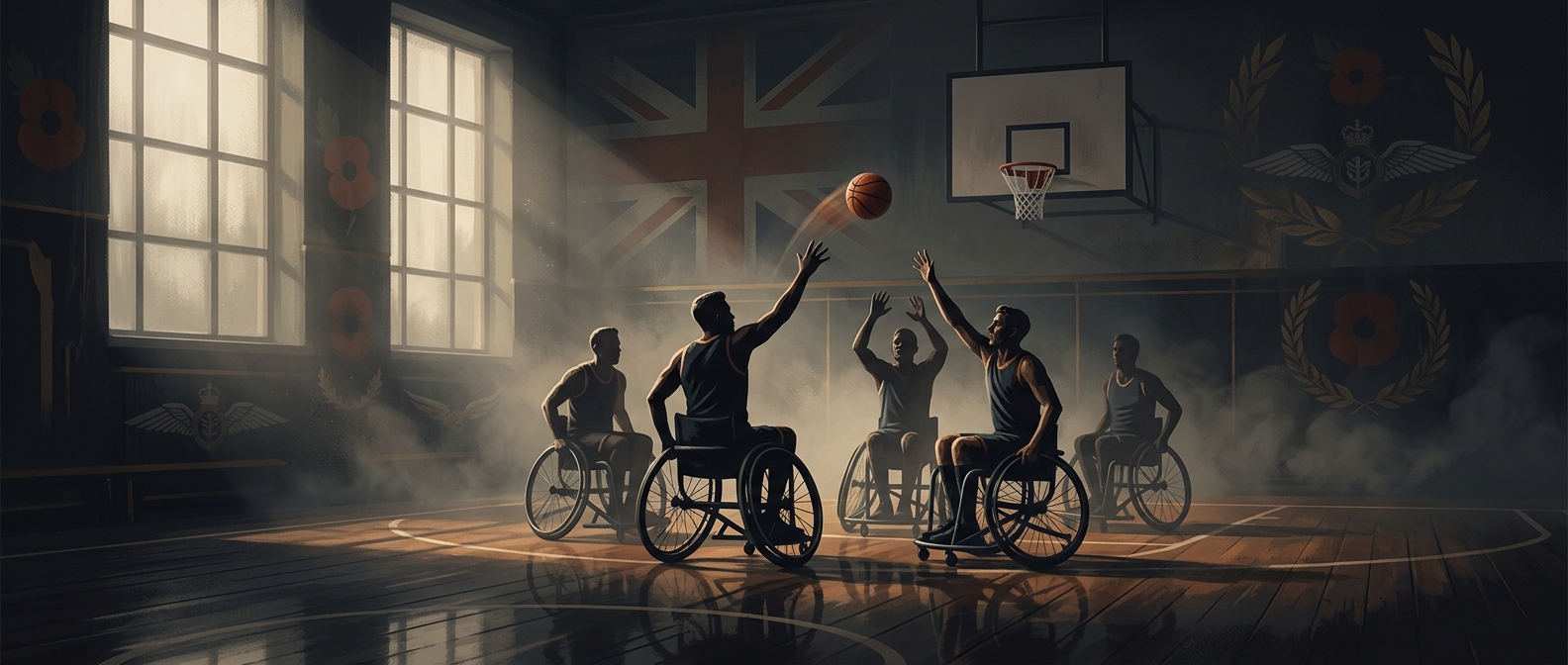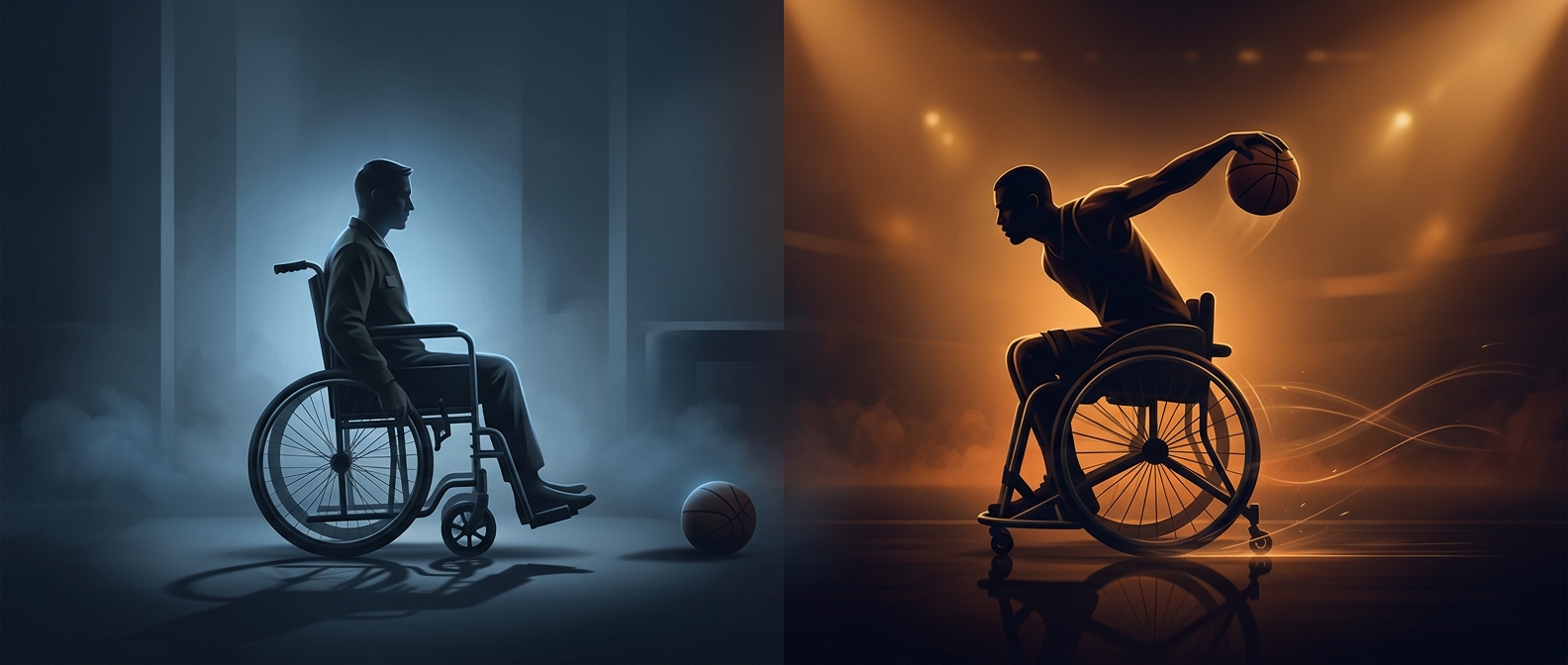
How rehabilitation put wheels on the basketball court
In rehabilitation programs, basketball offered a practical way to work on skills wheelchair users needed beyond the gym. Pushing across the court built arm strength and endurance; turning, stopping, and reaching for the ball challenged coordination and balance. The exercises had a clear goal, but the ball also gave players a reason to move quickly and make decisions in the moment.
The exercise became a contest
A drill can be repeated at a therapist’s pace. A game cannot: opponents cut off routes, loose balls demand quick reactions, and teammates depend on one another. That shift made familiar physical tasks part of a larger challenge involving timing, tactics, and teamwork. Players were no longer just practicing movement; they were using it to outmaneuver someone.
Wheelchair basketball also has rules that make movement with the ball part of the skill. A player must dribble or pass after pushing the chair twice, so propulsion and ball control have to work together. What began as a way to practice strength and coordination could therefore become a sport with its own strategy—and a fast break could make the therapeutic exercise feel like the least important part of the play.