A closed canal made the long way around matter
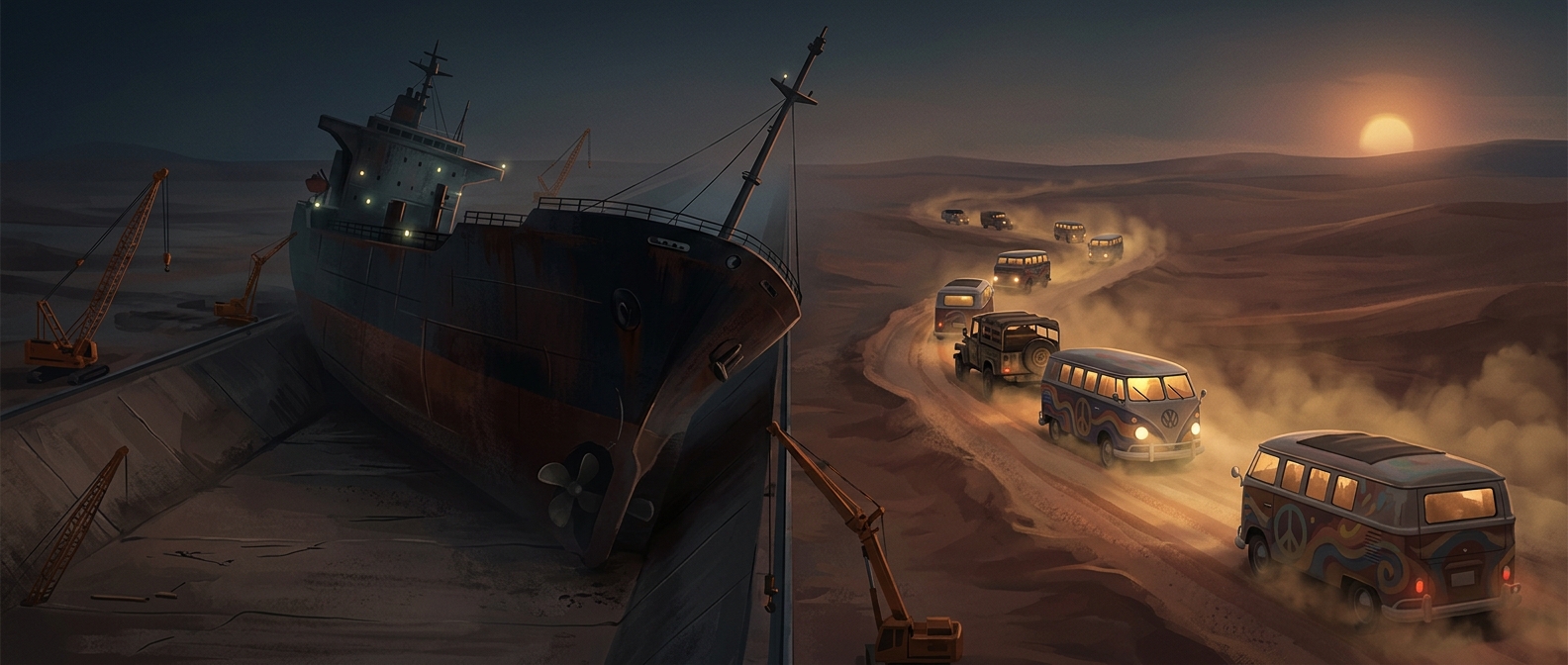
When the Suez Canal shut in 1967, ships traveling between Europe and Asia had to pass around the southern tip of Africa. That detour added distance and time to sea journeys. For young travelers heading east on tight budgets, overland travel offered a different calculation: cross Europe by bus or hitchhiking, then continue through Turkey, Iran, and Afghanistan toward South Asia.
The route became part of the experience
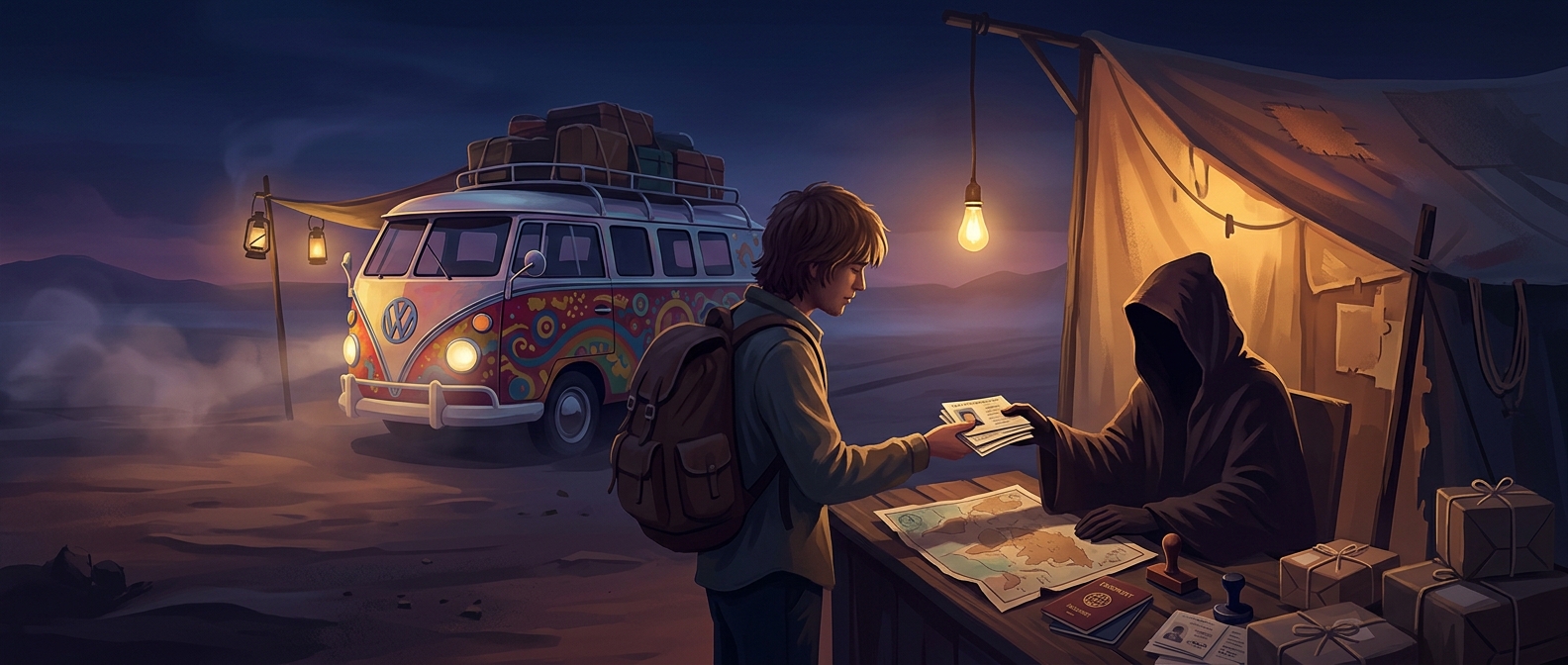
The journey was not a single organized highway. Travelers pieced it together from local buses, shared rides, and other inexpensive transport, stopping in towns along the way. Each border crossing and change of vehicle made the trip slower and less predictable than flying, but also turned transit into an extended journey through unfamiliar places.
The canal’s closure did not create overland travel from nothing. It helped make the land route more attractive as sea travel took a detour, while a growing culture of independent, low-cost travel supplied the people willing to take it. The result was the hippie trail: a recognizable eastbound route whose appeal lay partly in reaching India and partly in the many places encountered before arriving.