The hidden risk on the overland route east
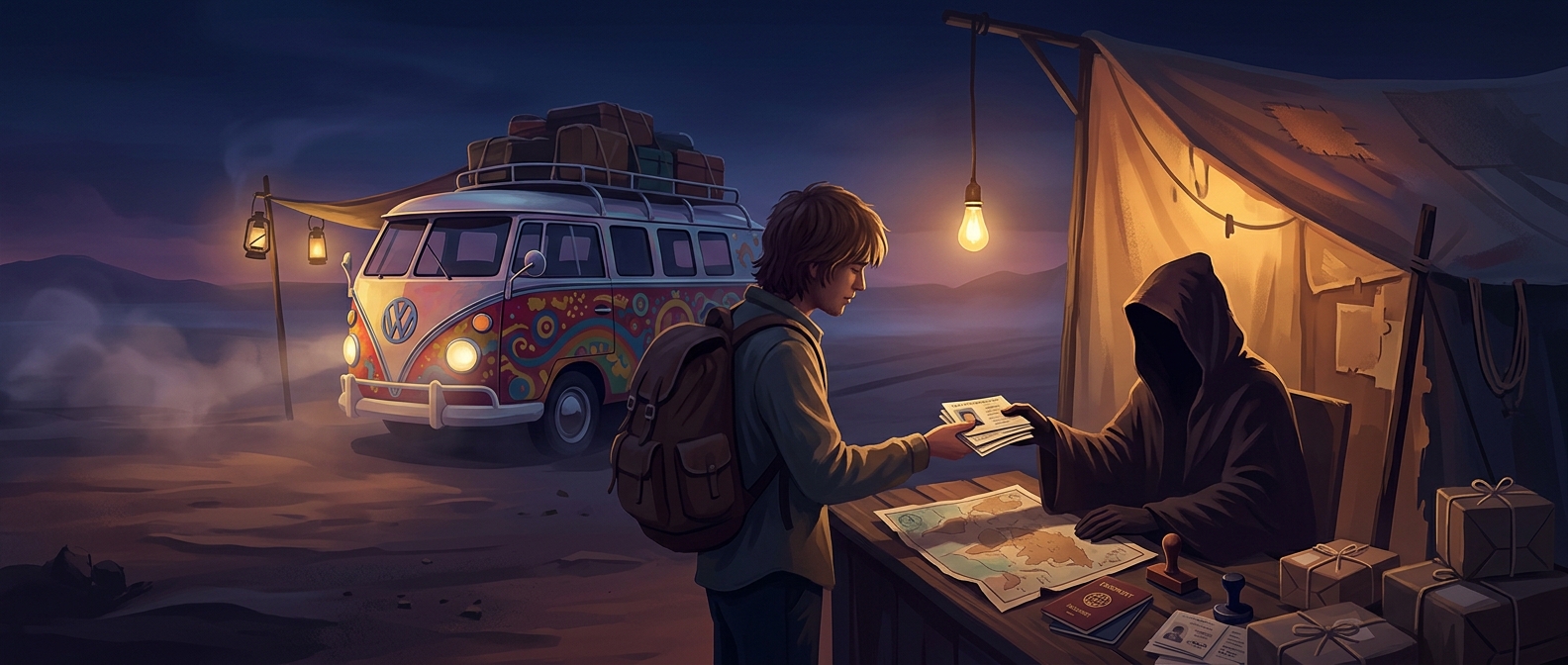
For many young travelers in the 1960s and 1970s, the hippie trail was a low-cost journey from Europe toward South Asia, made in stages by bus and other local transport. Its appeal was the freedom to travel slowly and cheaply. The same arrangement also meant long stretches between familiar comforts, with food, water, and lodging changing from stop to stop.
Dysentery is an intestinal illness that can cause severe diarrhea, sometimes with blood or fever. It spreads when food or water is contaminated with germs from human waste. On an overland trip, unreliable sanitation and limited access to clean water could make an ordinary meal or drink a serious risk. The illness could leave a traveler weak and dehydrated—especially difficult when the next destination was hours away and medical care was unfamiliar.
When the journey’s budget ran out
Travelers often planned around small budgets, stretching money across transport and daily expenses. A prolonged illness could disrupt that calculation: someone too sick to continue might need lodging, treatment, or a way home, while having little cash left. A telegram to family was not merely a request for spending money; it could be a practical lifeline when the route had become impossible to manage alone.
That contrast made the trail both liberating and precarious. A journey imagined as an open-ended escape could depend, at its most difficult moment, on a parent receiving a message and paying for a ticket home.