Why One Flying-Car Crash Needed a Fleet
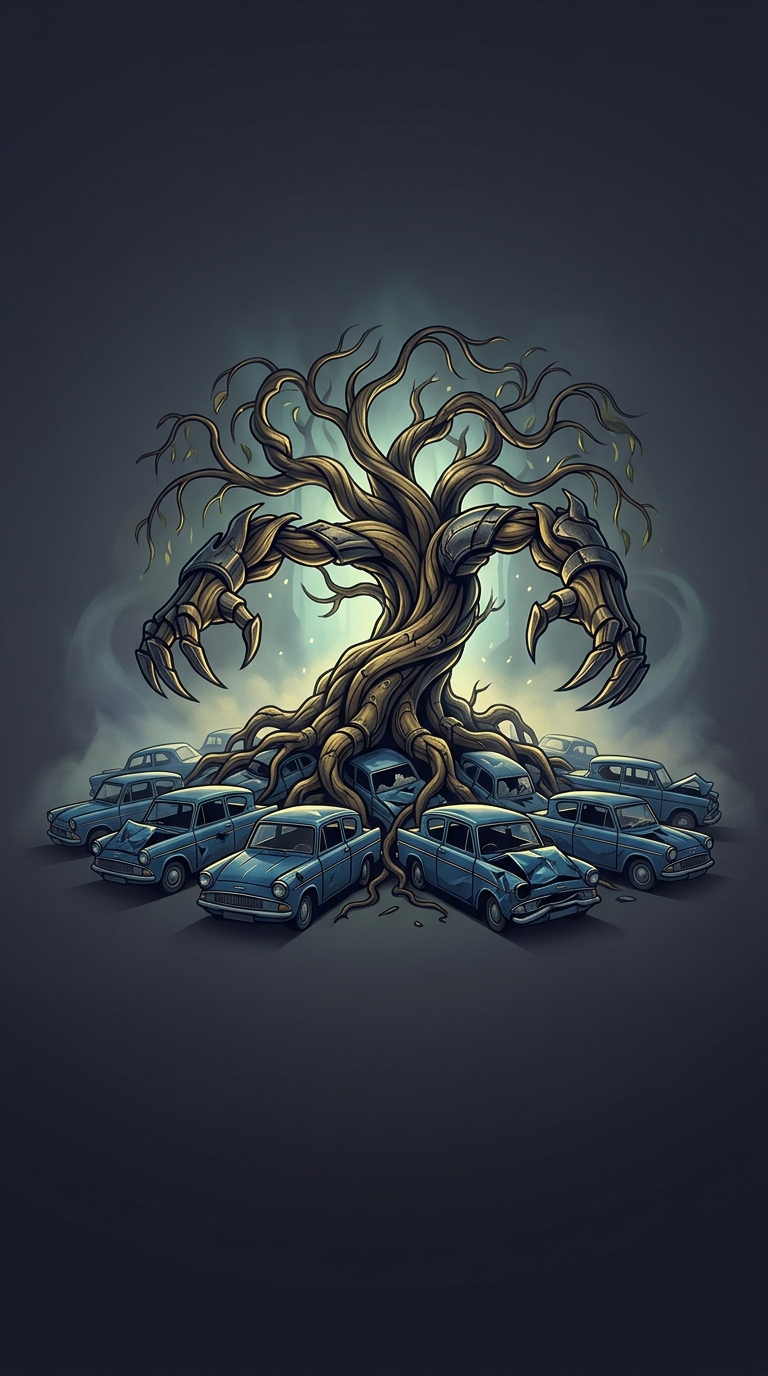
On screen, the enchanted Ford Anglia is one car. Behind the scene, filming its collision with the Whomping Willow meant treating that car as a resource that could be used up. A vintage automobile smashed for a stunt could not simply be restored to its original condition for another take, so the production needed multiple matching cars to stage the destruction.
That created a search problem as well as a stunt problem. The cars had to look alike enough for the audience to accept them as the same Anglia, and they had to be suitable for filming. The crew reportedly found fourteen. Their job was not just to locate old Fords, but to assemble enough visually consistent vehicles for a sequence built around a single, increasingly battered car.
How Editing Turns Many Cars Into One
Film scenes are assembled from separate shots, not recorded as one uninterrupted event. A cut can move from a wide view of a car hitting a tree to a closer view of the impact, then to the vehicle’s wrecked state. Matching cars give filmmakers practical options: one vehicle can appear intact, while another can be used for a more destructive moment. The edit hides the change, preserving the illusion that the same car has gone through the whole crash.
This is a basic constraint of practical effects—effects created physically on set rather than entirely with computer imagery. Damage is difficult to repeat precisely, and a destroyed prop cannot perform the next take. Having duplicates lets a production capture different angles and degrees of damage without asking one car to survive every attempt.
The striking part is the mismatch between the finished scene and the work behind it: the audience follows one battered magical car, while the production had to find and sacrifice a small fleet to make that single crash feel real.