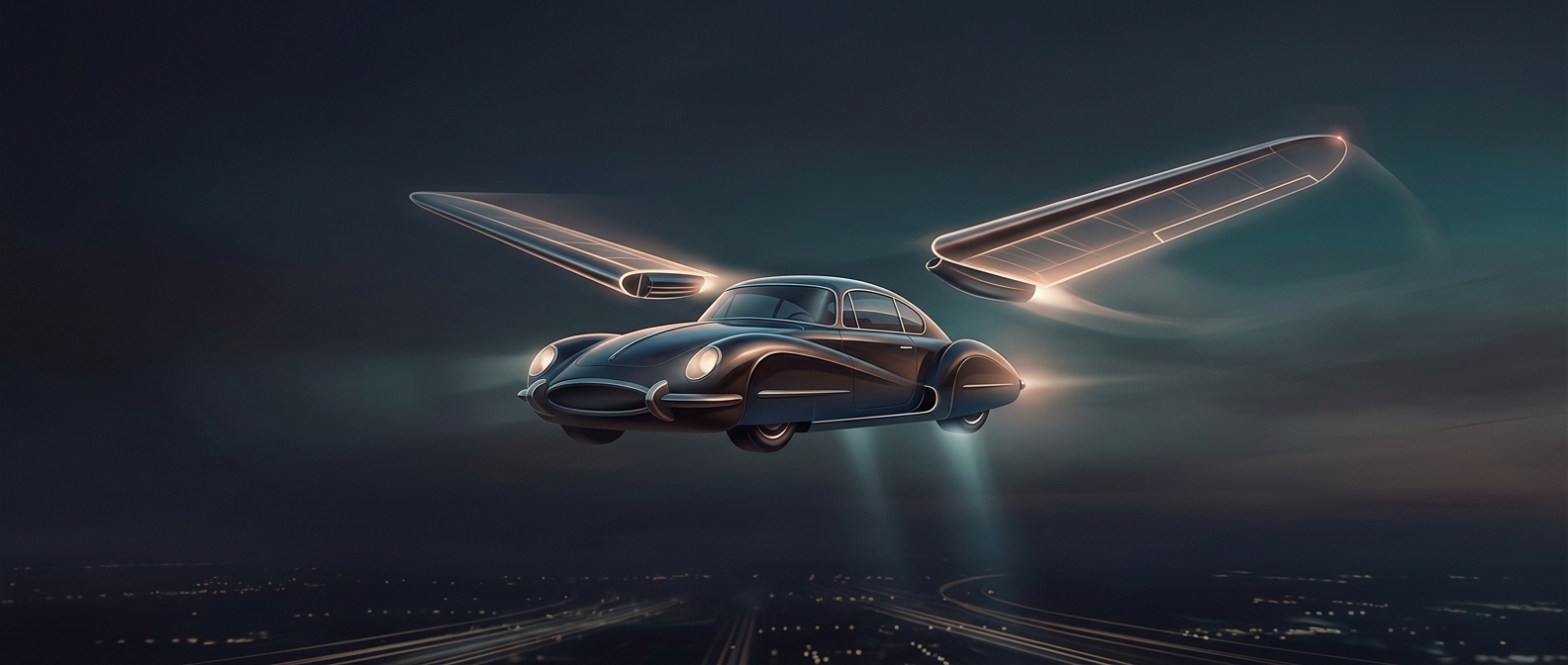
The wing had to become a road-sized load
A wing is useful in flight because it spreads across a broad area and generates lift as air flows over it. On a road, that same span is a liability: it makes the vehicle awkward to maneuver and difficult to fit within ordinary road space. Detaching the wing solved the clearance problem without asking the car to carry a bulky aircraft structure through every street and parking lot.
But a wing is not just a surface to attach for takeoff. In flight, it bears the force holding the vehicle aloft, so its connection to the body must stay secure under changing loads. The detachable assembly therefore had to be more than easy to remove; it had to reconnect firmly enough for the car to function as an aircraft.
The tradeoff moved the inconvenience elsewhere
Once removed, the wings still had to go somewhere. In this design, they traveled as a trailer: the car could use the road without them, but the complete flying machine was split between two vehicles. To fly, the owner would need access to the wings and a place to join them back to the car. The idea exchanged the burden of carrying wings everywhere for the burden of transporting and handling them separately.
That distinction matters. A roadable aircraft with detachable wings could make the road portion more practical, but it did not make the transition between driving and flying disappear. The wing assembly was the hinge between the two modes—and, because it became a trailer, also the clearest reminder that the vehicle was still part car, part airplane.