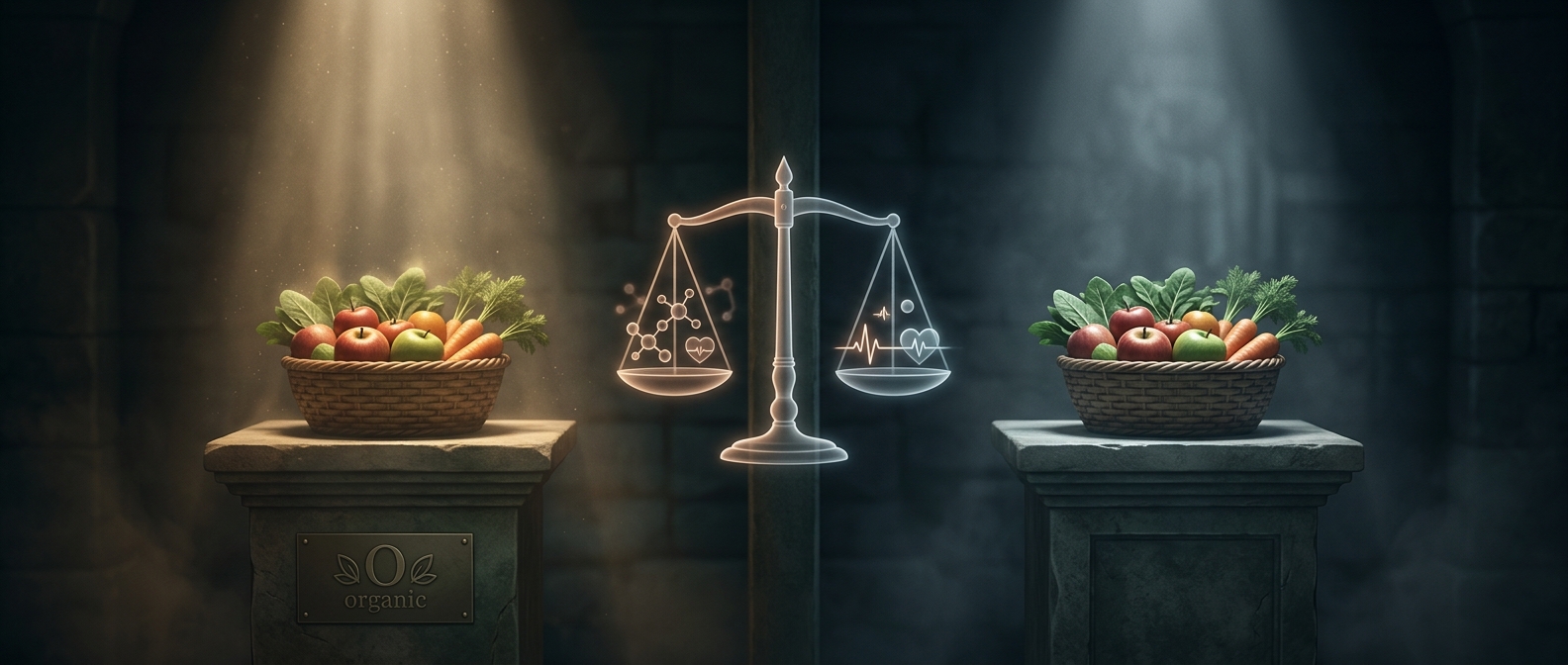
What the organic label measures—and what it doesn’t
Organic certification is mainly about the methods used to produce food, not a nutritional target. It sets rules for farming practices, including which inputs farmers may use and how they manage pests and soil. Those rules can change how a crop is grown, but they do not require it to reach a particular level of vitamins, minerals, or other nutrients.
Why nutrient levels vary
A plant’s nutrient content depends on several influences at once: its variety, the soil and weather in which it grew, how ripe it was when harvested, and how it was stored. Farming practices may affect some of these conditions, but they are only part of the picture. Two crops grown under the same system can differ, and the organic label cannot capture every difference between individual foods.
Nutrition also changes after harvest. Time in storage and cooking can affect some nutrients, while preparation determines what else is eaten with the food. For example, adding vegetables to a meal can contribute nutrients regardless of whether they were grown organically.
Choosing by the question you care about
The label can help shoppers identify a production system they prefer. It is not a shortcut for comparing the nutritional value of two pieces of produce. If the goal is to eat more nutrient-rich foods, variety and regular inclusion of fruits and vegetables matter more than assuming one farming label guarantees a nutritional advantage.