How sushi rice gets its sweet-tart flavor
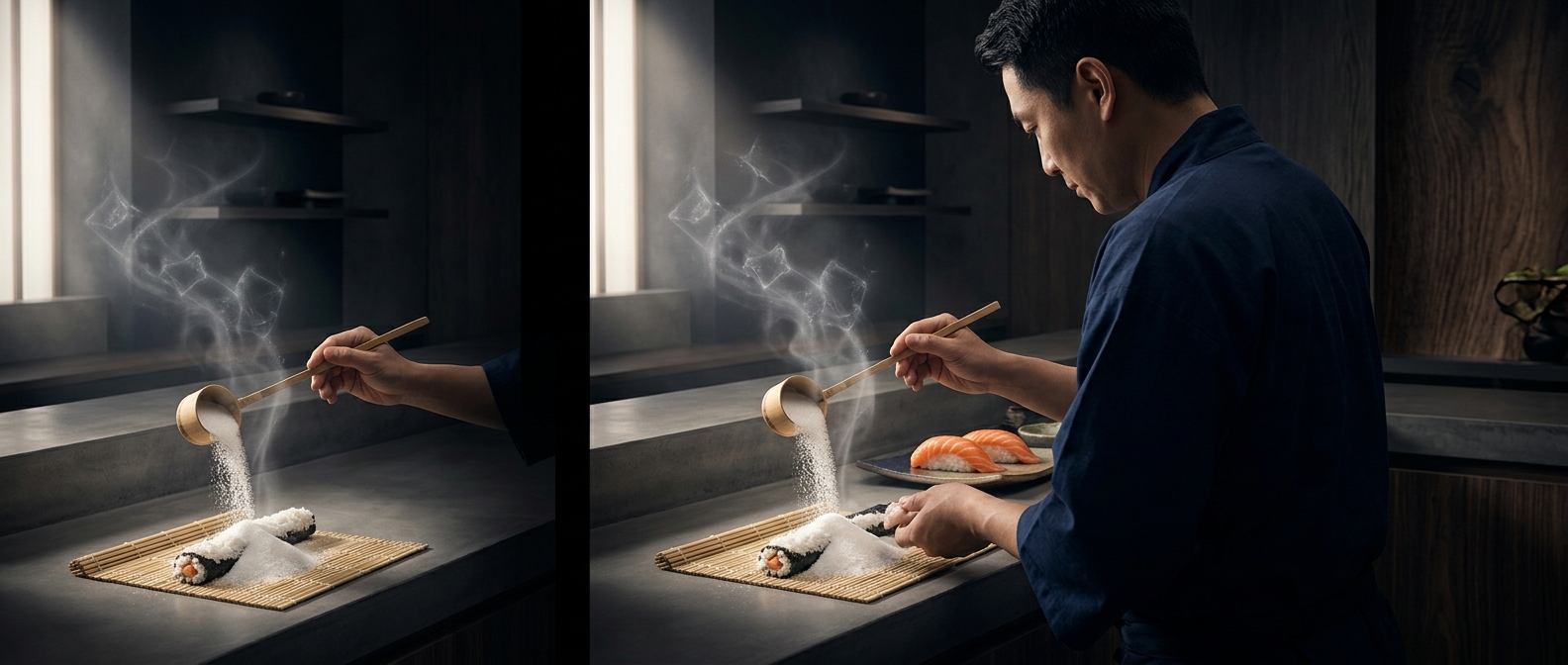
The seasoning is mixed into the rice after cooking, while the grains are still warm. That timing helps the vinegar-and-sugar mixture spread through the rice rather than sitting as a separate sauce on top. The result is not meant to taste like dessert: vinegar’s sharpness and the rice’s mild flavor keep the sweetness in the background.
Why the sugar is easy to miss
Taste is a balance. Sugar softens vinegar’s acidity, while vinegar keeps the rice from tasting flat or simply sweet. Together, they give each bite a more rounded flavor that can recede behind fish, seaweed, soy sauce, or other savory ingredients. The seasoning may be subtle, but it is part of the rice itself—not just something added by a filling or dipping sauce.
What that means nutritionally
Plain cooked rice already supplies most of the carbohydrates in a sushi roll. The added sugar contributes more, though how much depends on how the rice is seasoned and how much a roll contains. Because the sweetness is blended into the rice, it can be hard to notice by taste alone: a savory roll can still include sugar in its base.**