“Natural” is about origin, not harmlessness
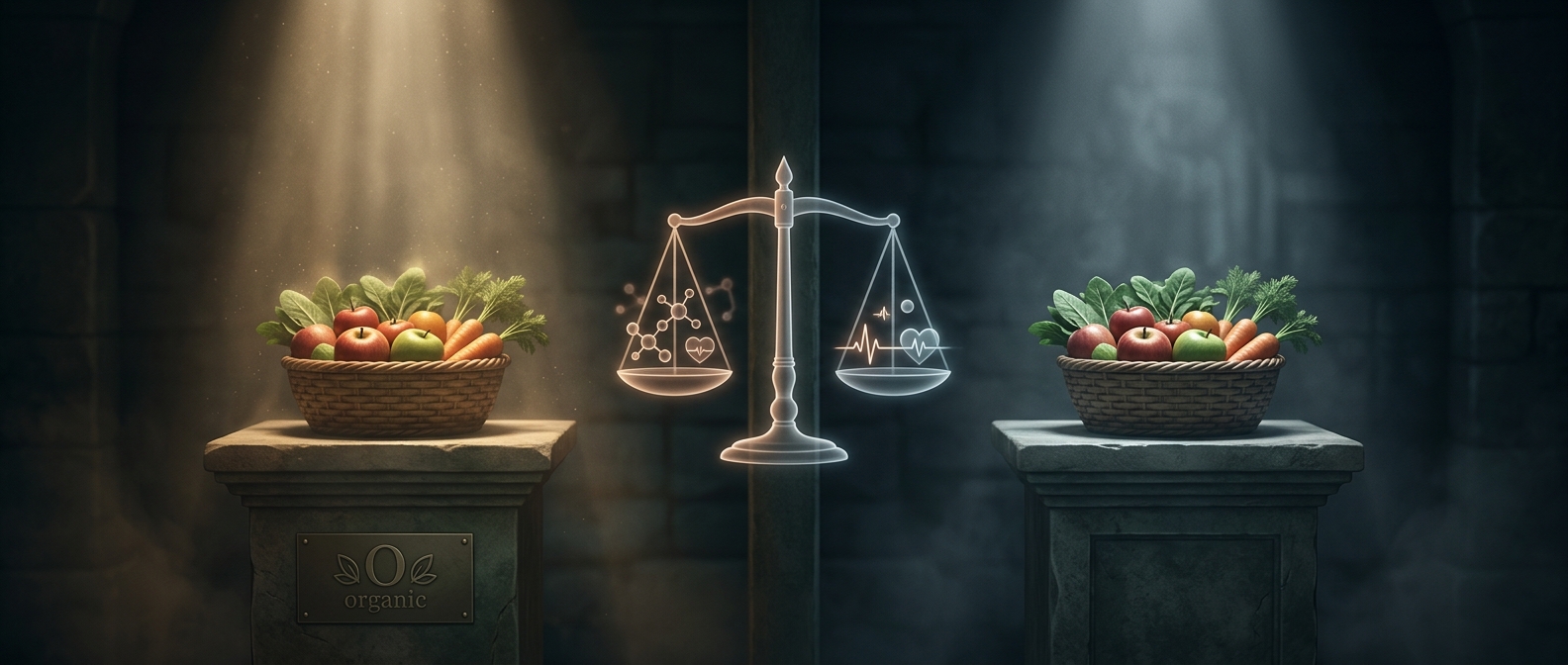
A pesticide is a substance used to control pests, whether it comes from a plant, a mineral, or a laboratory. Organic farming rules restrict which pesticides may be used, but they do not ban all pest control. Some permitted products come from natural sources—and can still harm organisms. Their effects depend on the substance, how much is present, and how people or other living things encounter it. “Organic” describes a production standard; it is not a guarantee that food is pesticide-free.
How contamination reaches produce
Pest control is only one possible route from a farm to a foodborne hazard. Manure used as fertilizer can contain disease-causing bacteria, including E. coli. If it contaminates produce, germs may remain on the surface, especially on fruits and vegetables eaten raw. The farming method alone cannot tell you whether a particular item carries contamination.
What a rinse can—and cannot—do
Rinsing produce under clean running water helps wash away material on its surface, including dirt and some contaminants. It is a practical step, not sterilization: washing cannot reliably remove everything, and it does not reverse contamination that has reached inside damaged produce. Handle fruits and vegetables carefully, and keep them away from raw meat and its juices. The useful takeaway is simple: wash produce regardless of its label, while treating “organic” as information about how it was grown—not proof that no hazards are possible.