What happens between harvest and the freezer
A vegetable does not stop changing when it is picked. Its cells remain active, and enzymes—proteins that drive natural chemical reactions—continue breaking down some vitamins and other compounds. Warmth and time speed those reactions, so the trip from field to store and the days a vegetable spends in a refrigerator can matter as much as the label on the package.
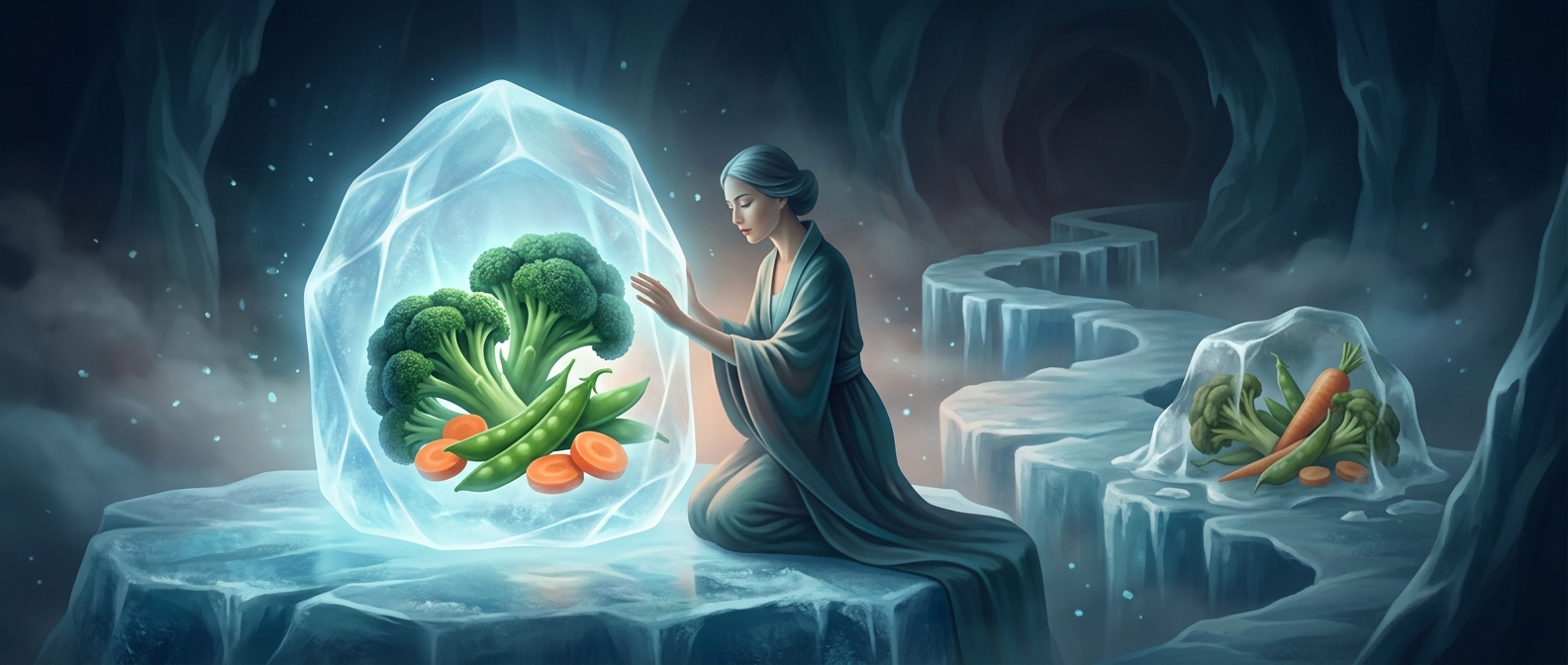
Freezing slows these changes by making water inside the vegetable unavailable for most chemical reactions. Before freezing, many vegetables are briefly blanched: heated in hot water or steam, then cooled. This step deactivates enzymes that could otherwise affect flavor, color, and texture during storage. It can also reduce some heat-sensitive or water-soluble nutrients, including vitamin C and certain B vitamins.
Freshness is a timeline, not a label
“Fresh” describes how produce is sold, not how recently it was harvested or how it was handled. A locally picked vegetable eaten soon after harvest may retain more nutrients than its frozen counterpart. But produce that has spent days in transport and storage may lose some nutrients along the way. Frozen vegetables are often processed soon after picking, which can preserve much of what was present at harvest.
The result depends on the vegetable, its handling, and how long it is stored. Frozen produce is not automatically more nutritious, and freezing does not restore nutrients already lost. But for vegetables that have traveled or sat for several days, the freezer can preserve a nutritional profile comparable to what you get from the fresh aisle—making the harvest date less important than the time and conditions between harvest and dinner.