Why a wet machine can grow a film
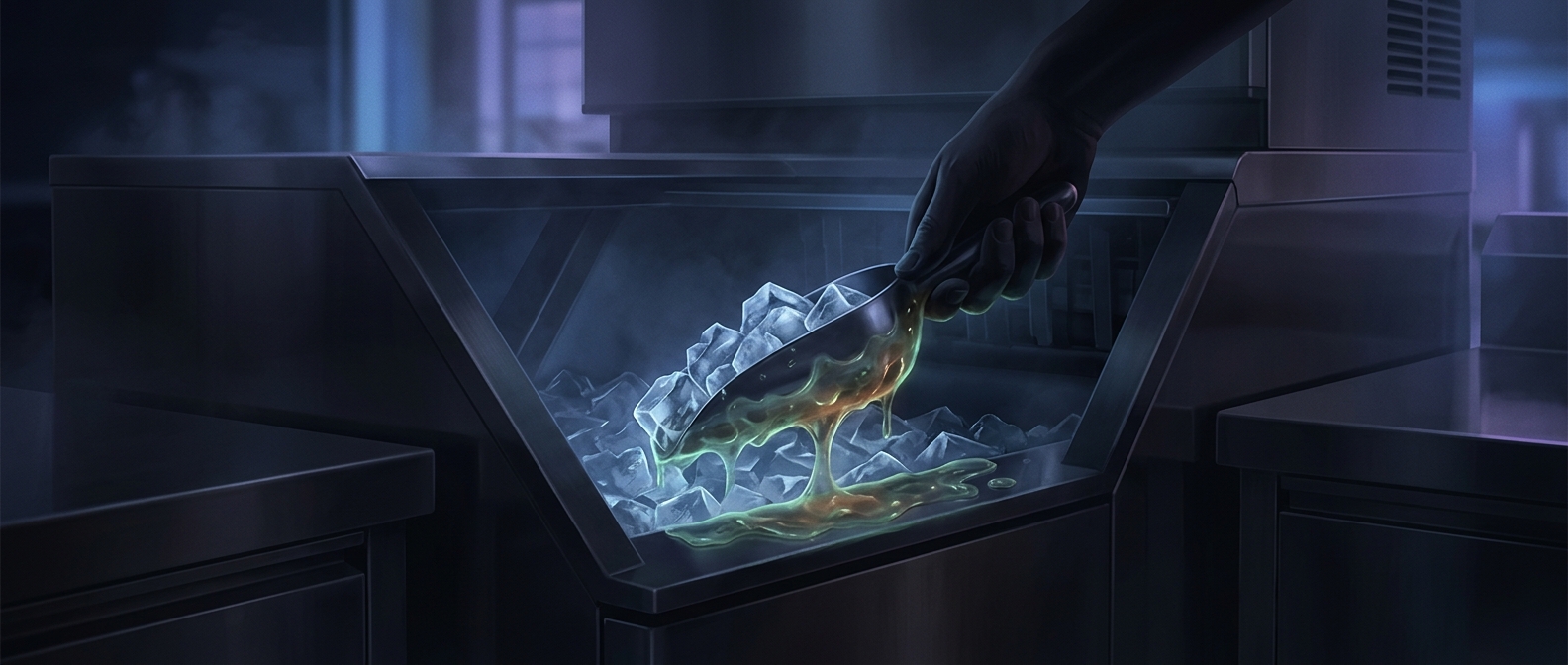
An ice machine repeatedly brings water into contact with cool surfaces, then leaves some of those surfaces damp between cycles. That moisture can support microbes, especially where small amounts of dust, mineral deposits, or other residue collect. Some organisms attach to the surface and build a biofilm: a sticky community of microbes held together by a protective layer they produce.
A pink or orange tint can come from pigmented microbes, including some bacteria or yeasts. Color alone cannot identify what is growing—or show whether it is harmful. The key issue is that growth inside equipment can reach areas that are difficult to see during a quick glance.
Why wiping the visible parts is not enough
Ice machines contain seams, corners, water channels, and components where residue and moisture can linger. A surface film can cling to those spots, so rinsing or wiping the easy-to-reach areas may leave growth behind. Sanitizer works best after soil and film have been physically removed; otherwise, material on the surface can shield microbes from contact.
That is why proper cleaning involves taking apart the parts intended for routine cleaning, washing and sanitizing them as directed, and letting them dry where appropriate. The ice bin and scoop also matter: hands or an improperly stored scoop can introduce contamination even when the machine itself is clean.
What the film means for the ice
A stain inside the machine does not prove that every cube is contaminated, but equipment surfaces that contact water or ice create a route for contamination. Regular, thorough maintenance is therefore more than cosmetic: it helps keep unseen buildup from becoming part of the ice-making process.