Why cash can collect microbes over time
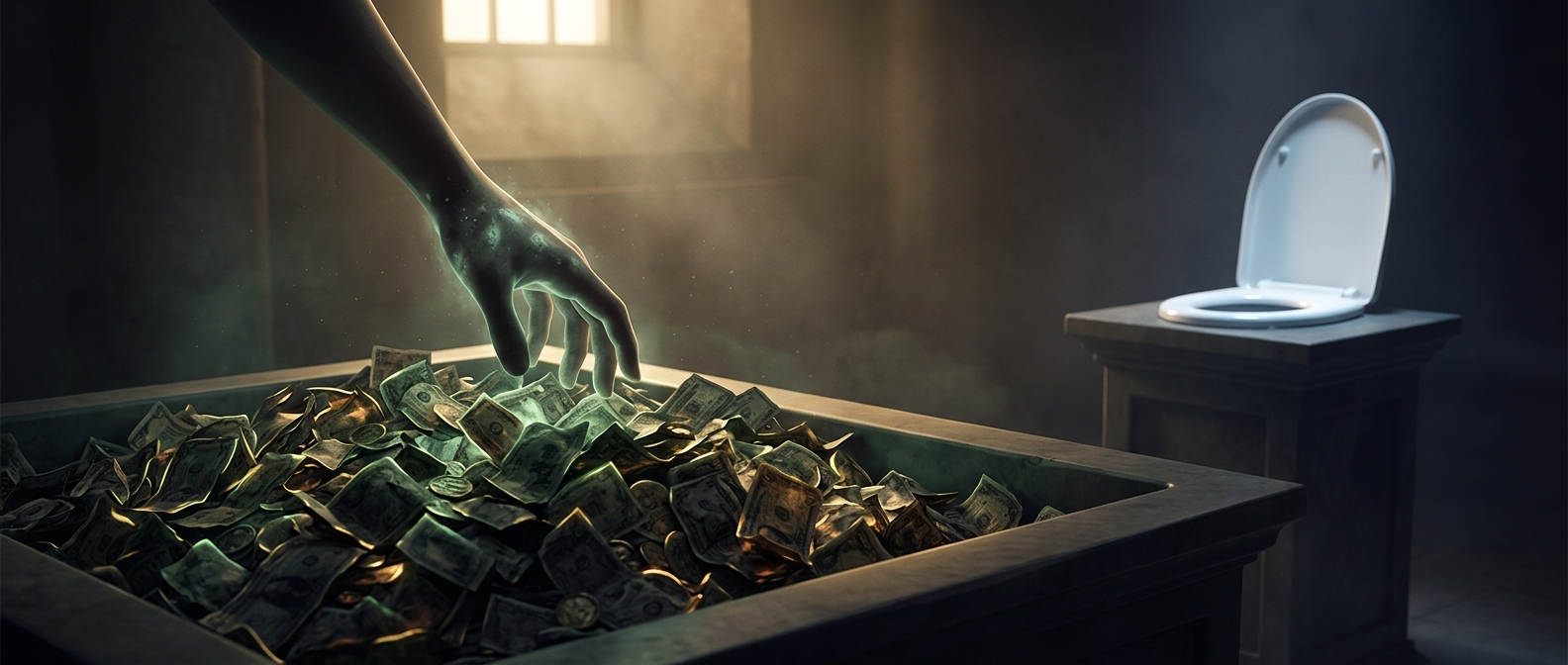
A banknote is handled, set down, folded, and tucked into pockets or wallets, often by many different people. Each contact can leave behind tiny amounts of skin oils, dirt, and microbes—microscopic organisms such as bacteria. The next person may add more. Because cash is reused rather than replaced after each transaction, this residue can accumulate across a long chain of handoffs.
The surface matters, but so does its history
A toilet seat may seem like an obvious comparison, yet it is often cleaned regularly. Cash usually is not. That does not mean every bill is heavily contaminated, or that it carries more bacteria in every comparison: the result depends on the particular note, what it has touched, and how each surface was sampled. The useful point is that a familiar object’s cleanliness cannot be judged by appearance alone. A bill’s many opportunities for contact can matter more than the surface it is compared with.
Finding bacteria is not the same as getting sick
Microbes on an object do not automatically cause illness. For infection to occur, a harmful organism must be present, survive long enough, transfer from the note to a person, and reach a route into the body—often the mouth, nose, or eyes. Many organisms are harmless, and the presence of bacteria by itself says little about the risk.
The practical consequence is simple: handle cash as a shared surface, not as something sterile. Washing hands before eating, and avoiding touching the face with unwashed hands, interrupts the transfer route without requiring anyone to treat every bill as a danger.