Why Chocolate-Covered Ham Passed for Zombie Flesh
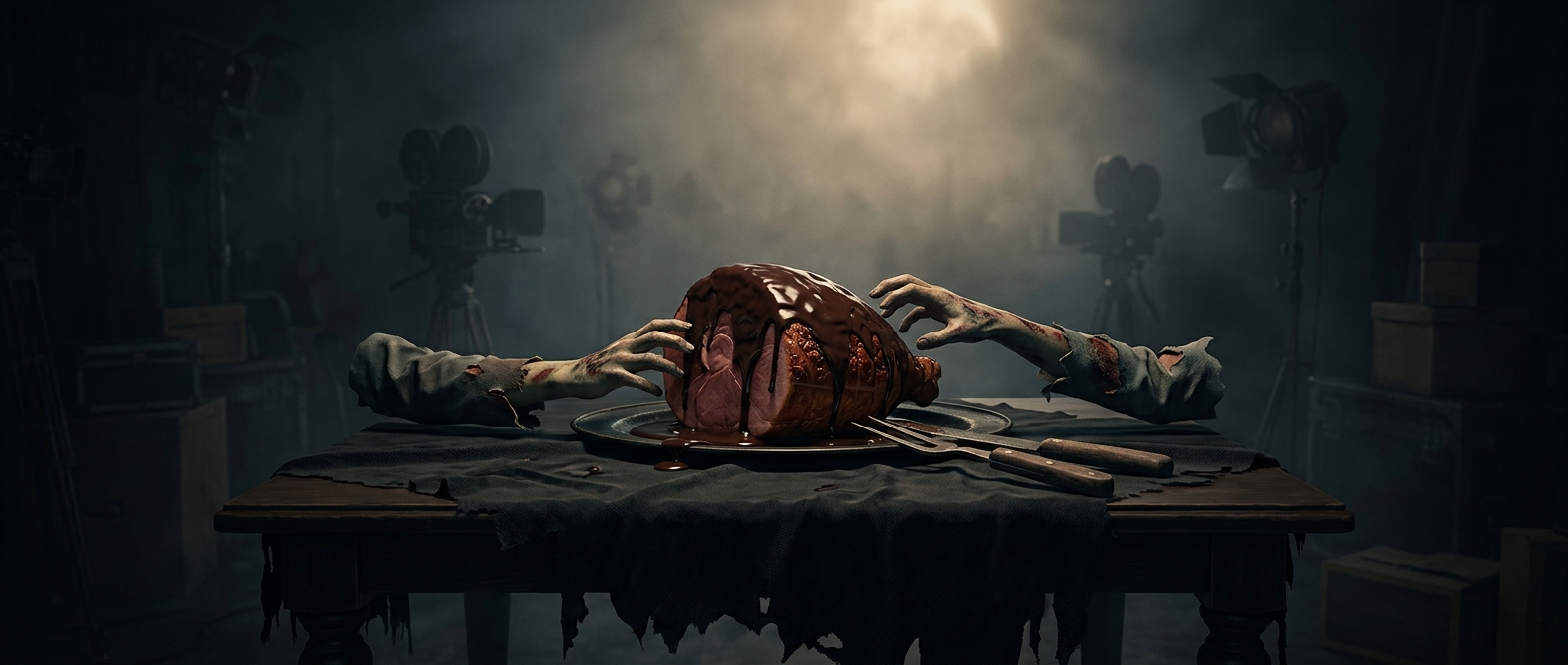
The effect relied on a simple visual trick: roast ham supplied the uneven, fibrous surface, while chocolate sauce darkened and coated it. Together, they suggested the wet, raw-looking texture the scene needed without using actual flesh. On camera, color and surface texture can carry the impression; the food’s real flavor is irrelevant to what viewers see.
A Grisly Look, a Sweet Smell
For the extras eating it, though, the illusion came with an unavoidable sensory mismatch. Chocolate sauce gave off a sweet smell, while the ham looked like something from a horror scene. That contrast is part of what makes the detail memorable: the same prop could read as gore to the audience and as oddly dessert-like food on set.
It is a small example of how a screen effect can be convincing in one sense and strange in another. The camera preserved the grisly appearance; the extras had to deal with the smell.