Why grief can come out as laughter
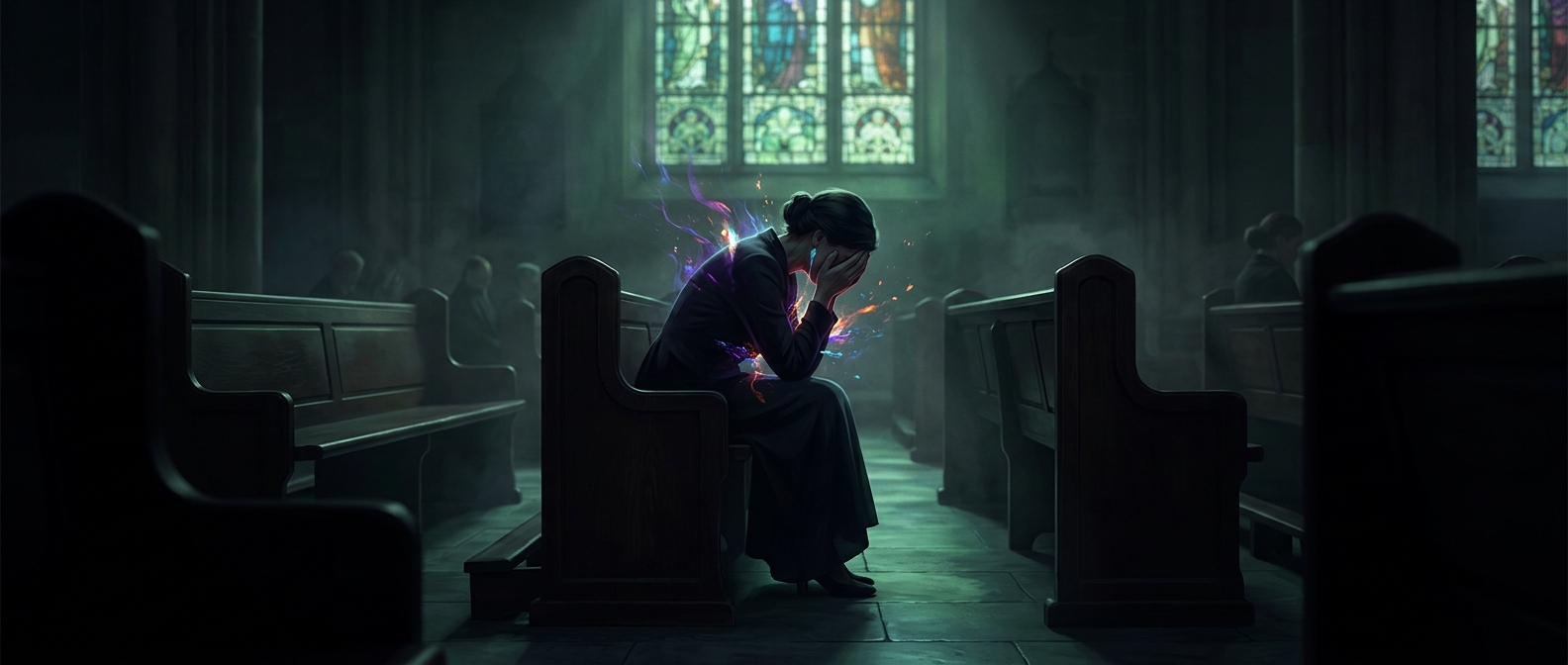
A funeral asks people to manage several powerful demands at once: feel the loss, behave respectfully, and stay composed in front of others. That effort can create intense tension. Laughter sometimes appears as an involuntary response to that tension—not because the moment seems funny, but because the body is reacting to emotional overload.
A reaction, not a message
Laughter is not always a signal of amusement. Like crying, trembling, or an unsteady voice, it can emerge when feelings are difficult to regulate. A person may laugh briefly while feeling grief, anxiety, embarrassment, or shock. The response can be especially startling because the setting makes the person acutely aware of how others might interpret it, adding another layer of pressure.
Trying hard to suppress the laugh can make the moment feel even more charged: attention narrows onto the reaction, and the fear of being noticed grows. That does not mean every laugh has the same cause, or that a person can never choose to laugh. It means the sound alone cannot reliably reveal what someone feels.
What the moment does—and doesn’t—tell you
At a funeral, an unexpected laugh may be a poorly timed release of nervous energy, not a judgment about the deceased or the loss. The person may care deeply and still have a reaction that conflicts with the occasion. A visible expression is not a dependable measure of private grief.