Reading the Mosquitoes Before They Spread
At a sprawling Florida resort, mosquito control is less a matter of spraying everywhere than of finding where the insects are active and interrupting their life cycle. Mosquitoes lay eggs in standing water, so crews can reduce breeding by finding and treating small pools of water before they produce another wave of adults. Traps and inspections help reveal where mosquitoes are gathering.
Garlic extract is one additional tool. Mosquitoes use cues from animals—including the carbon dioxide people exhale—to locate a potential blood meal. A garlic-based treatment can make an area less attractive by interfering with those cues. It does not make the grounds mosquito-proof; it helps reduce bites alongside other control measures.
Chickens as Early-Warning Systems
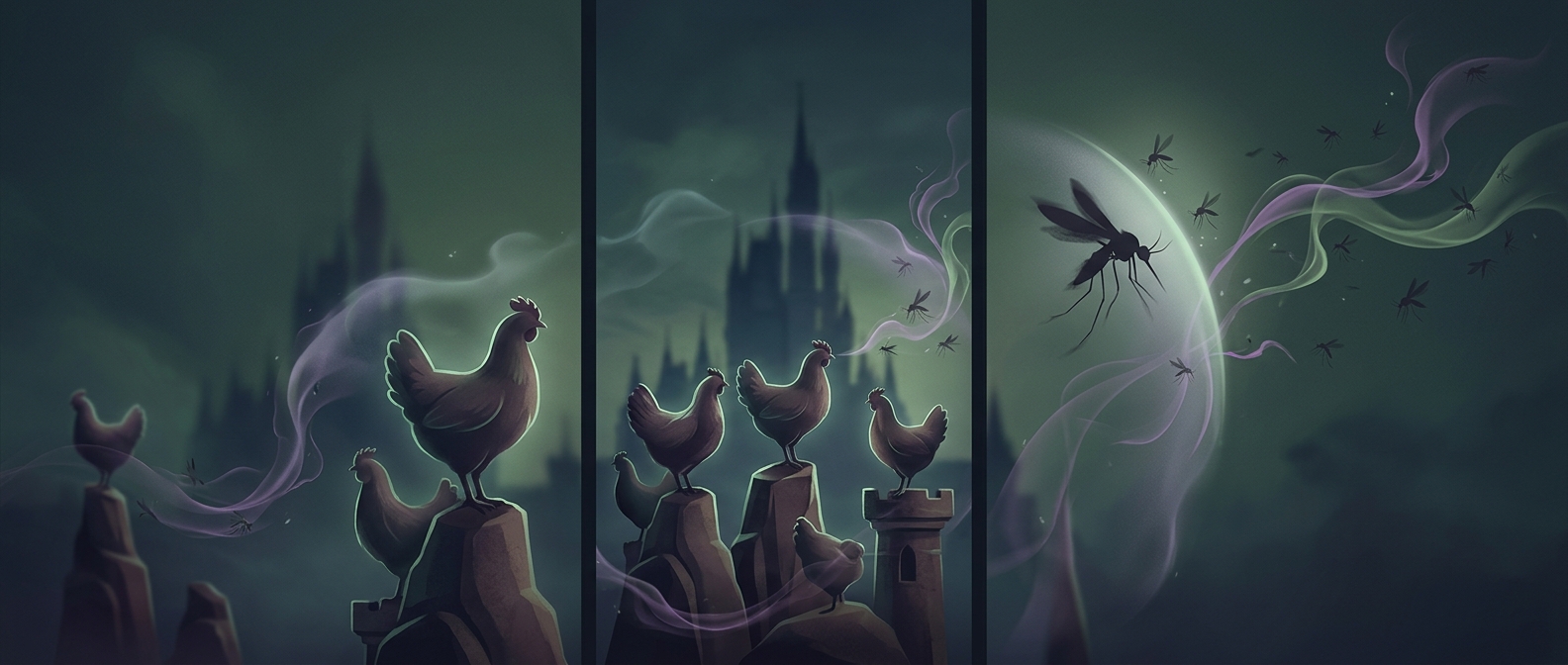
The chickens serve a different purpose: they help show whether mosquito-borne viruses are circulating nearby. Mosquitoes may bite the birds, which can develop detectable signs of exposure without becoming seriously ill. Health monitoring of blood samples can therefore provide an early warning to mosquito-control staff, before the same virus poses a greater risk to people.
That distinction matters. The chickens are not there to draw mosquitoes away from visitors; they are living sentinels, much like a warning light in a system that is otherwise hard to see. Together, surveillance and targeted control let staff respond to local conditions rather than treating every part of the resort the same way.