How a fake window changes a windowless room
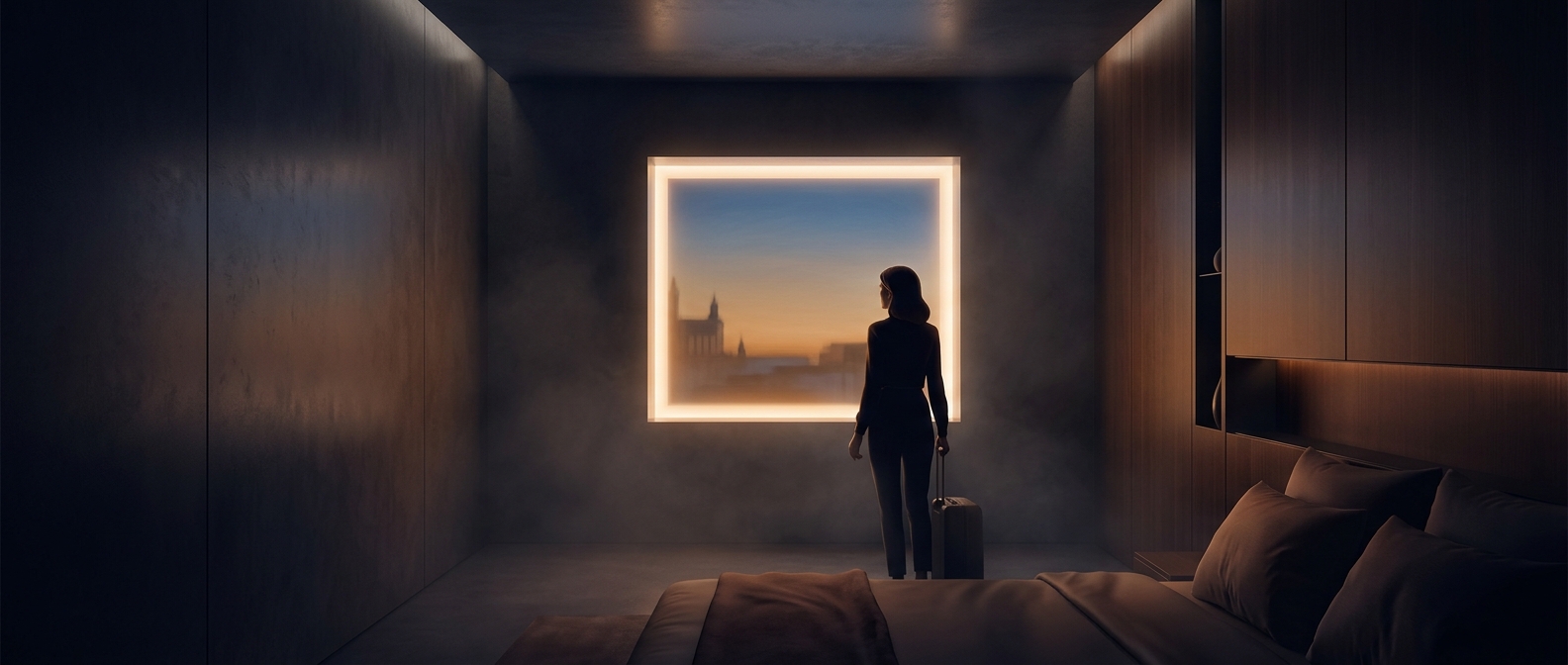
A real window does more than admit light: it gives the eye a bright focal point and a sense of distance beyond the walls. In a room with no exterior opening, a glowing panel can recreate part of that visual pattern. The eye reads the bright rectangle as a windowlike feature, while curtains supply a familiar frame and soften the hard edges of the wall.
Light, depth, and the feeling of a room
The effect depends on contrast. A softly lit panel stands out against the surrounding wall, much as daylight does at a real window. That brighter area can make a compact room feel less enclosed, even though it adds no actual depth and reveals nothing about the outdoors.
Some designs use an image or a lighted surface to suggest a view; others rely mainly on the glow. Either way, the trick offers a visual cue, not the changing daylight, fresh air, or outside orientation a real window provides. Its appeal is modest but practical: it gives the eye somewhere brighter to rest than a blank wall.
A cue, not an opening
For a guest arriving in a room without exterior windows, the panel can make the space feel more familiar and less like an enclosed box. Pulling the curtains aside reveals the illusion; drawing them closed turns the feature back into a framed patch of light. The room stays windowless, but its brightest wall no longer has to look like one.