Why the Axolotl Keeps Its Gills
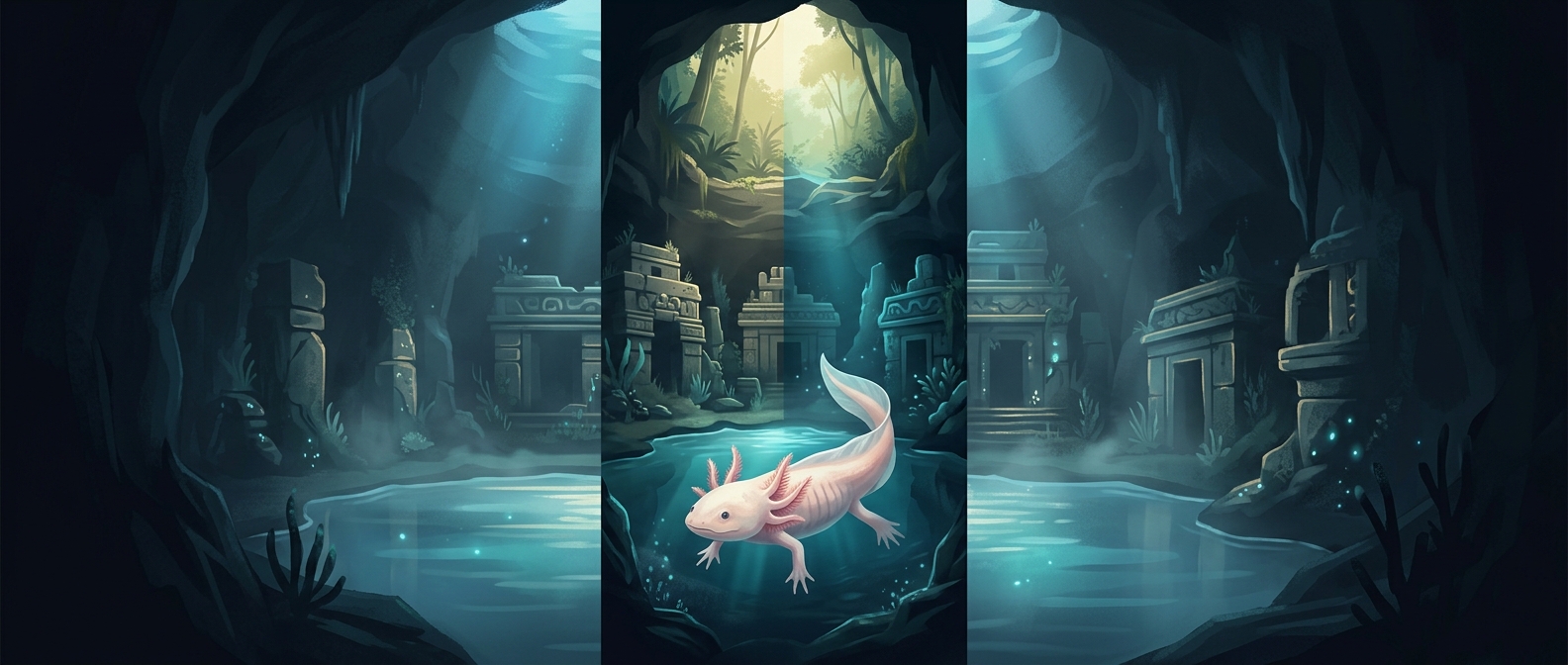
An axolotl is a salamander, but unlike most salamanders it usually does not leave its aquatic larval form. Its feathery gills remain outside its head, where they collect oxygen from the water. The animal can also breathe through its skin and lungs, but those branching gills are a conspicuous sign of its lifelong underwater existence.
This persistence of juvenile traits is called neoteny. It does not mean the axolotl is simply frozen in development: it grows, becomes capable of reproducing, and reaches adulthood while retaining features that other salamanders lose as they transform.
A Different Route to Adulthood
In many salamanders, development includes metamorphosis—a major change in body form that prepares the animal for life on land. Axolotls generally mature without that shift, keeping a tail and body suited to swimming. Under certain conditions, they can undergo metamorphosis, but it is not their usual path.
That distinction helps explain why an axolotl is not just a young salamander that happens to live a long time. Its development follows a different route: it can reproduce while still carrying the traits associated with a larval stage.
What the Gills Reveal
The gills are more than an unusual silhouette. They show how development can produce a successful adult without following the familiar sequence from water-dwelling juvenile to land-living adult. For the axolotl, the juvenile-looking form is not a temporary stop—it is the form in which it lives and reproduces.