A living partnership powered by sunlight
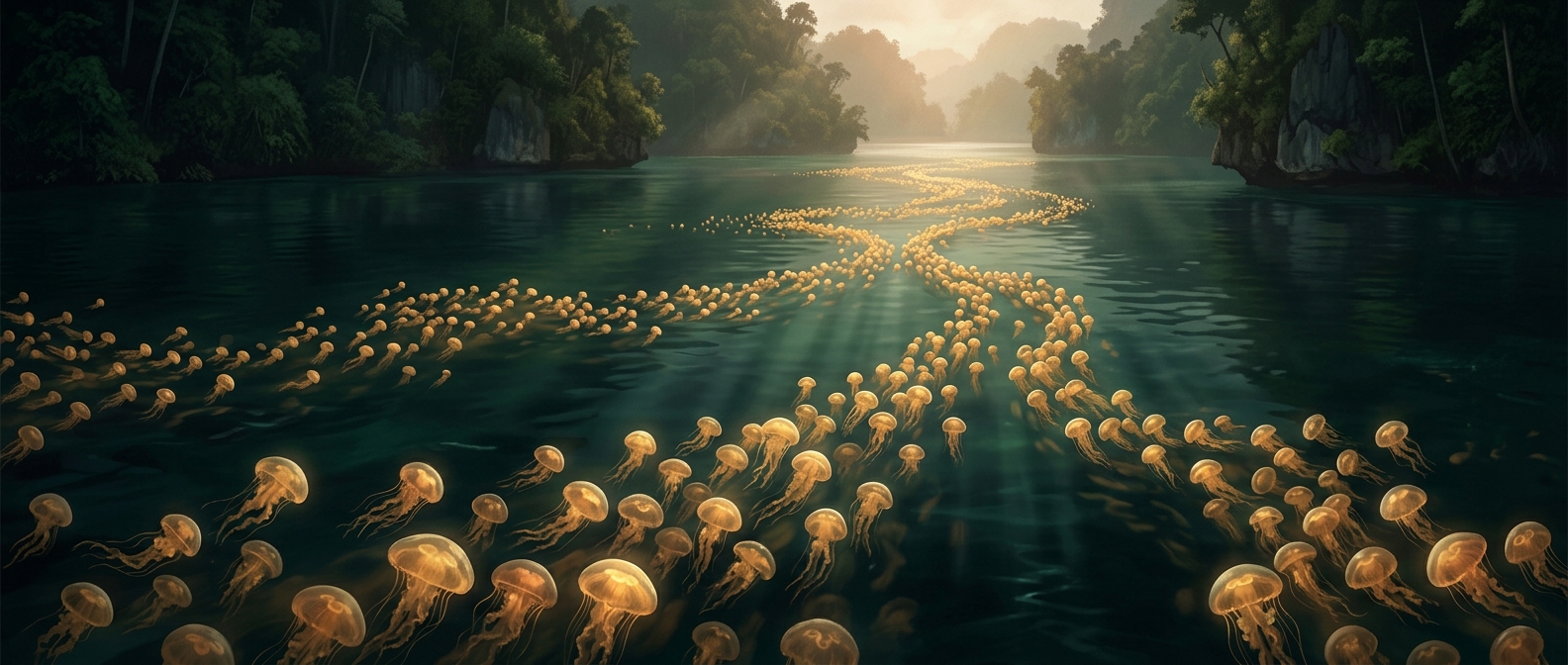
Some lake-dwelling jellyfish carry microscopic algae inside their tissues. The algae use sunlight to turn carbon dioxide and water into sugars, and some of that food passes to the jellyfish. In return, the algae gain a protected place to live and access to materials they need for photosynthesis.
This arrangement is a symbiosis: two different organisms live closely together and each benefits. It changes what the jellyfish’s daily movements are for. By swimming toward brighter water, it brings its food-producing partners to better conditions for making energy.
How the jellyfish moves its garden
A jellyfish does not steer with fins or paddle like a fish. It contracts its bell—the rounded body—to push water backward and move forward. Repeated pulses let it travel through the lake as the sun’s position and the available light change. The algae themselves stay inside the jellyfish; the host carries them to the light rather than letting them drift away.
The partnership does not make the jellyfish independent of its surroundings. Photosynthesis works only when light is available, so access to sunny water can help determine how much food the algae produce and share. A small animal’s path across the lake is therefore also a way of tending its internal food supply: each pulse of its bell moves both the jellyfish and its microscopic partners toward the conditions they need.