The photographic plate that should have stayed blank
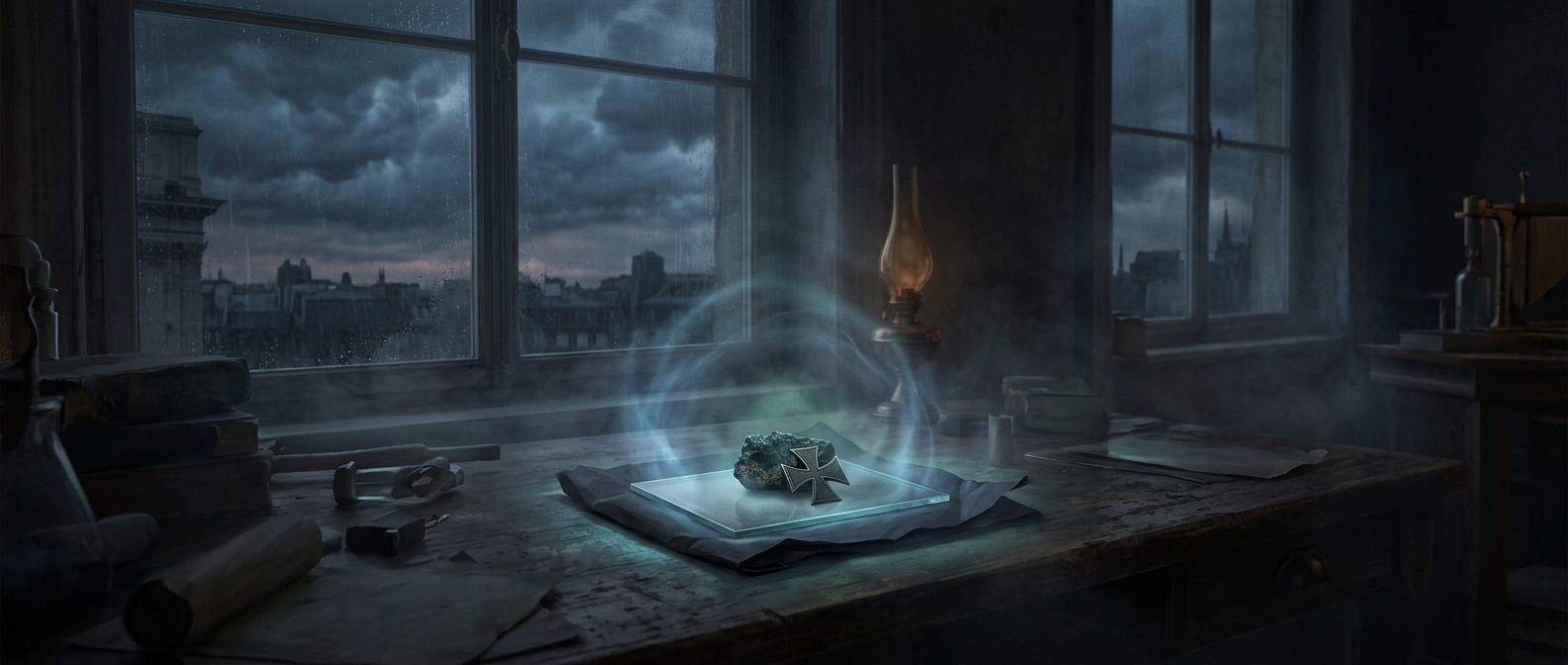
In 1896, physicist Henri Becquerel was investigating whether uranium compounds gave off rays after exposure to sunlight. To test the idea, he placed the compounds near photographic plates, which record light as dark areas, and wrapped the plates in thick paper to keep ordinary light out.
Clouds disrupted his plan: without sunlight, he could not carry out the exposure he intended. But when Becquerel later developed the wrapped plates, they were darkened. Since light had been blocked, sunlight could not explain the result. Something from the uranium had passed through the paper and affected the photographic material.
From a failed sunlight test to a new phenomenon
The result shifted the question. Becquerel found that uranium emitted penetrating rays without first being lit by the Sun. The emission was spontaneous—not a stored effect that had to be switched on by illumination. That observation became the discovery of radioactivity, the process by which unstable atoms release energy and particles as they change.
The darkened plate was a detector, not merely a record. Its change showed that an invisible emission had reached it, even though the material between the uranium and the plate blocked visible light. In later work, other researchers found that radioactivity was not unique to uranium, opening a new field of study into the structure and behavior of atoms.
The cloudy weather mattered because it interrupted the experiment Becquerel had planned. The plates’ unexpected darkening then pointed to a source that did not depend on sunshine at all.