A parasite meets a different kind of red blood cell
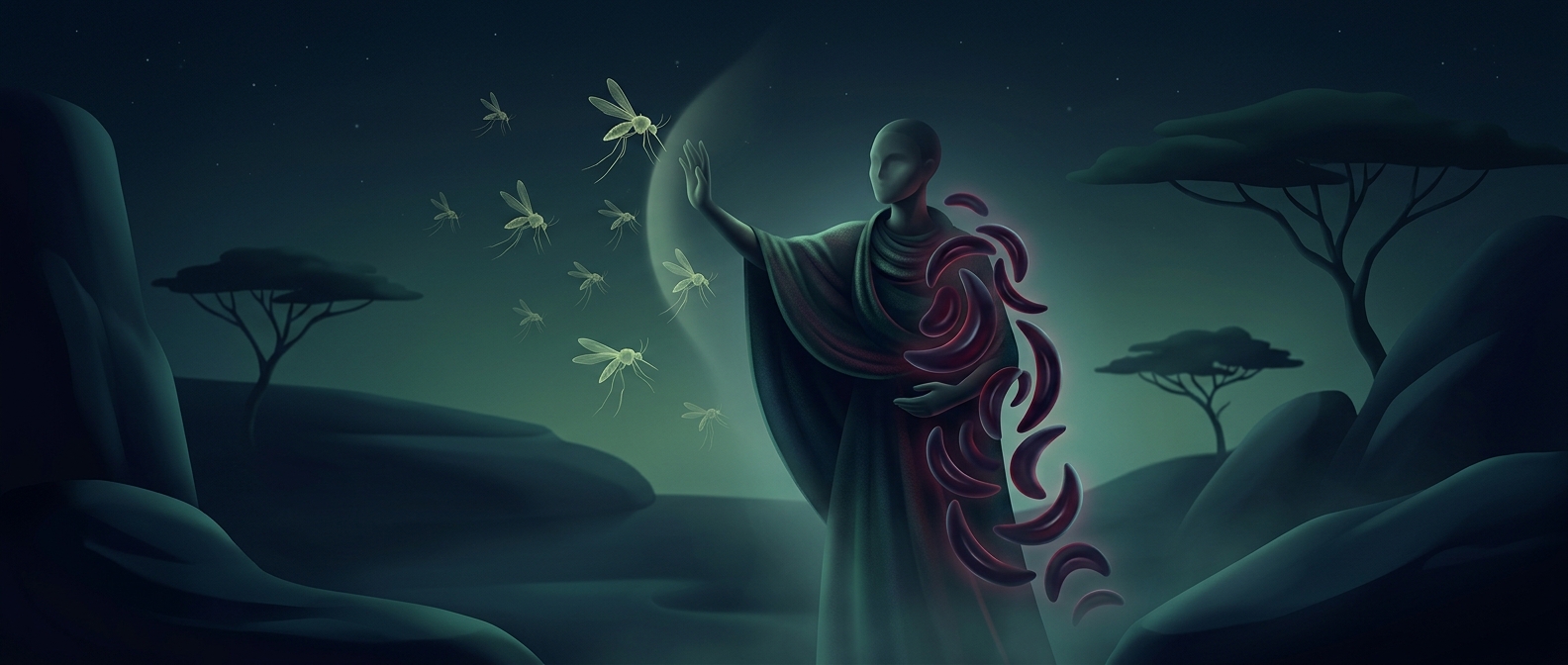
Malaria is caused by Plasmodium parasites, which enter red blood cells and use them to reproduce. In places where malaria is common, people who inherit one sickle-cell gene and one usual hemoglobin gene tend to have some protection against severe malaria. This condition is called sickle-cell trait; it is not the same as sickle-cell disease, which usually results from inheriting two altered copies.
The altered hemoglobin in trait carriers can make red cells behave differently when oxygen is low or cells are under stress—conditions that can occur as malaria parasites grow inside them. Infected cells may become less hospitable to the parasite and more likely to be removed by the spleen, an organ that filters blood and clears damaged cells. The parasite then has fewer chances to multiply and spread through the bloodstream.
Why one copy matters
The protection is partial, not a guarantee against infection. But it can reduce the risk of the most dangerous outcomes, especially in childhood. That difference matters because severe malaria can be fatal, while sickle-cell trait usually causes no sickle-cell disease symptoms.
In regions with intense malaria transmission, this creates an evolutionary tradeoff. People with one altered copy may be more likely to survive malaria and pass that copy to their children. People with two altered copies, however, can develop sickle-cell disease, a serious condition in which red cells can become rigid and sickle-shaped, blocking blood flow and damaging organs.
So the gene variant persists not because it is simply beneficial, but because its effects depend on how many copies a person inherits—and on whether malaria is a major threat where they live.