A wiper setting is a compromise, not a rain gauge
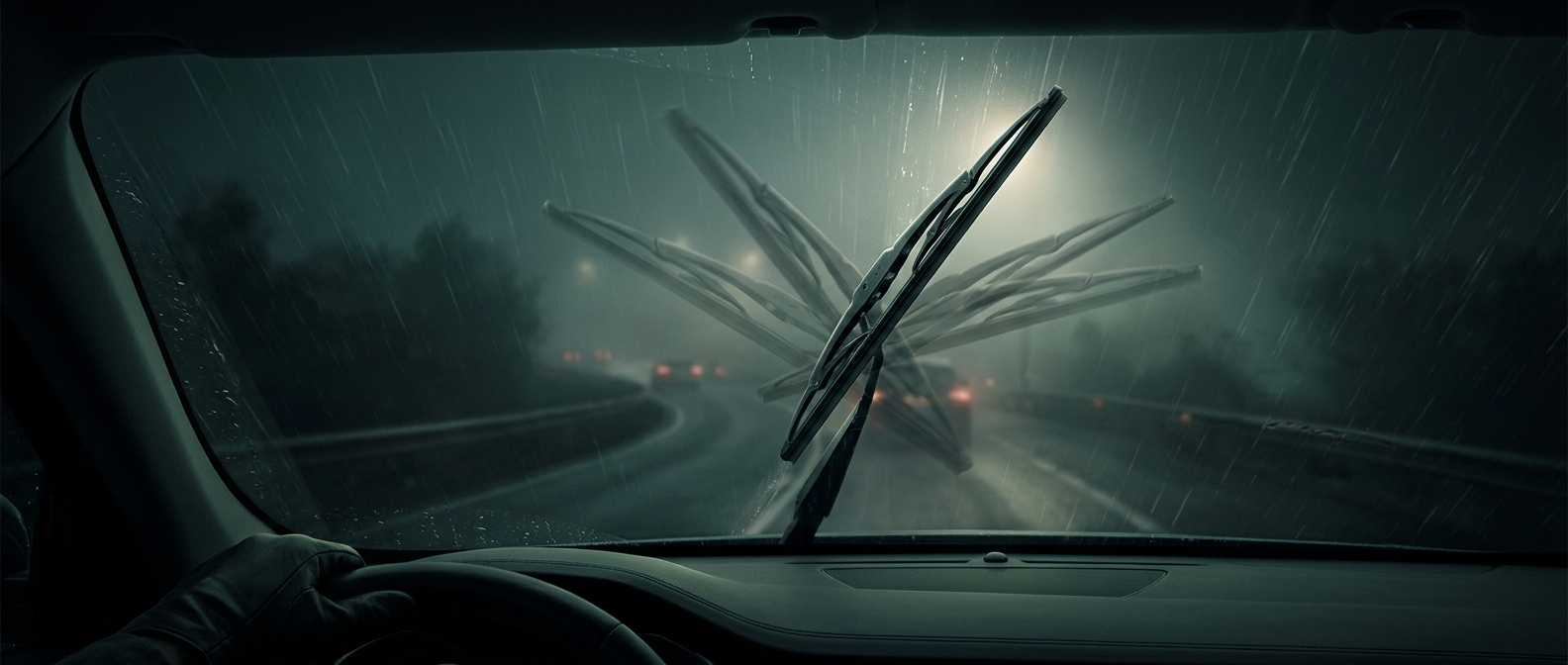
A wiper does not measure how much water is on the windshield. At a fixed setting, its motor sweeps the blade back and forth at a fixed pace, clearing a broad path each time. Rain then begins covering that glass again. If water builds up faster than the blade clears it, visibility drops between sweeps; if it builds up slowly, the blade may cross glass that is almost dry.
That is why the useful speed can change even during one trip. A light shower can become heavier, or a truck can throw a sudden sheet of spray across the windshield. The driver’s view also depends on more than rainfall: road speed changes the airflow over the glass, and drops do not land evenly across it. A setting that worked moments ago may no longer match what the windshield needs.
The blade has to clear—and grip
Wipers rely on a rubber edge pressing against the glass to push water aside. When enough water is present, it helps the blade glide as it clears a path. On nearly dry glass, the rubber can drag, chatter, or squeak; that sound is a clue that the blade is working against more friction, not necessarily that it needs to move faster.
A faster setting may restore a clear view in heavy rain, but it can be distracting or noisy when the glass is already mostly clear. A slower setting is quieter, yet leaves water in the line of sight for longer. Intermittent settings offer a middle ground by pausing between sweeps, but they still cannot adapt continuously to every change in rain or spray.
Why the driver remains part of the system
Automatic rain-sensing wipers can adjust their pace based on water detected near the windshield, but they respond to what their sensor sees—not every change in the driver’s view. With ordinary controls, the driver supplies that missing judgment. The “right” setting is therefore not a single speed: it is the pace that keeps the view clear without making each sweep unnecessary. In shifting weather, that pace can change before the next turn.