A spring-built prop for graceful movement
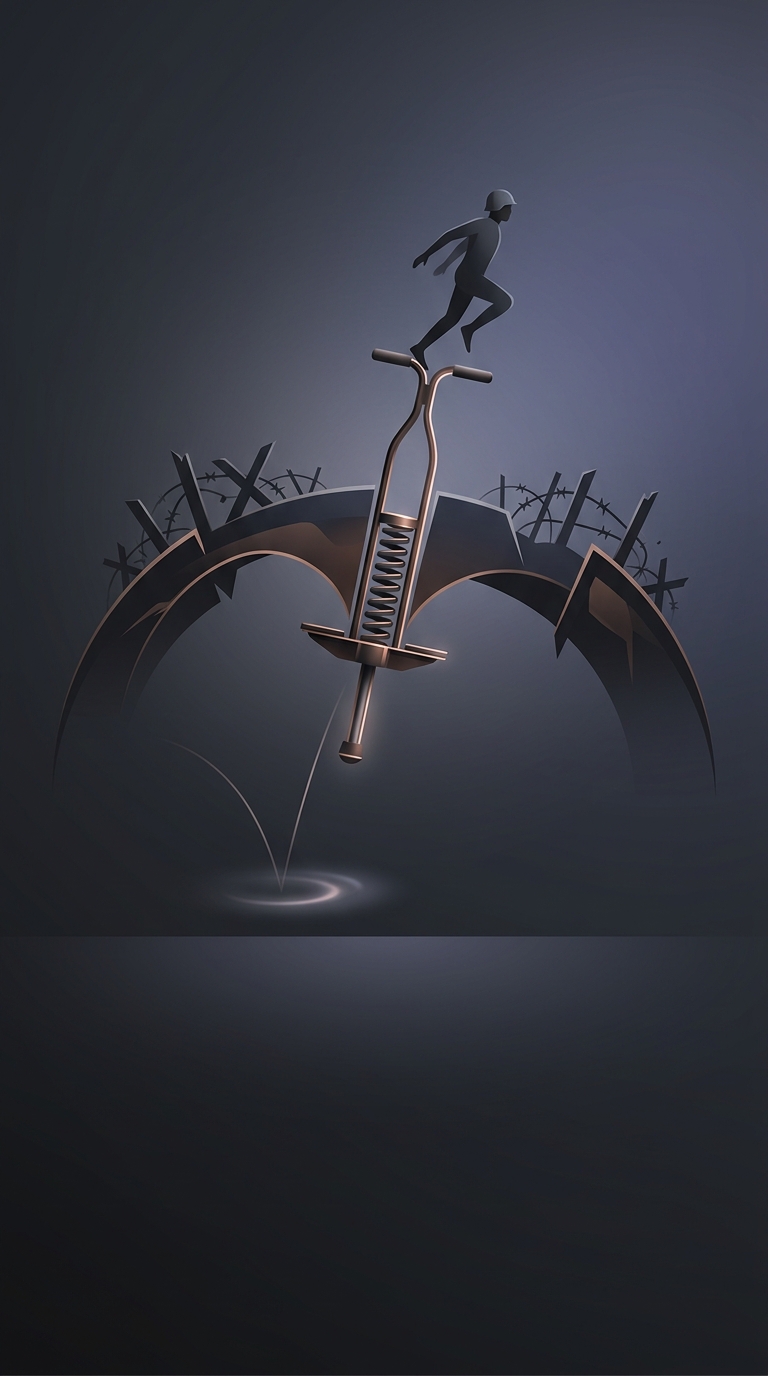
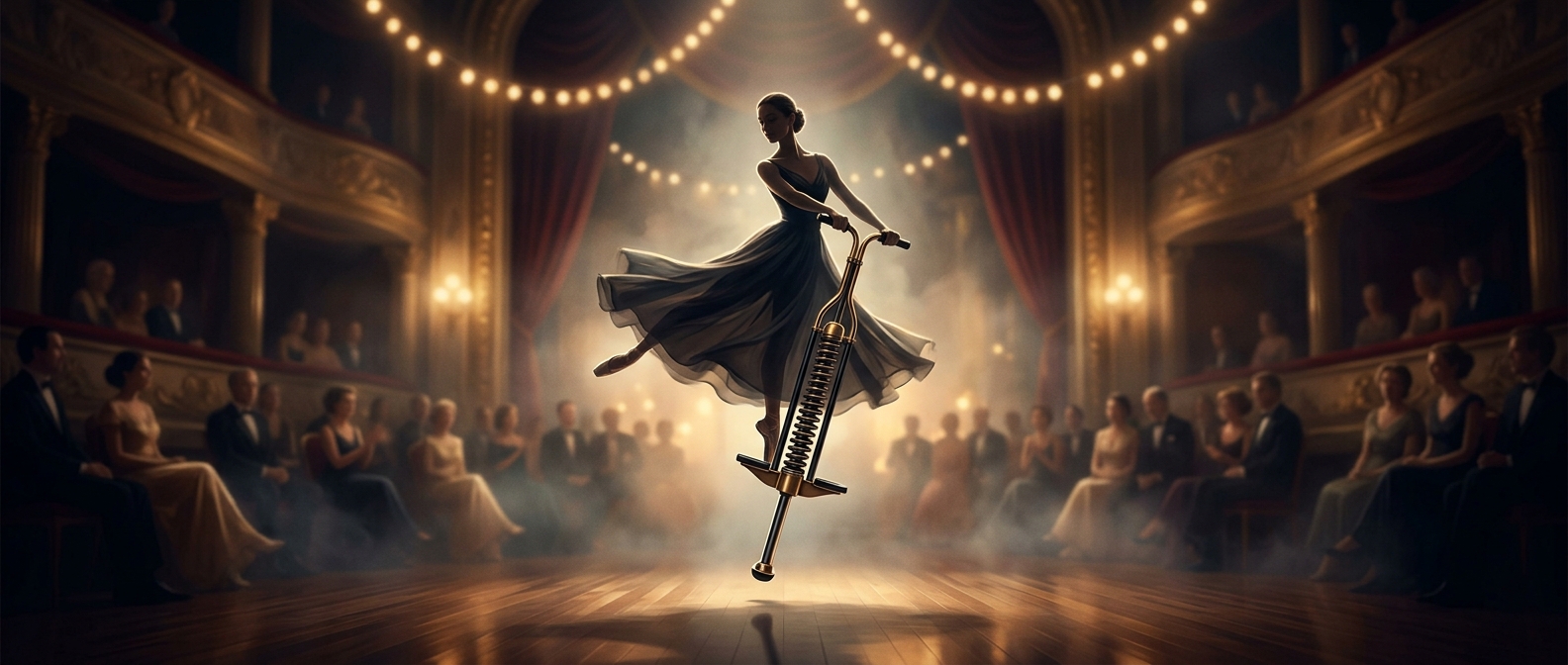
A pogo stick’s basic parts—a spring, a frame, footrests and a handle—make it possible to turn a landing into the start of another leap. That simple rebound was useful not only for jumping higher, but for creating a repeated, rhythmic movement that could be choreographed as a dance.
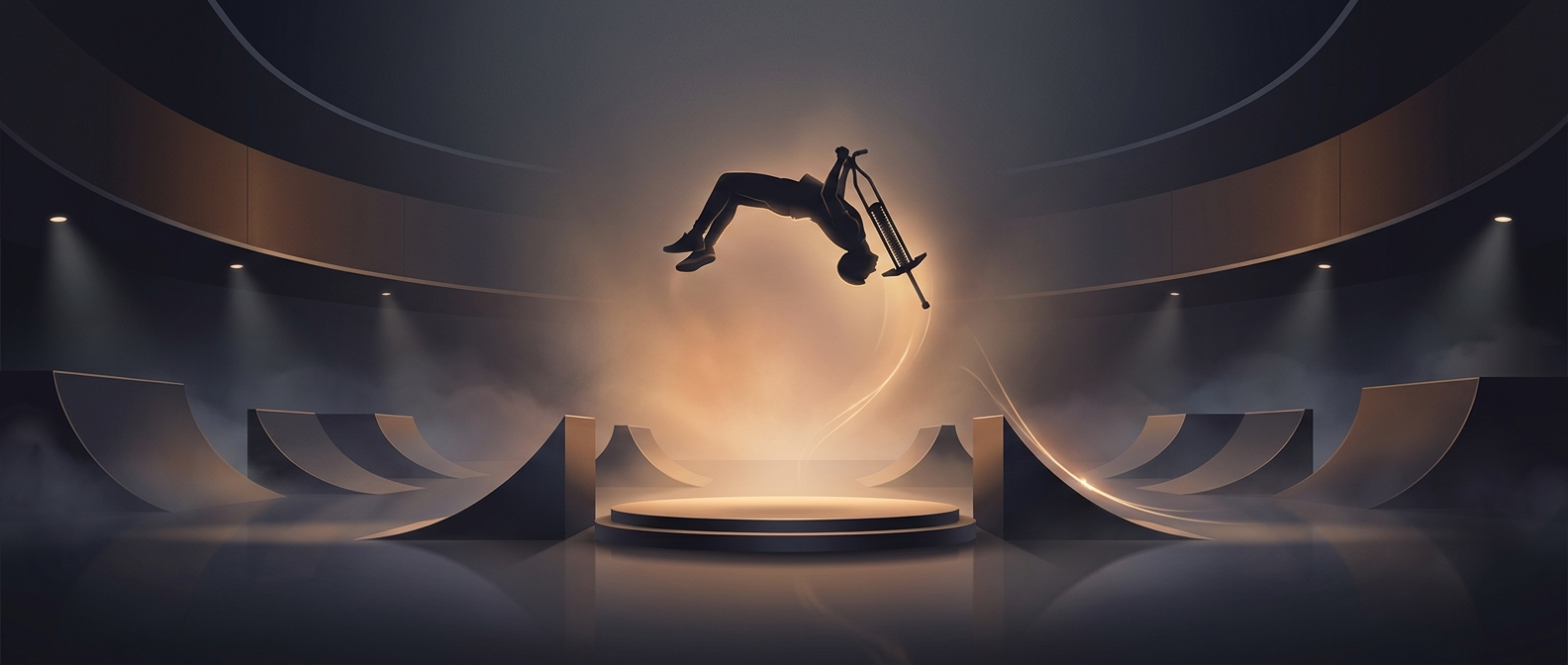
The elegance came from control, not from the device doing the dancing on its own. A performer had to keep the stick upright, time each landing and push-off, and guide the handle while the spring compressed and released. Small changes in posture and timing could make a sequence look smooth rather than like a series of uncontrolled hops.
The performer supplies the rhythm
In a dance routine, the spring acts as a mechanical partner: it stores some energy as it compresses, then returns that energy as it expands. The floor provides the firm surface needed for each cycle. The performer still determines the beat and direction, so the same bouncing action can be made to look deliberate and graceful.
That combination explains why the pogo stick could serve as more than a novelty jumping device. Its engineering offered a repeatable motion; choreography gave that motion shape. The striking idea is that an ordinary landing—usually the end of a step—could become the spring-loaded beginning of the next one.