Featherwork made political power visible
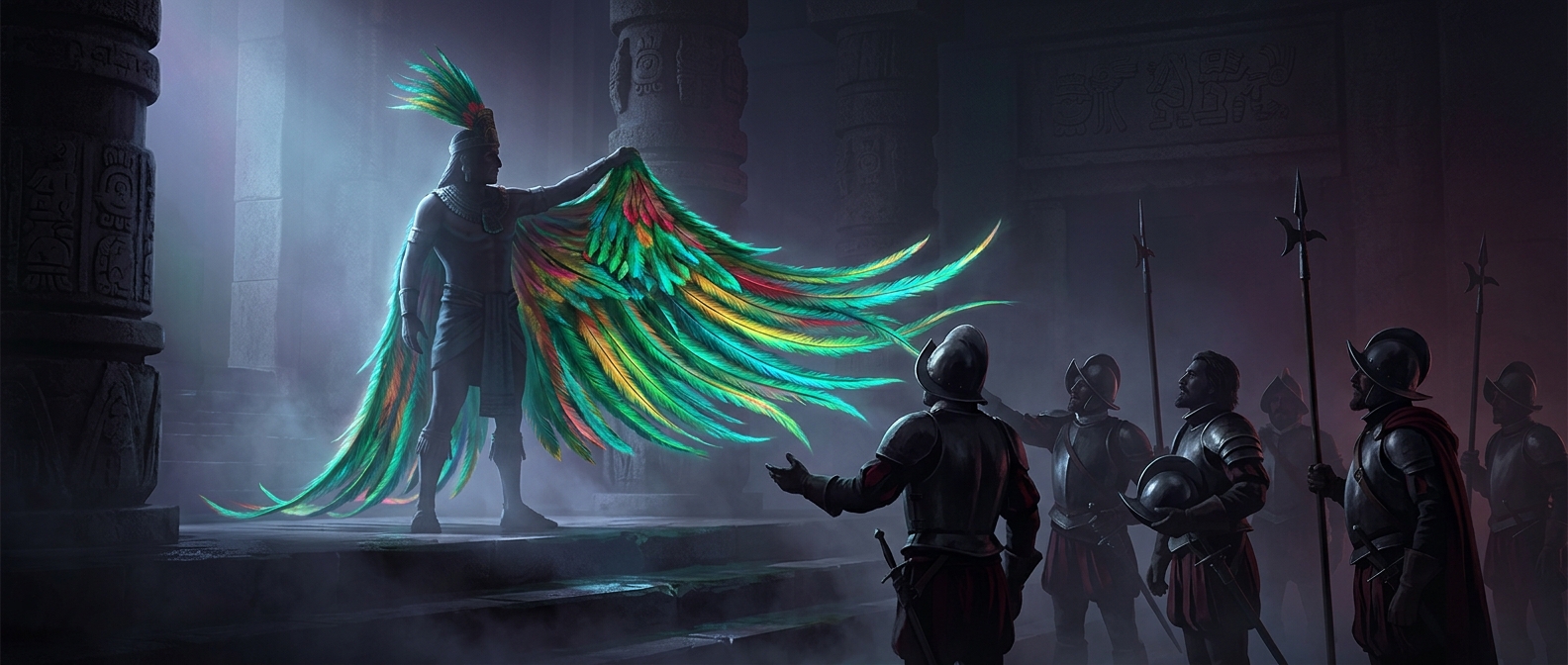
A quetzal feather was valuable partly because it came from a brilliant bird associated with distant, tropical regions. Getting such feathers to the Mexica capital required long-distance networks of tribute and exchange. Skilled featherworkers—known in Nahuatl as amanteca—set feathers into shields, headdresses, and other objects, turning scarce natural materials into intricate works of art.
That craftsmanship mattered. A feathered gift could display access to faraway resources, the labor of specialists, and the authority to command both. Its significance was not simply that feathers were pretty or rare: the finished object made political reach tangible.
A gift could carry a message
In Mexica diplomacy, valuable presents helped express rank and relationships. The meaning depended on who gave an object, who received it, and the occasion. Moctezuma’s featherwork gifts to the Spaniards could therefore be read as acts of royal generosity and status—not just as goods offered for their material worth.
Gold also had value in Mexica society; the contrast was not that one side cared about precious things and the other did not. But the Spaniards’ search for gold made them especially attentive to metal as wealth they could take away. They could recognize the feathers’ beauty while missing the political language attached to the gift.
Two measures of value, one encounter
The mismatch mattered because an object can be both a possession and a statement. To the giver, an elaborate featherwork piece could embody skilled labor, far-reaching connections, and a ruler’s standing. To a recipient focused on bullion, its most important meaning might be harder to see—and its value harder to convert into the kind of wealth he wanted.
That gap helps explain why the gifts could impress without producing mutual understanding: the same object announced power in one political world and looked like a less useful prize in another.