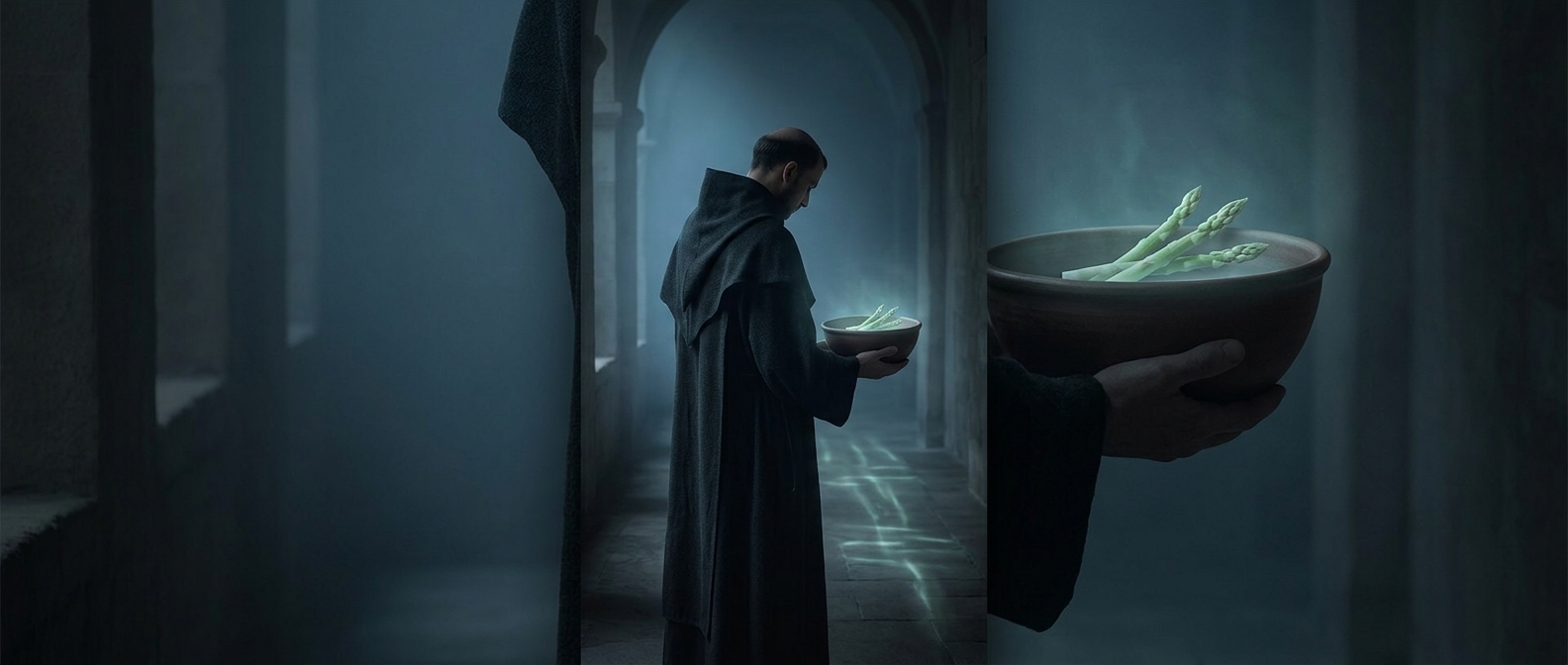
Austerity at the Table in John of the Cross’s Monastery
Reports that John of the Cross ate bitter asparagus and little bread describe more than an unusual menu. In the religious life he practiced, choosing simplicity and going without comforts could be part of asceticism: a deliberate discipline meant to loosen the hold of appetite and keep attention on prayer. A plain meal made that discipline tangible, repeated day after day rather than reserved for a dramatic moment.
The detail also belongs to a period when John was writing and taking on responsibilities in the Carmelite community. It suggests that leadership and literary work did not necessarily come with a comfortable private life. But a report about a particular food should not be mistaken for a complete account of his diet or a precise record of what he ate every day; the surviving anecdote gives a glimpse, not a menu.
A Small Detail, Not a Recipe for Mysticism
John’s spiritual writing is not explained by hunger, and the asparagus itself was no mystical ingredient. The point is the practice the meal represents: accepting material plainness as part of a religious commitment. That distinction matters. It lets the story illuminate the discipline surrounding his work without reducing his ideas to deprivation—or treating a reported meal as proof of a particular spiritual state.
The memorable contrast is between a demanding inner life and an unremarkable, austere table: even during periods of writing and leadership, comfort was not necessarily the measure of importance.