Why Liquid Bromine Releases a Visible Cloud
A liquid does not need to boil to enter the air. At its surface, some molecules are always moving fast enough to escape into the space above it. Bromine’s molecules do this readily at ordinary indoor temperatures, creating a substantial amount of vapor without the liquid reaching its boiling point. Boiling is only one route into the air—not a requirement for evaporation.
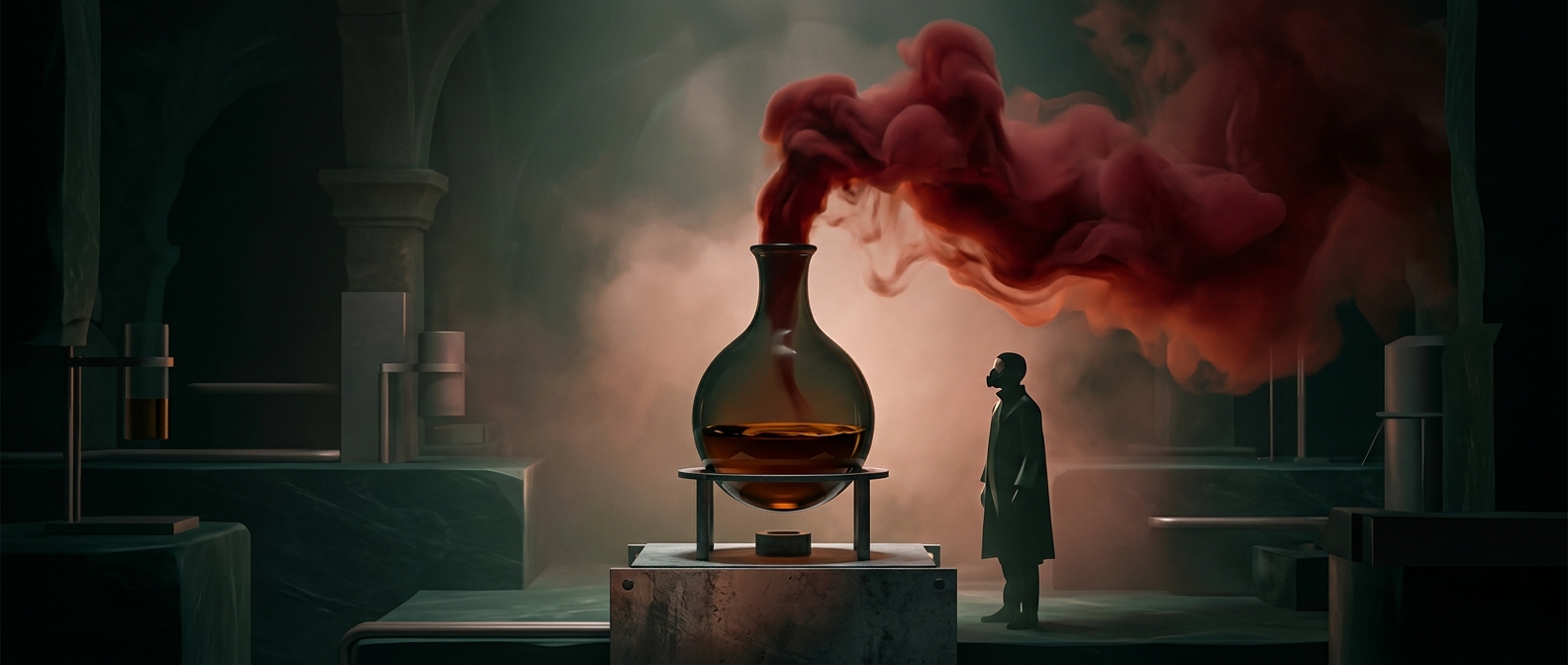
The reddish-brown color comes from bromine vapor absorbing some colors of visible light and allowing others to pass through. That makes a leak unusually easy to see, but the visible plume is not a reliable measure of how much bromine is present: dangerous vapor can extend beyond what looks like a dense cloud.
Why a Spill Can Escalate Quickly
When liquid bromine spreads across a floor or other surface, more of it is exposed to the air. Molecules continue escaping from that enlarged surface, so a spill can replenish vapor as it disperses. In an enclosed or poorly ventilated space, the vapor can build up rather than being diluted quickly.
Bromine is hazardous because it can injure tissue on contact and irritate or damage the eyes and respiratory system when inhaled. Its corrosive action also makes a cloud dangerous to nearby materials and equipment. The crucial practical point is that a pool that looks stable is still feeding the air above it; handling a bromine release is a containment and emergency-response problem, not a matter of waiting for the liquid to boil away.