Why methane can flow on Titan
Titan’s surface is cold enough for methane to behave the way water does on Earth: it can pool as a liquid rather than quickly escaping as gas. The moon also has a substantial atmosphere, so methane can move between air and ground. Sunlight warms the surface unevenly, helping methane evaporate; higher in the atmosphere, it can form clouds and return as rain.
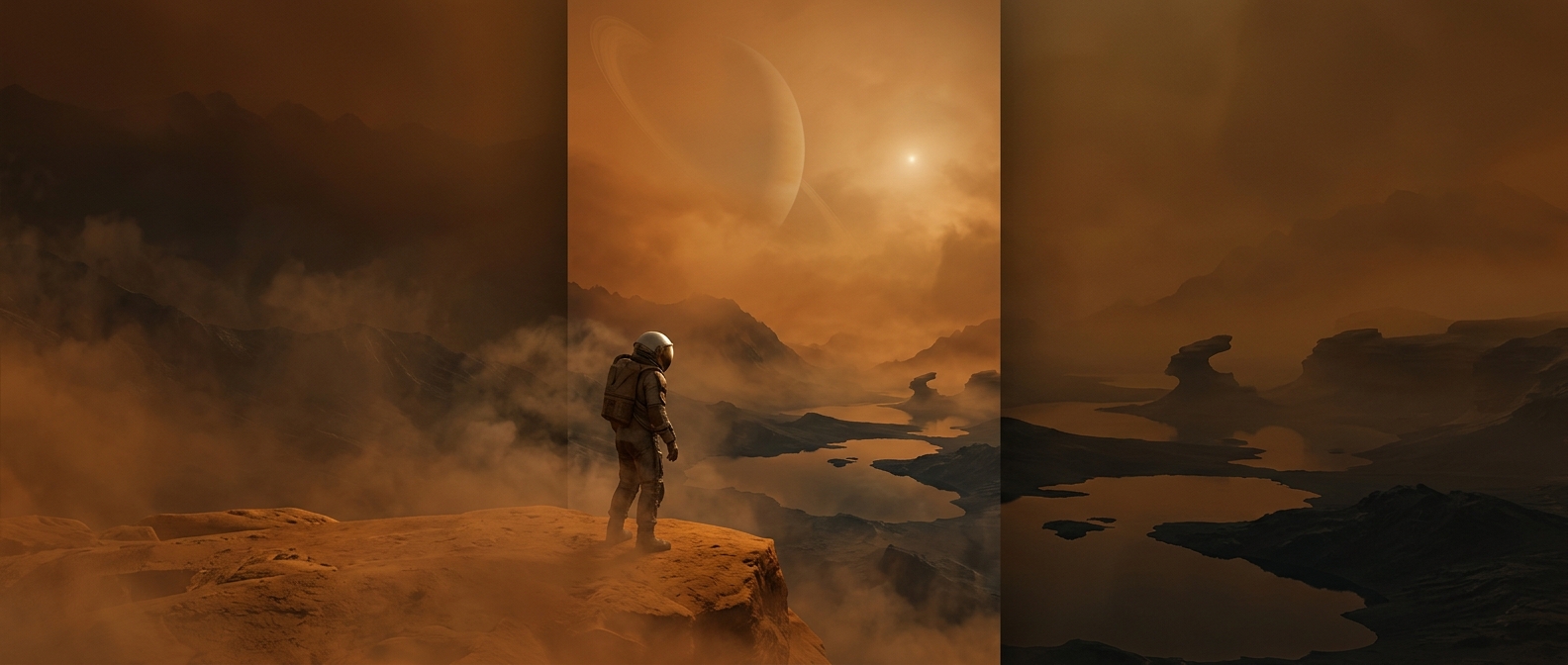
That rain does more than fill lakes. Flowing liquid cuts channels into the ground and carries sediment downhill, shaping shorelines and drainage networks. Titan’s lakes and seas are concentrated mainly near its poles, where the climate favors surface liquids. Some contain ethane as well as methane, because atmospheric chemistry converts part of the methane into other hydrocarbons.
A landscape built by a different liquid
On Earth, water is the main agent that wears down rock and gathers in rivers and lakes. On Titan, liquid hydrocarbons play that role, while water is frozen into a hard surface material. The result is not simply an icy moon with puddles: it is a world whose clouds, rainfall, runoff, and lakes are governed by methane.
That reversal makes Titan useful for understanding how landscapes can develop under unfamiliar conditions. Its channels and lake margins show what a liquid cycle can do even when the liquid is not water—and what the terrain might look like when the familiar substance is locked solid beneath your feet.