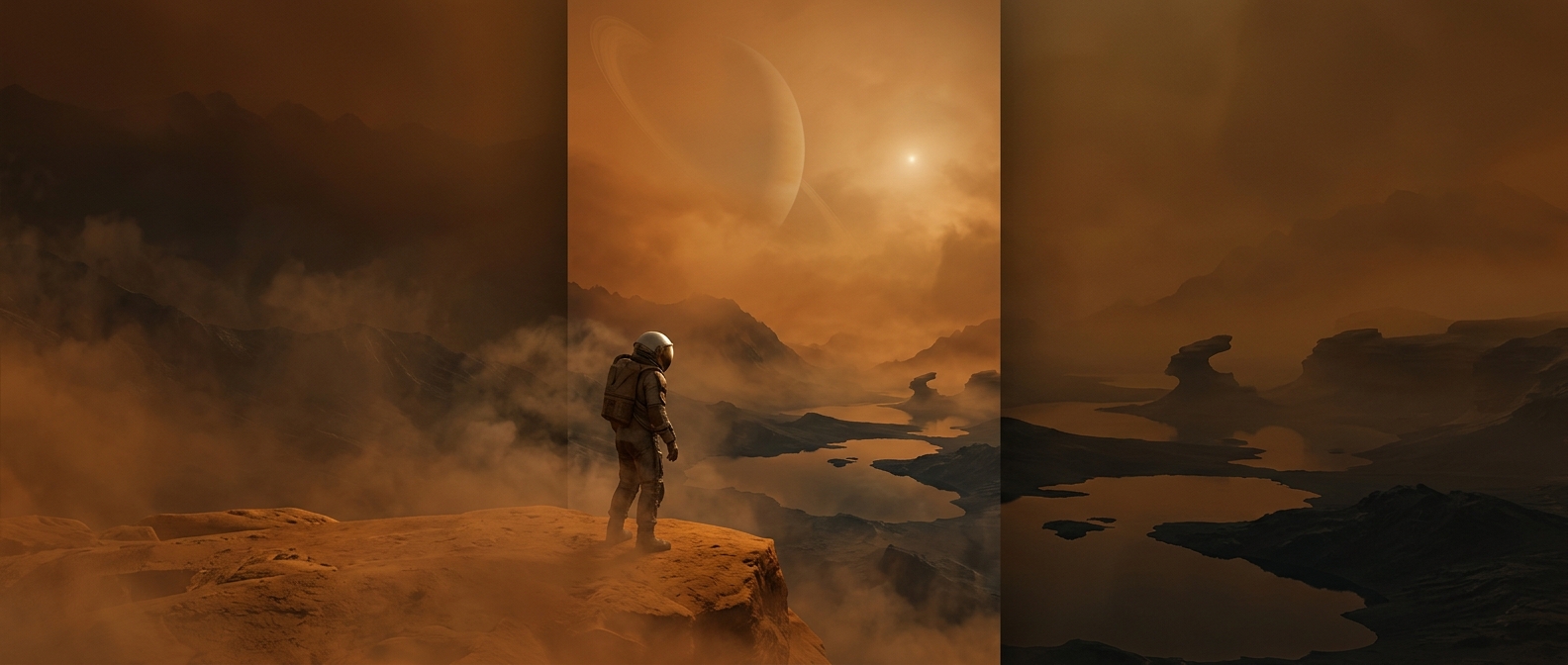
Why Titan’s air is unusually easy to push against
A wing flies by redirecting air downward. The air pushes back, creating lift; the denser the air, the more force a wing can generate at a given speed. Titan’s atmosphere is roughly four times as dense as Earth’s at the surface, so a wing can get substantial lift without moving as fast or needing as much area.
Titan’s weak gravity helps, too. Its surface gravity is only about one-seventh of Earth’s, so a flying machine—or a person—would need less lift to stay aloft. Together, thick air and low gravity make flight unusually forgiving by planetary standards.
Flight-friendly does not mean life-friendly
Titan’s air is mostly nitrogen, with methane among its other constituents; it does not contain breathable oxygen. The surface is also bitterly cold, around 94 kelvins (−179°C). A person would still need a sealed, heated suit and an oxygen supply, regardless of how easily a wing could stay up.
The contrast is the striking part: on Titan, the atmosphere can make the mechanics of flight easier while making unprotected human life impossible. The same air that gives wings plenty to work with is not air a person can breathe.