stackyFACTS
Science

Brown dwarfs are stars that never ignited

HERE’S THE INTERESTING PART

Imagine gathering immense amounts of cosmic gas and just entirely giving up right before the finish line. These tragic celestial objects are too massive to be classified as normal gas giants but completely lack the internal mass to trigger self-sustaining nuclear fusion. They just sit in the endless dark, weakly glowing, serving as the universe's most dramatic underachievers.
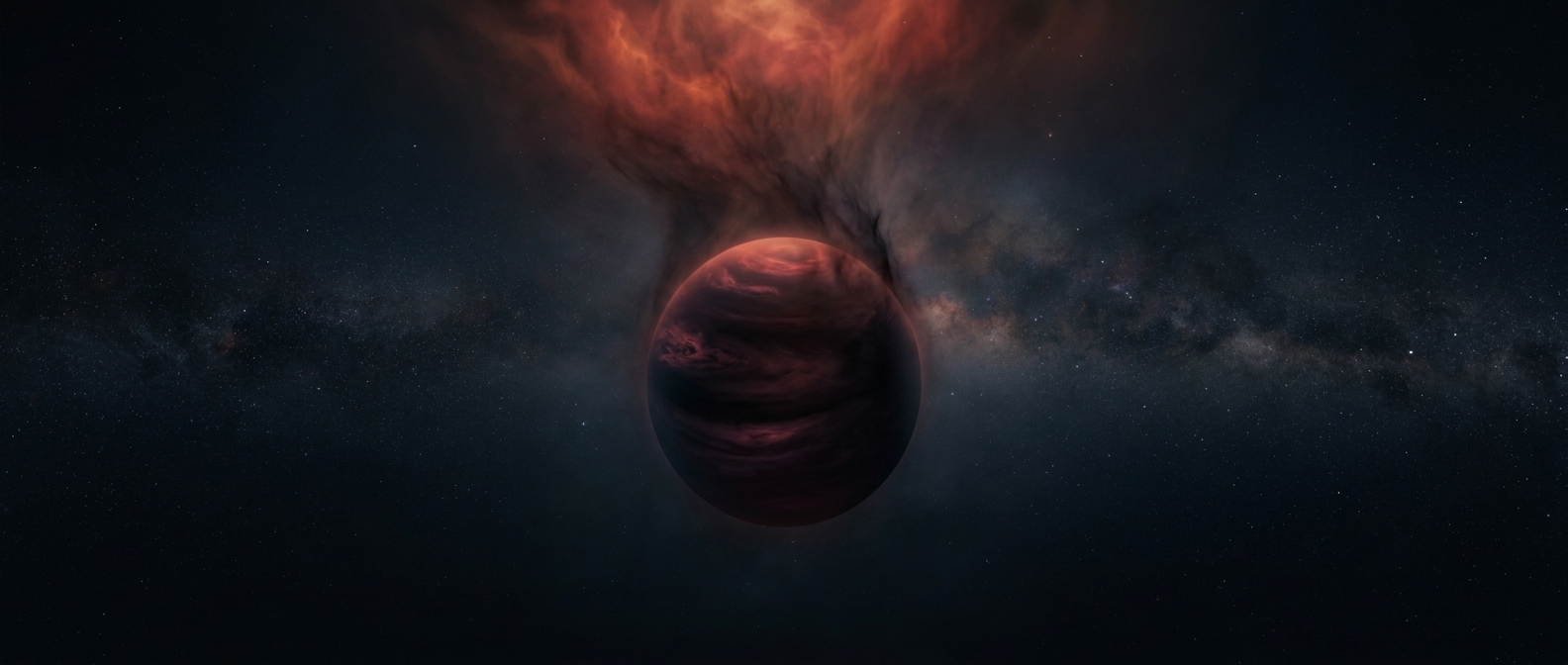
Brown dwarfs are stars that never ignited
STACKY / Science
One discovery leads to another.

Keep exploring facts in this topic.

Science →

STACKY FOR IPHONE

A bigger world.
One discovery
at a time.

Keep discovering with Stacky. Interesting facts in an app that is always within reach.

Download on the App Store
ONE MORE DISCOVERY?

Keep exploring

All in this topic →
Jupiter acts as a massive cosmic vacuum cleaner for the solar system, using its immense gravitational field to suck up or deflect dangerous asteroids and comets away from Earth.
Science

Jupiter acts as a massive cosmic vacuum cleaner for the solar system, using its immense gravitational field to suck up or deflect dangerous asteroids and comets away from Earth.

Jupiter acts as a massive cosmic vacuum cleaner for the solar system, using its immense gravitational field to suck up or deflect dangerous asteroids and…

Discover more
Uranus has rings that point straight at us
Science

Uranus has rings that point straight at us

Saturn gets all the glory, but Uranus has its own set of rings that run completely vertically. Because the planet is knocked on its side, its ring system…

Discover more
Uranus completely lacks any internal heat source
Science

Uranus completely lacks any internal heat source

It is officially the most boring, dead gas giant in the neighborhood. While Jupiter and Saturn radiate vast amounts of internal energy left over from their…

Discover more
Uranus genuinely smells like rotten eggs due to the massive concentration of hydrogen sulfide in its upper atmospheric layers.
Science

Uranus genuinely smells like rotten eggs due to the massive concentration of hydrogen sulfide in its upper atmospheric layers.

Uranus genuinely smells like rotten eggs due to the massive concentration of hydrogen sulfide in its upper atmospheric layers. Astronomers used sophisticated…

Discover more
Why the Moon always shows us the same face
Science

Why the Moon always shows us the same face

The moon is perpetually giving us the cold shoulder by being tidally locked to our planet. It takes exactly the same amount of time to rotate once on its axis…

Discover more
Some stars orbit so closely they steal material
Science

Some stars orbit so closely they steal material

Being a solitary star is entirely too peaceful for some stellar masses. Many bright points in the sky are actually two massive suns violently trapped in each…

Discover more
StackyMore discoveries in the app
Download on the App Store