How an icy world can erupt without lava
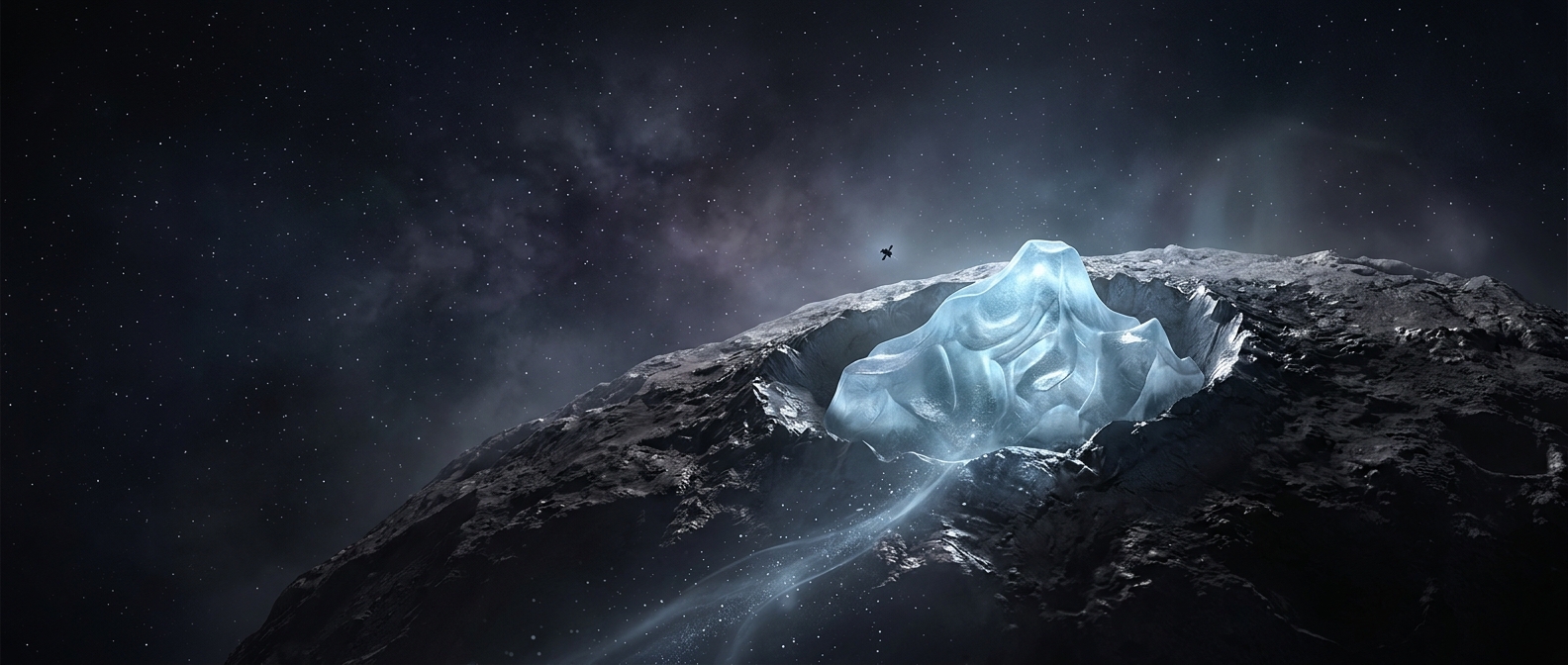
On a small, frigid world, water behaves less like a familiar surface liquid and more like rock. The ground is frozen, but warmth and pressure beneath it can keep water or a salty mixture—called brine—liquid. If that material finds a crack or weak spot, pressure can force it upward in an eruption. Scientists call this kind of ice-based volcanism cryovolcanism.
The erupted material may be liquid, slushy, or vapor carrying ice grains. In the near-vacuum of space, exposed liquid can boil or freeze quickly. The result spreads across the surface and hardens into deposits of ice, rather than cooling into the dark rock formed by an ordinary volcano.
What builds the volcanic-looking terrain
Repeated eruptions can pile up frozen material around an opening or lay it across nearby ground. Over time, those deposits can make a dome, mound, or broad, smooth plain that resembles a volcanic feature. The resemblance comes from the way the terrain was built, not from molten stone: the erupting substance is water-rich material.
A surface deposit is also a clue to what may lie below. If liquid water can reach the surface, some source of heat or pressure must help move it through the frozen crust. A possible reservoir beneath the ground could remain active even while the exterior is intensely cold. The eruption itself does not prove that a hidden ocean exists, but it gives researchers a way to investigate how material might circulate inside an icy world.
A glimpse below the ice
That makes a cryovolcanic feature more than an unusual landform. Its shape and composition can preserve evidence of what erupted and how often, offering clues to the world’s interior without drilling through the crust. A mound of frozen water can therefore mark a place where a seemingly solid, lifeless surface may have been connected to moving liquid underneath.