A menu you can inspect from the sidewalk
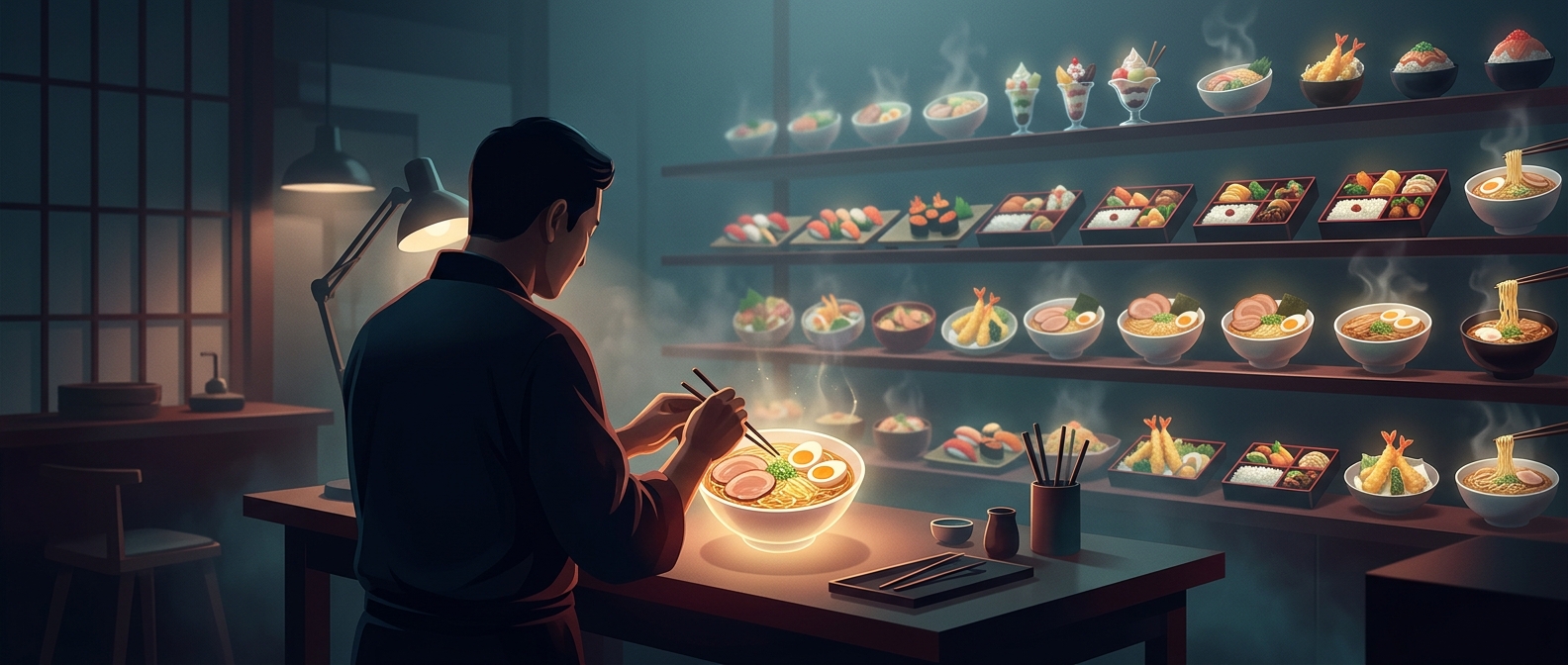
Sampuru—Japanese replicas of prepared dishes—solve a practical problem: a menu can name a meal, but it cannot show its portion, color, or arrangement. In a restaurant window, a model lets passersby compare dishes at a glance, including people who may not know the food’s name. That visibility can help a restaurant turn curiosity into an order.
Making a dish last
A convincing model is not simply a food-shaped prop. Its appeal depends on details diners recognize: the shine on broth, the texture of a noodle, or the uneven edge of a cooked piece. Makers reproduce those cues with molded materials, color, and hand finishing. The work can be highly specific to the dish, which makes the display more useful than a generic picture—but also means each replica takes time and skill to produce.
The restaurant is buying a durable display, not another serving of food. A real dish in a window would spoil, need replacing, and look different from one day to the next. A replica can remain in place for years, preserving the same presentation without refrigeration or waste. Its upfront cost is weighed against that long service life and its role as a silent salesperson.
A small investment with a visible payoff
Sampuru sit where a restaurant meets the street: they make an unfamiliar menu tangible before a customer enters. Their economic value comes from combining craft with repeated use. A carefully made bowl may cost more than a printed menu image, but it can keep communicating the same promise to every passerby, day after day.