A beard, a medical role, and a rare audience
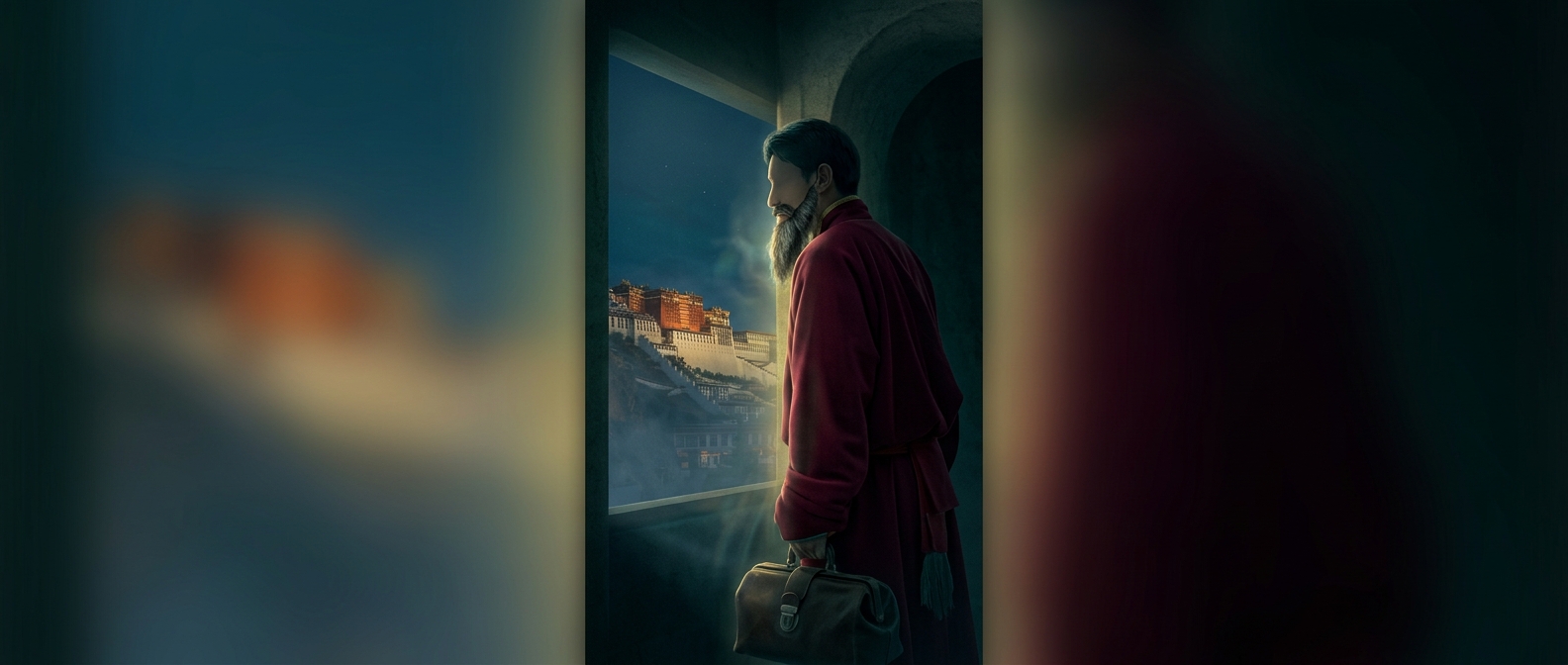
Thomas Manning’s disguise solved a practical problem: a foreign traveler needed a reason to be admitted to a place where outsiders were rarely welcome. In the early 19th century, he made his way to Lhasa posing as a physician. The long beard helped make that identity visible; it was part of a performed role, not proof of medical training.
The claim that he had no real medical credentials matters because “doctor” was his route to access, not an account of his qualifications. A traveler who arrived openly as a foreigner might attract suspicion or be turned away. Presenting himself as someone with useful expertise gave local authorities a more familiar reason to receive him.
From disguise to the Dalai Lama
Manning reached Lhasa in 1811 and was granted an audience with the 9th Dalai Lama, then a child. That meeting was extraordinary not because Manning held official standing, but because he had crossed the social and political barriers that kept most foreign visitors from meeting Tibet’s spiritual leader.
The beard did not, by itself, open the door. It helped support a larger deception—his assumed medical identity—which made an audience seem plausible. The episode shows how, before modern travel documents and diplomatic channels, a traveler’s appearance and claimed occupation could shape whether a journey continued at all. Manning’s access rested on being read as a useful visitor rather than simply an outsider.