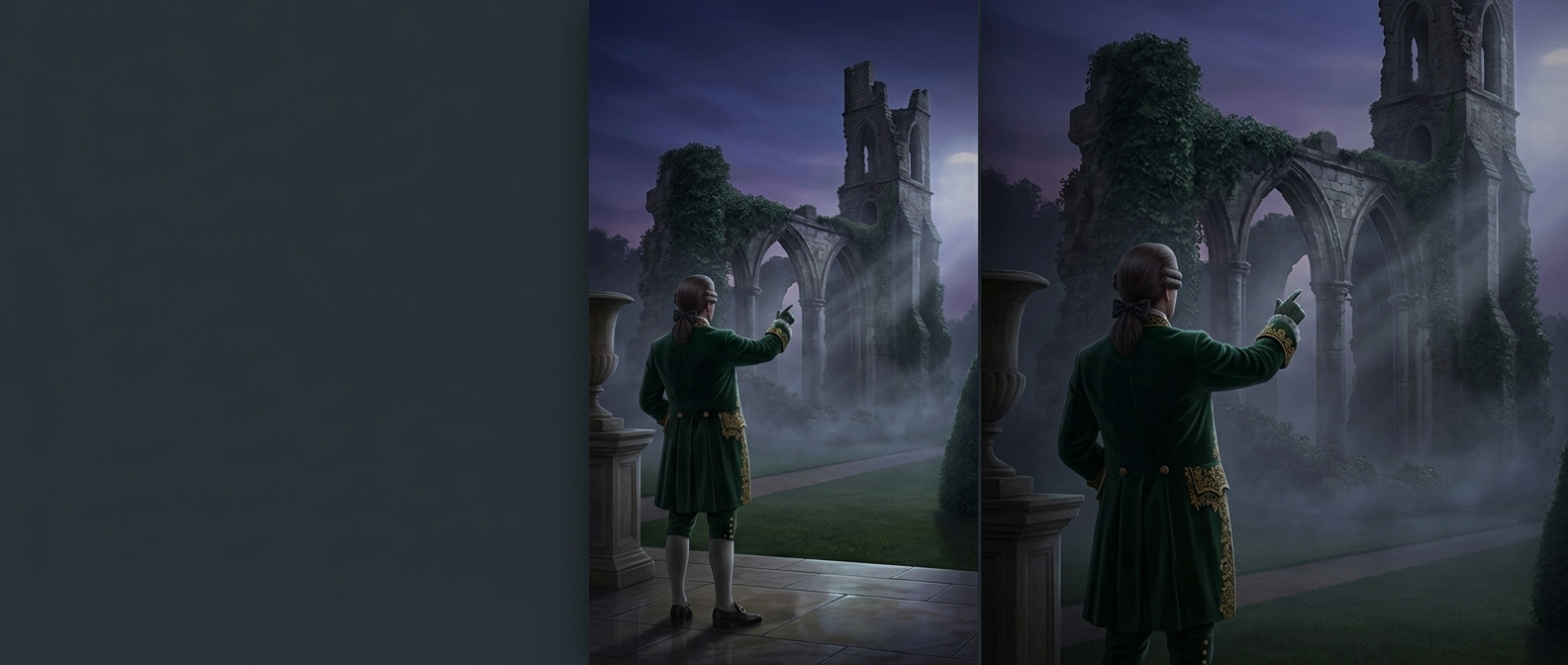
A ruin could be designed like a garden feature
In the 18th century, wealthy landowners reshaped their estates to look less like formal grounds and more like idealized landscapes. A classical temple or broken castle gave a lawn a focal point, but a pristine new building could look too orderly. Designers therefore built structures that appeared weathered, incomplete, or long abandoned. These garden ornaments are often called follies: buildings made chiefly for their visual effect rather than practical use.
What the staged decay was meant to evoke
A sham ruin could suggest a distant past, a dramatic story, or a picturesque scene encountered in the countryside. Its rough edges and missing sections contrasted with the clipped hedges and planned paths around it. The contrast made the estate seem both carefully composed and touched by time.
The effect depended on placement as much as appearance. A ruin might be framed at the end of a path, glimpsed across a pond, or set on a rise. As visitors moved through the grounds, it could appear gradually, like a discovery rather than a building presented all at once.
A manufactured past, with real consequences
These structures reveal how landscape design could turn history into an experience for visitors. The owner did not need an actual medieval fortress or ancient temple; an architectural hint could summon the mood of one. Some follies also offered a place to sit or shelter, but their main purpose was to shape what people saw and felt as they walked.
The result was a deliberate paradox: the garden’s apparent age was part of its newest design.