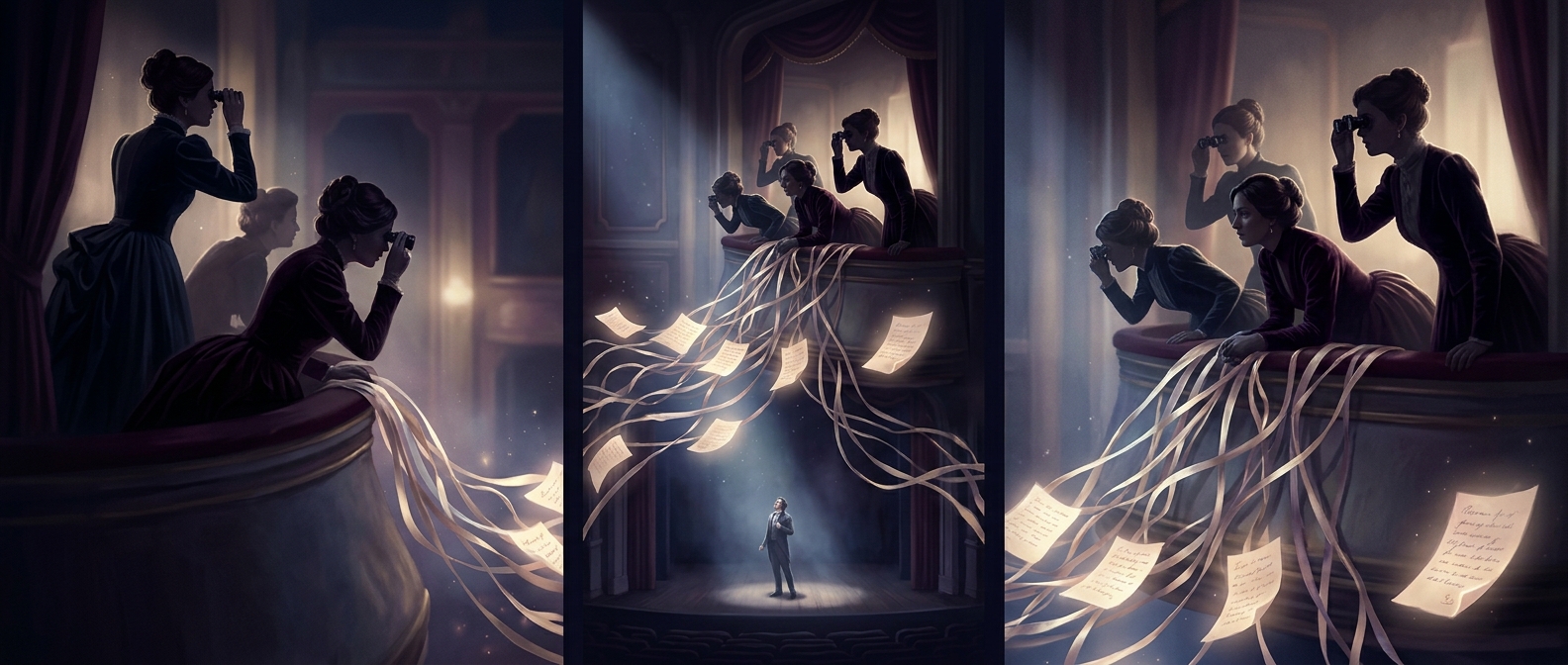
The theater made a performer feel close—and unreachable
In Victorian Britain, a stage actor could become a familiar presence to people who had never met him. Audiences saw performers repeatedly, while newspapers and theatrical publications carried news about their careers. Portrait photographs gave admirers an image to keep and share. Together, these channels turned an evening at the theater into an ongoing interest in a performer’s public life.
Fan clubs made admiration social
Women who admired actors did not have to pursue that interest alone. Fan clubs gave them a way to exchange news, collect portraits, discuss performances, and signal loyalty to a particular star. The club could be a social circle as well as a fan network: members shared an enthusiasm that might otherwise have seemed merely private or frivolous.
Calling these women “respectable” matters. The clubs show that intense celebrity attachment was not confined to a modern youth culture or to behavior considered outside polite society. Admiring a performer could fit within women’s social lives even as it raised questions about the boundary between public attention and personal devotion.
Fame traveled beyond the stage
Actors’ appeal depended on more than acting: appearance, roles, publicity, and the sense of a distinctive personality all helped make a star memorable. But the relationship remained unequal. Admirers could follow a career and gather around a shared image of a performer without having access to his private self. The result was an early form of organized fandom—built from live performance, print, and personal collecting long before online fan communities existed.