How the prompter’s box kept a scene moving
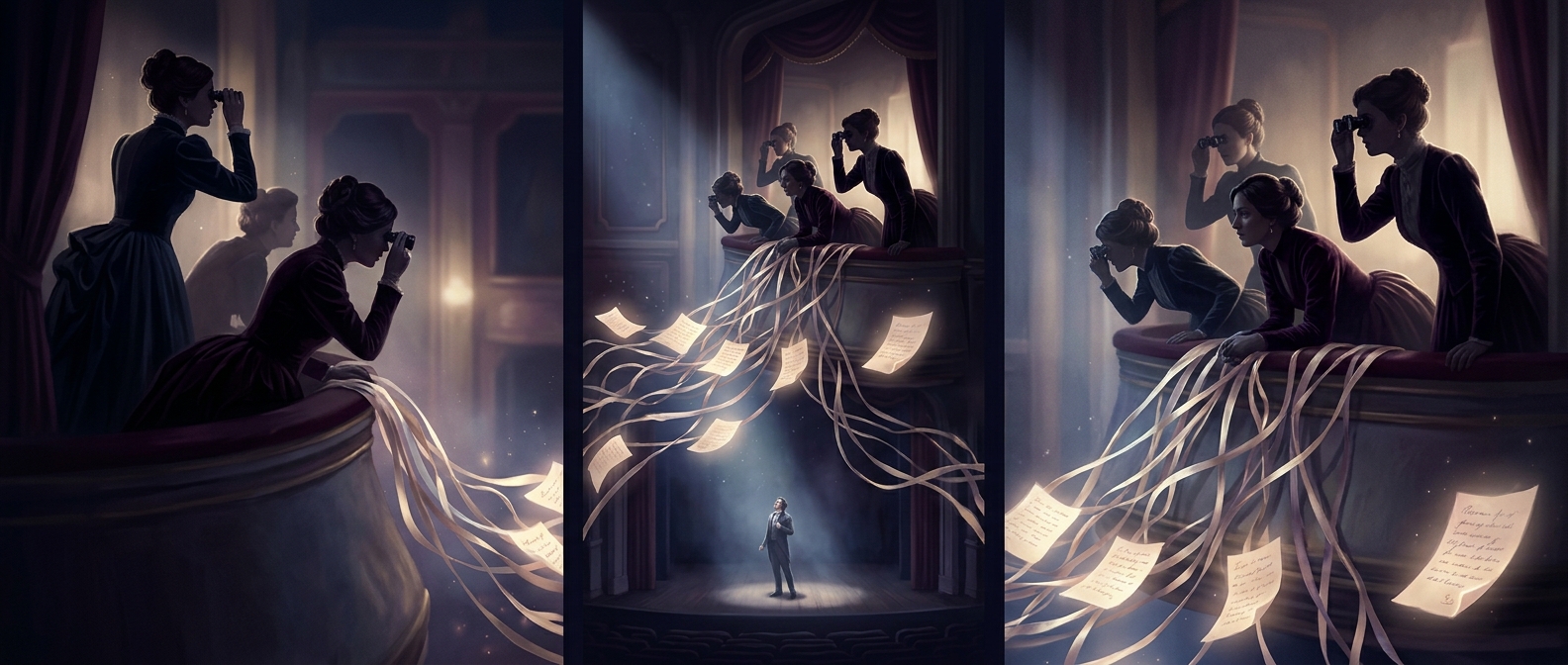
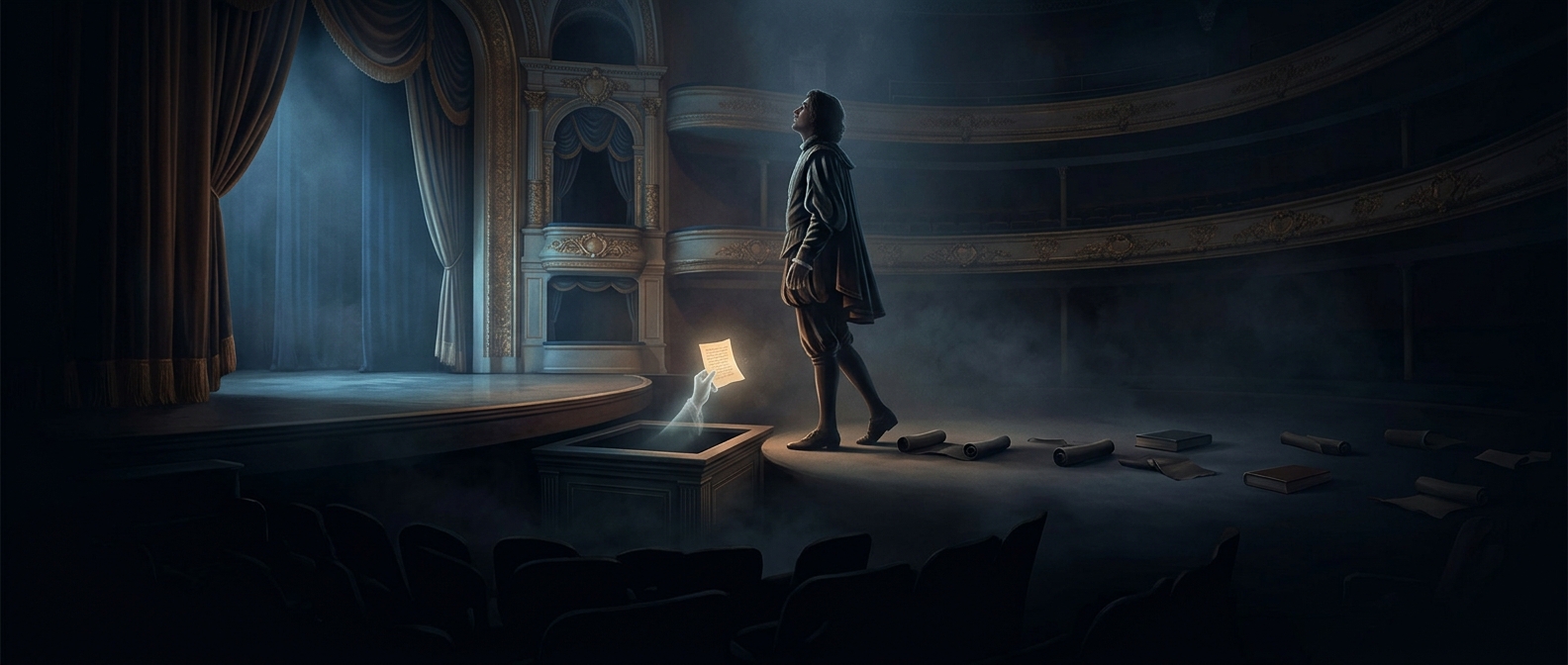
A forgotten line could leave a whole scene stranded. The prompter’s box offered a discreet fix: a small, hooded enclosure near the front of the stage, often positioned among or just behind the footlights. From inside, the prompter followed the script and supplied a missed word or phrase quietly enough that the audience was not meant to notice.
The box solved a practical problem. A person standing openly at the side of the stage would be visible and could distract both actors and spectators. A low enclosure at the stage’s edge let the prompter watch the performance while keeping most of their body out of sight. Its hood directed the prompt toward the actors and helped muffle it from the audience.
A safety net with a delicate job
Prompting was not simply reading the next line aloud. The prompter had to track where the actors were in the script, recognize when someone had lost their place, and offer just enough help for the scene to continue. Too little, and the performer might remain stuck; too much, and the audience could hear the rescue or the actor might lose the thread further.
The arrangement depended on trust and timing. Actors had to catch a low, quick cue without making their response look like a recovery. The prompter was an unseen partner in the performance, supporting the illusion that the action onstage was unfolding without a safety net. The box made that backup person nearly invisible—but not unnecessary.