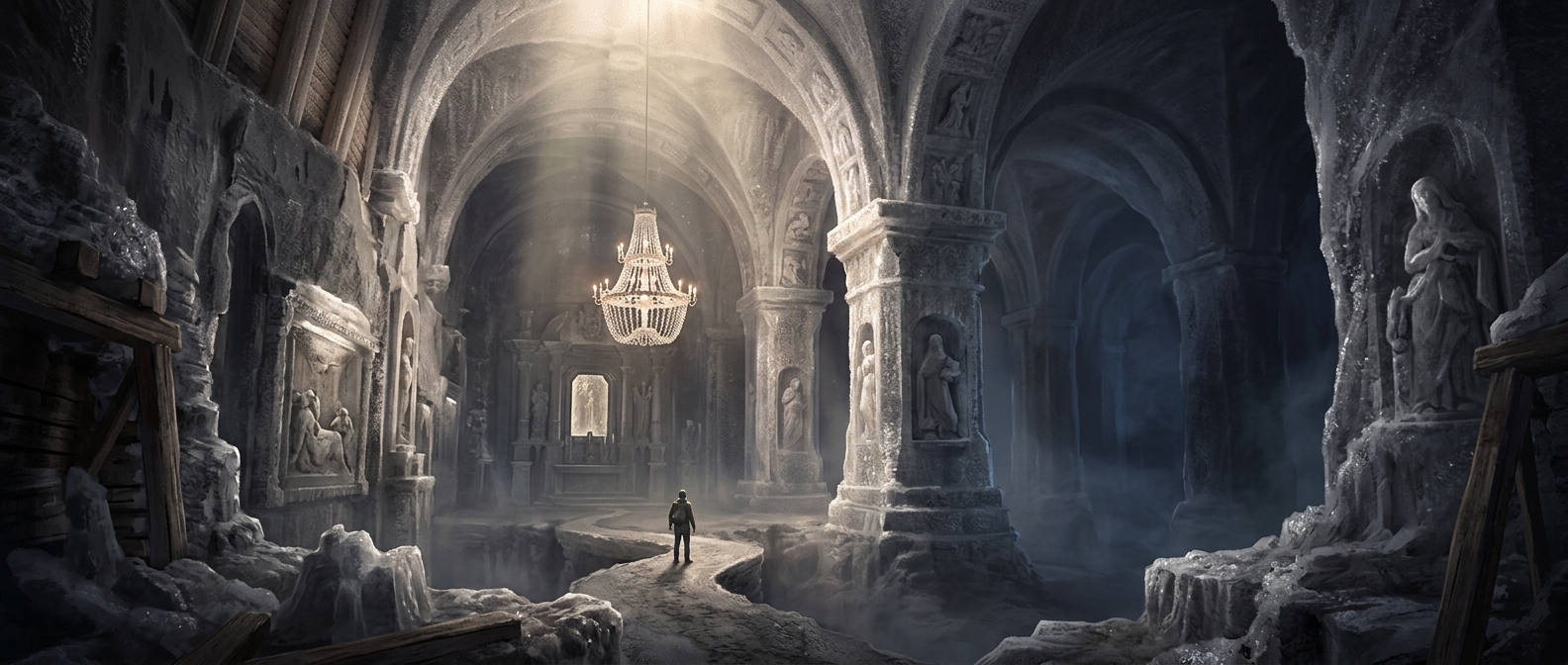
How a working salt mine became an underground sanctuary
At Wieliczka, near Kraków, the cathedral-like chambers grew out of a practical industry. For centuries, miners followed deposits of rock salt—salt left behind as ancient water evaporated—deep beneath the ground. Digging and hauling it away left large spaces underground. Some of those spaces were later shaped into places for worship and gathering, rather than simply abandoned.
That change depended on the miners’ skills. They knew how to work the rock safely and how it behaved under a blade. In their spare time, miners carved religious figures and decorative details directly into the salt walls. The work turned a difficult workplace into a setting where faith, craft, and daily life met.
Salt changes the way the room feels
Rock salt is not always plain white: impurities can tint it, while clear crystals can let light pass through. Carefully cut salt crystals in chandeliers catch and soften the light, making the underground room seem to glow. The effect comes from the material itself, not from painted scenery or a surface replica.
The result is more than an ornate chamber. It records how people made meaning in a place where they spent much of their working lives. The chapel’s art is literally part of the mine: remove the salt around it, and the room—and its sculpted sanctuary—would not exist.**