Why horror comics became a target
In the early 1950s, critics blamed crime and horror comics for encouraging juvenile delinquency. The concern grew into a public backlash against an industry whose lurid covers showed violence and monsters. Rather than face government censorship, comic-book publishers created the Comics Code Authority in 1954, a self-regulatory system that reviewed comics before they went on sale.
The rule that made the undead disappear
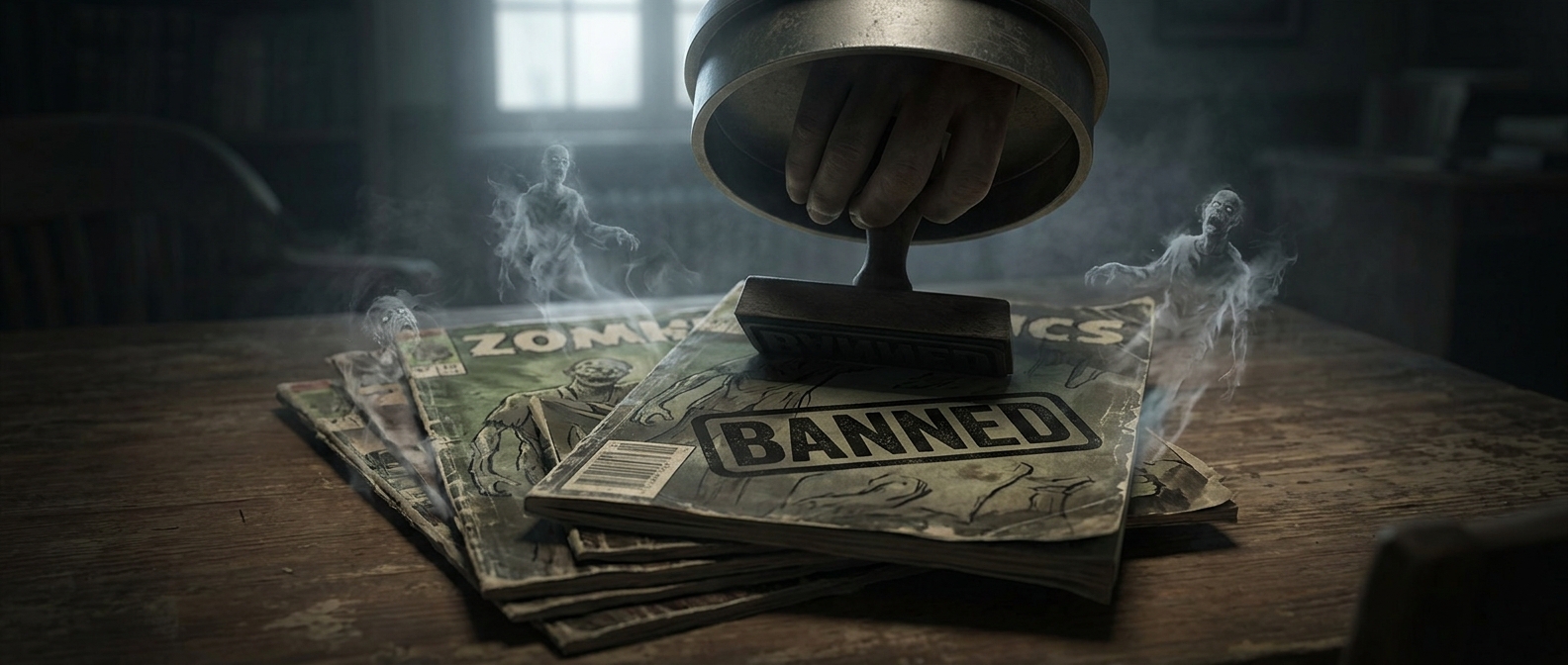
The Code’s restrictions went beyond graphic violence. It prohibited stories featuring vampires, werewolves, and zombies, and also barred the words “horror” and “terror” from comic titles. The rules reflected a broader effort to make comics seem morally safe for children—and to reassure parents, retailers, and distributors who could keep books off shelves.
That left writers with a practical problem: how could a story keep its menace if it could not name its monsters? Creators sometimes used indirect language or presented supernatural events as dreams, tricks, or misunderstandings. But those workarounds could not replace the freedom to build a story openly around the undead.
A ban with a long afterlife
The Code was not a law, but its approval seal mattered commercially. Many retailers relied on it when deciding which comics to stock, so publishers had strong incentives to comply. Over time, publishers challenged and revised the restrictions; in 1971, the Code was updated to allow some horror material under limits, and later revisions loosened the rules further.
The episode shows how a private set of standards could shape an entire genre without making its stories illegal. For years, the undead were not absent because readers had stopped wanting them; they were difficult to publish through the channels that dominated the market.