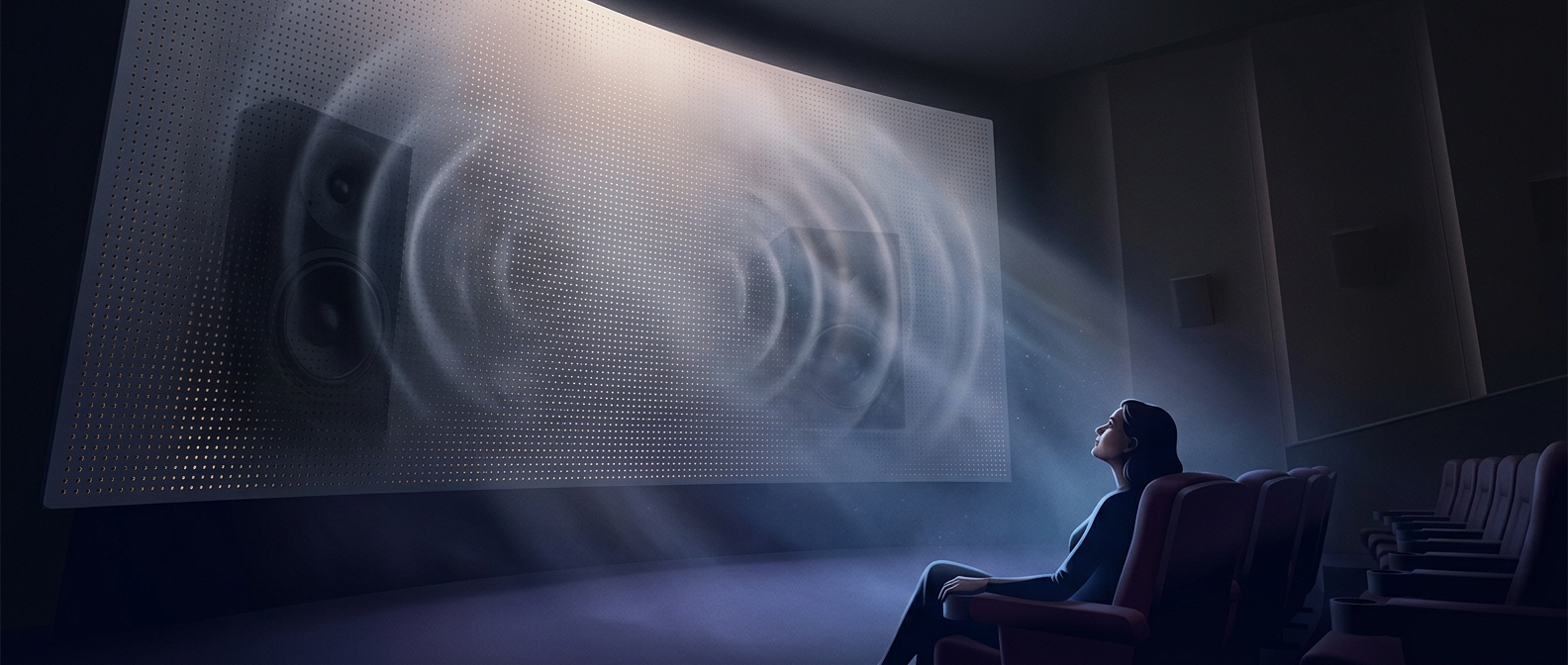
How a Loud Note Can Hide a Quiet One
The effect begins in the ear, not in the file. The inner ear separates sound into bands of frequency, much as a bank of filters would. When a strong tone excites one band, a weaker, nearby tone may make little perceptible difference: the louder sound raises the threshold at which the quieter one can be heard. This is called auditory masking.
The masking is strongest when sounds are close together in pitch, but it can also happen across time. A loud sound may briefly conceal a softer sound just before or after it. The ear is not simply turning the quiet sound off; it is receiving both, while the stronger one makes the weaker detail harder to distinguish.
How Encoders Use the Effect
Some compressed audio formats exploit this limit to save space. An encoder analyzes a short stretch of audio and estimates which details are likely to be masked. It can then represent those details less precisely, or omit some information, while preserving the parts listeners are more likely to notice. The decoder reconstructs sound from the remaining data, so the result is smaller than an uncompressed recording.
This is a tradeoff, not a guarantee that every quiet sound disappears. Masking depends on the sounds’ pitches, levels, and timing, as well as the encoder’s settings. If too much information is discarded, a supposedly hidden detail can become audible as distortion or a faint, watery texture—especially in exposed passages where there is little louder sound to cover it.
The practical consequence is that compression can reduce file size without making every removed detail equally noticeable. It works best when it spends fewer bits on information the ear is least able to separate, rather than treating all parts of the waveform as equally important.