How Loose Leaves Became a Reading Surface
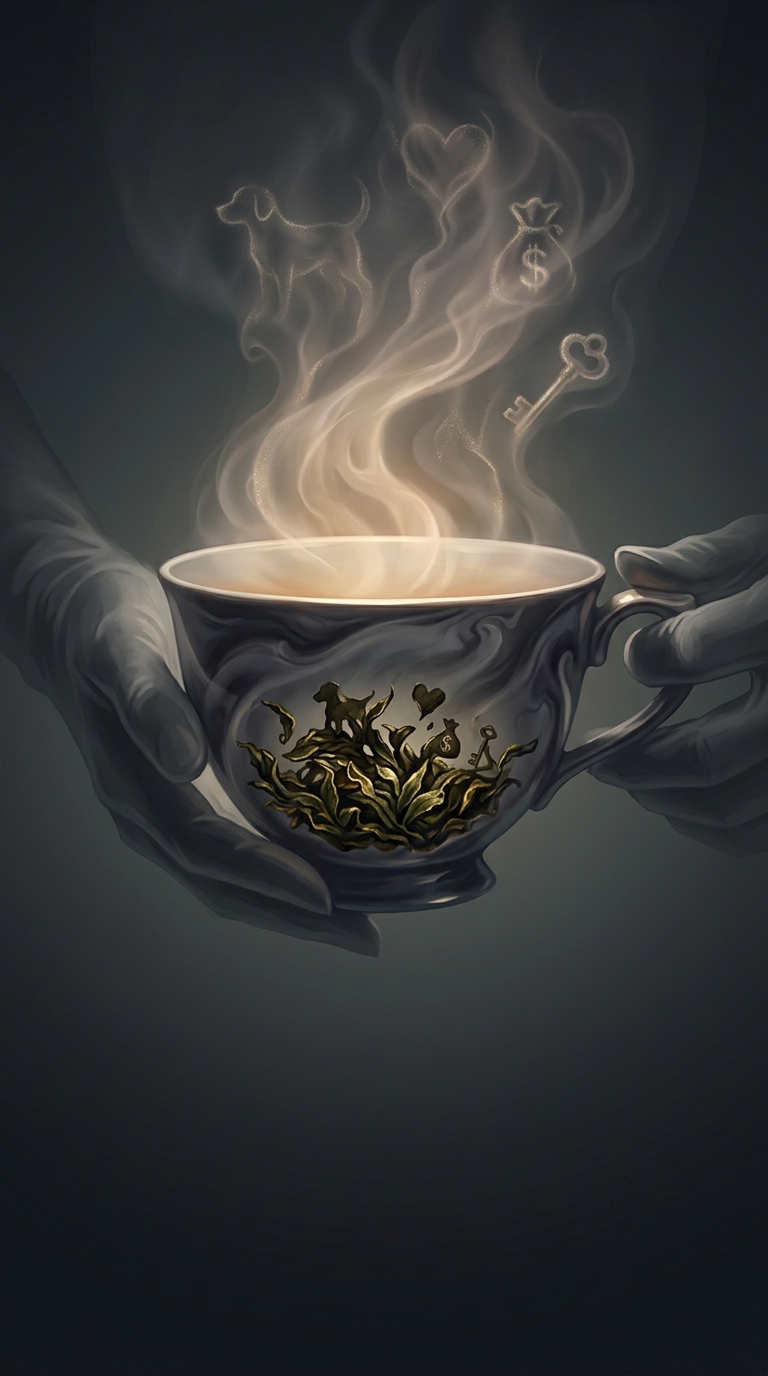
A cup of tea offered an unusual kind of oracle: a pattern that appeared by chance, but could be interpreted in response to a person’s concerns. After drinking, the reader examined the leaves left in the cup, looking for shapes that might suggest people, events, or outcomes. Marriage and money were familiar subjects because they touched everyday hopes and anxieties.
The spread of tea made this practice possible on a larger scale. As imported tea became more available in Europe, more households had the loose leaves—and the leftover residue—that tasseography required. A new everyday drink had also supplied the materials for a domestic form of divination.
From Shapes to Meaning
The leaves did not deliver a fixed message on their own. Their meaning depended on the reader’s interpretation: an indistinct mark could be connected to a question, a person, or a possible future. That flexibility made each reading personal. It also meant that tasseography was not a single, uniform system; interpretations could vary from one reader to another.
This helps explain the practice’s appeal without treating its predictions as established fact. The cup turned uncertainty into something visible and discussable. A person could ask about money or marriage, study the scattered leaves, and make sense of the shapes through the expectations and worries already on their mind. Tea’s spread thus carried more than a beverage into European homes: it created a small ritual in which an ordinary residue could become a prompt for imagining what might come next.