A UV flashlight can change the order of a room
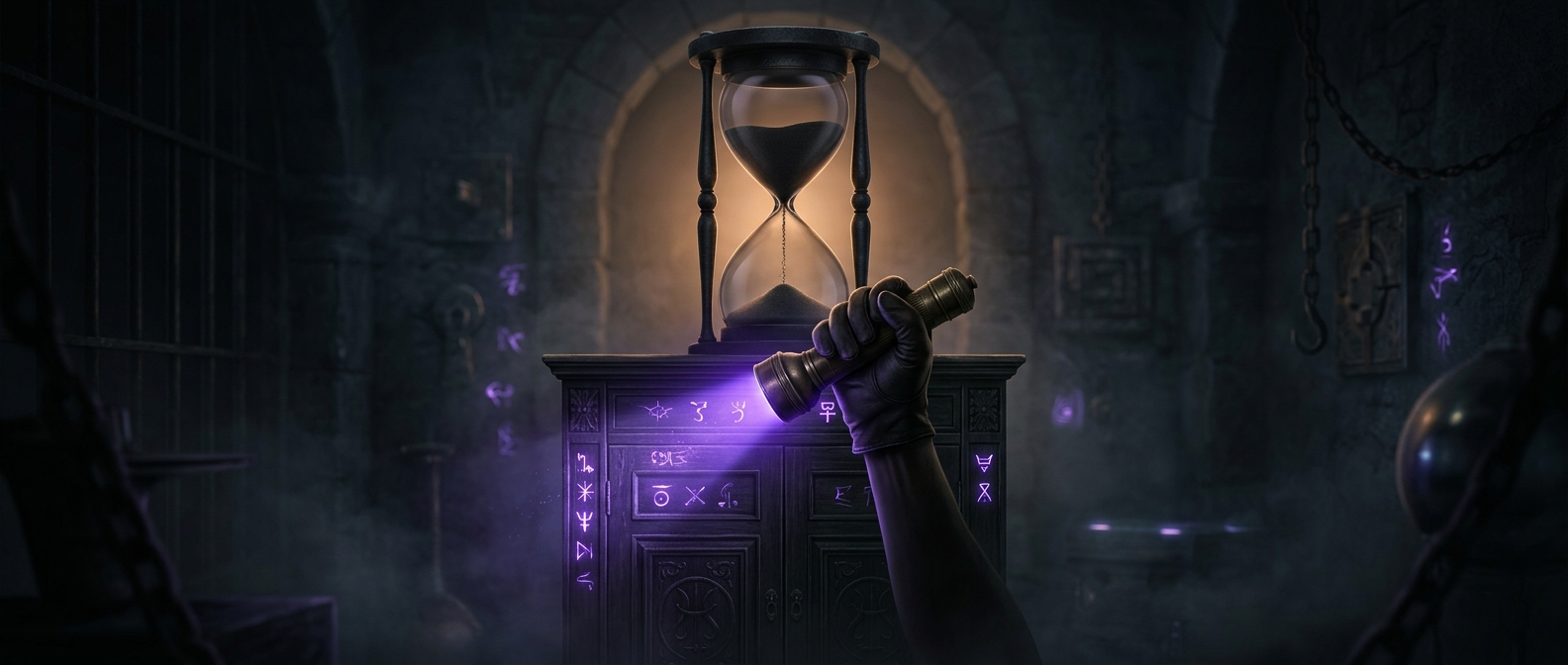
A clue that appears only under ultraviolet light is more than a hidden message: it is a second information channel. Players must first notice or obtain the flashlight, then decide where to shine it. If the beam can reveal writing on many surfaces, every prop becomes a possible target—even objects that matter only much later.
That can turn a logic puzzle into a search problem. Instead of comparing clues and testing a theory, players may sweep the room with the light, hoping to uncover something useful. The game master can delay access to the flashlight so the group encounters the room’s ordinary clues first and has a better chance to understand the puzzle’s intended structure.
Timing protects the puzzle’s sequence
Escape rooms often rely on discoveries building on one another. An early clue points toward a lock; opening it reveals an object or instruction that makes a later clue meaningful. A UV message found too soon might skip that chain, or appear so cryptic that players cannot tell whether it matters yet.
Holding back the light lets the game master introduce it when the search has a purpose—for example, after players have solved a related step or have reason to inspect a particular area. The tool then rewards their progress rather than inviting an indiscriminate scan.
Access is part of the design
Rationing does not necessarily mean the light is scarce in the story. It can be a way to manage attention, keep simultaneous puzzles from collapsing into one hunt, and preserve the moment when a hidden clue becomes legible. The flashlight controls not just what players can see, but when they are ready to make sense of it.