How puzzle layout can keep one player from taking over
An escape room’s puzzle order shapes more than the route to the exit: it shapes who gets to participate. In a linear design, one clue unlocks the next, so the group often gathers around a single problem. A quick, confident player can become the default solver while everyone else waits for the next step.
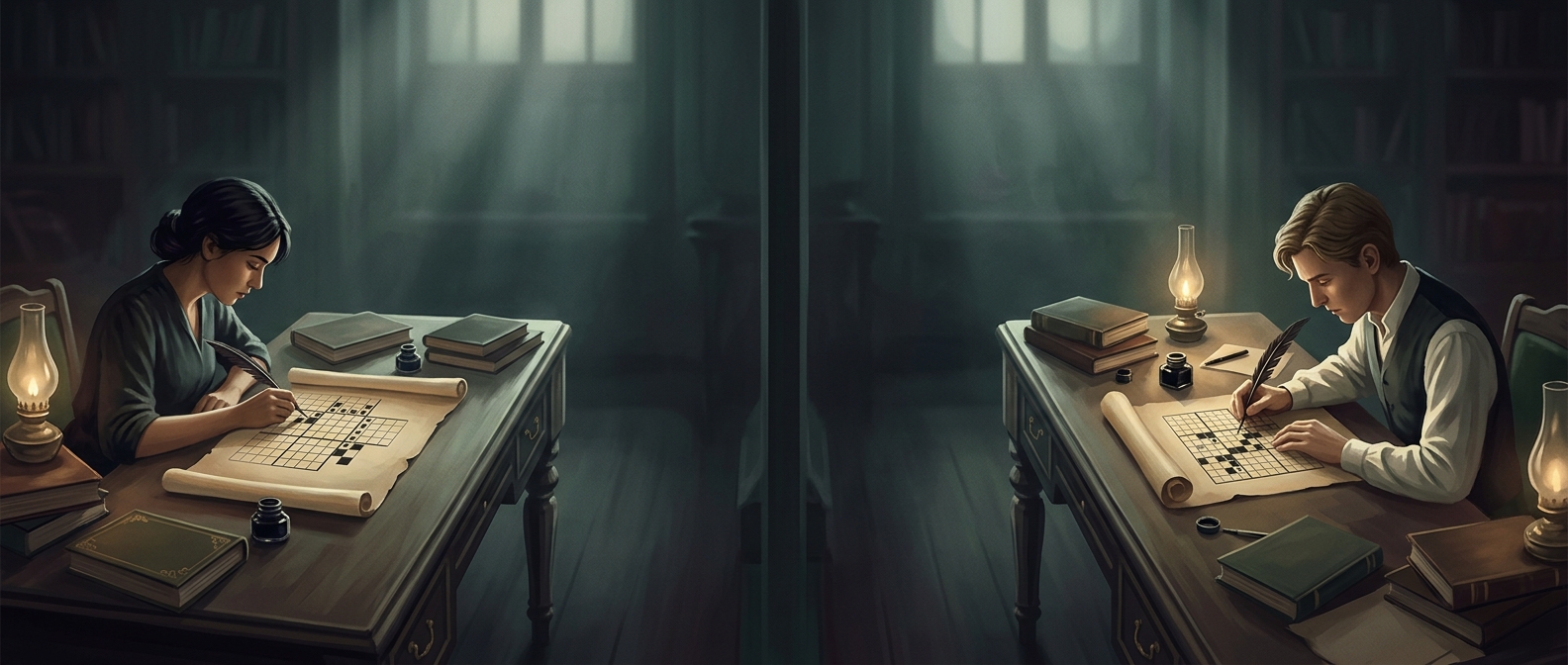
A parallel design gives players several independent strands to pursue at once. “Independent” means progress on one strand does not have to wait for another. While one person tests a physical mechanism, others can examine a code or search for a separate clue. The challenge is no longer only solving puzzles; it is noticing that the work must be divided and sharing useful discoveries across the room.
The room becomes a coordination problem
This does not guarantee equal participation. A dominant player can still issue orders or grab every clue. But the layout raises the cost of doing everything alone: attention is limited, different tasks may demand different kinds of observation or hands-on testing, and progress stalls if nobody takes responsibility for a strand. The quieter player who spots a pattern or reports a result can become essential to the group’s progress.
Designers also need to manage the handoff. If parallel puzzles never reconnect, players may feel they are completing unrelated activities. A later bottleneck—a stage that depends on results from multiple strands—gives the group a reason to bring those findings together. The structure then moves from splitting up to pooling information.
The key design choice is not simply adding more puzzles. It is arranging them so that several people can make meaningful progress at once, but the group still has to combine what they learn. That turns cooperation from a polite suggestion into part of the puzzle itself.