When the audience seems to disappear
In a bright room, other people’s faces are easy to read—and easy to imagine reading yours. A glance, a pause, or a change in expression can feel like feedback, even when no one is judging you. That awareness can make ordinary actions, such as speaking or moving, feel like performances.
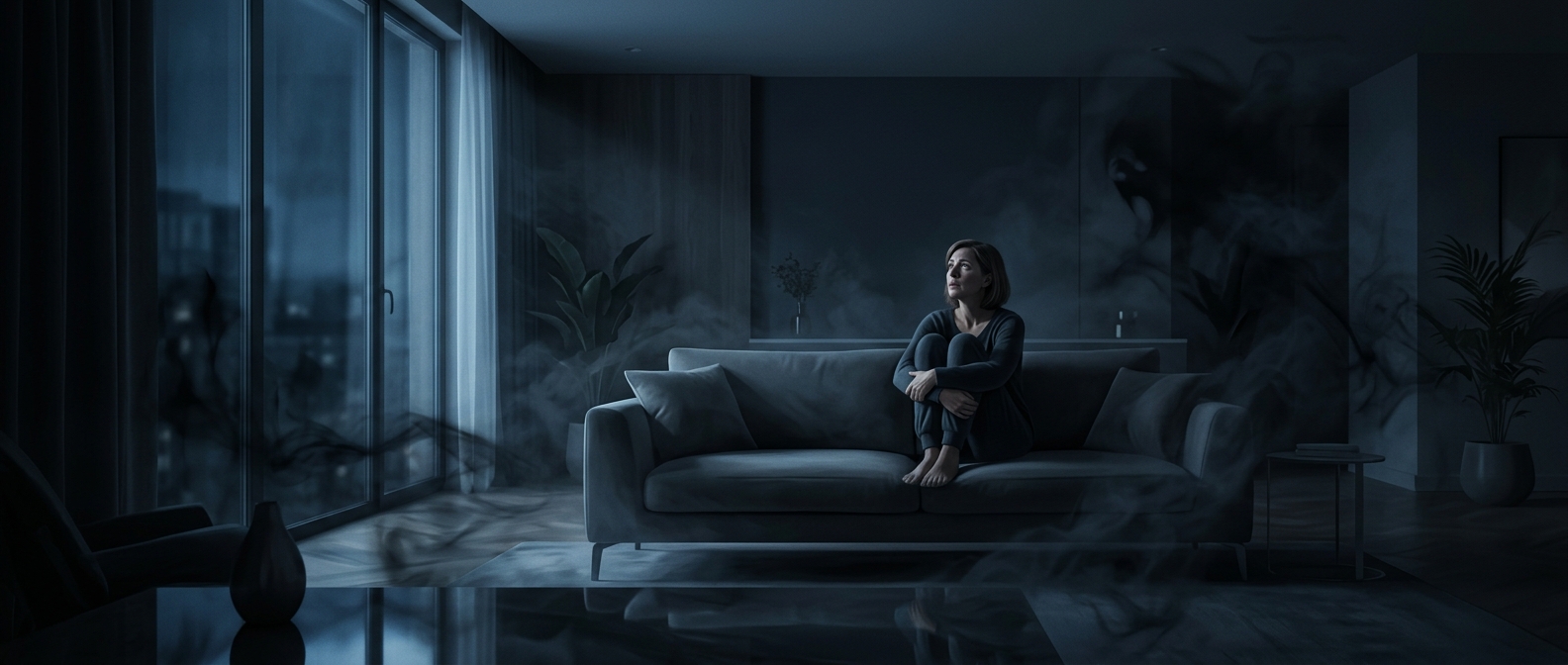
Darkness weakens that sense of an audience. When faces and eye contact are hard to make out, there are fewer visible cues to monitor and fewer reminders that you might be observed. The room can feel more private, even if other people are still there.
Less visibility, less self-monitoring
Psychologists call attention to how we appear to others self-focused attention. It can rise when someone feels scrutinized, making them more alert to their posture, voice, or mistakes. A dim setting may ease that pressure by reducing the visual signals that keep attention fixed on other people’s reactions.
The comfort is not the same as being alone or genuinely unseen. In darkness, people may still know they are sharing a space; they simply have less to look at—and less immediate evidence that others are looking back. For someone who feels exposed, that difference can be enough to make a room feel safer.