How a Hand Gesture Becomes Part of a Story
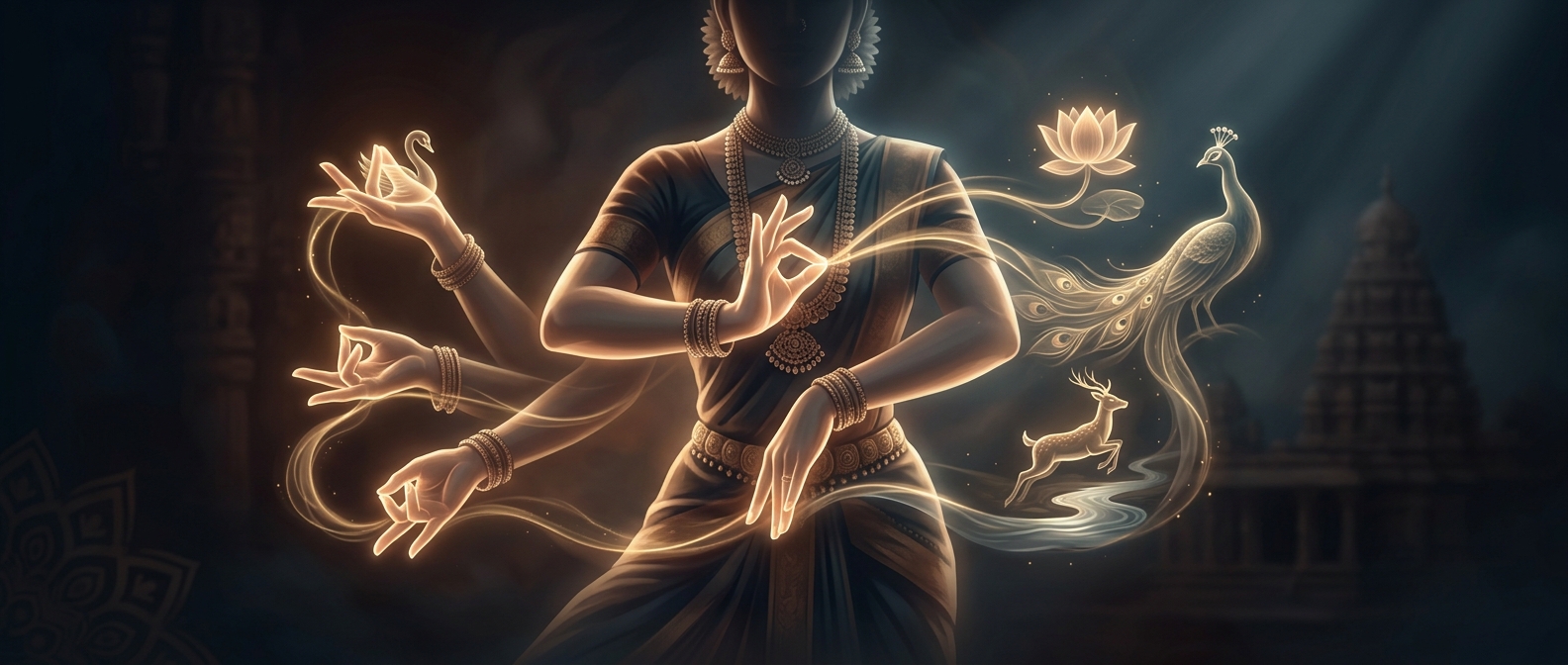
In Bharatanatyam, a mudra is more than a decorative hand pose: it is a shaped sign that can help identify an object, action, person, or idea. A dancer may use one hand or both, then shift from one gesture to another to make an event unfold. The hands do not function as a word-for-word substitute for spoken dialogue; their meaning depends on what the dancer is showing around them.
Meaning Comes From the Whole Body
A gesture becomes legible through its timing and its relationship to the rest of the performance. The dancer’s gaze can direct attention toward an imagined person or object. Facial expression conveys feeling, while posture and movement suggest what is happening. A sequence might establish a character, show an action, and then reveal that character’s reaction—all without a spoken line.
This is why the same hand shape need not carry one fixed meaning in every moment. The story emerges from the gesture in context, much as a word’s meaning depends on the sentence around it. Dancers learn a repertoire of forms, but they also have to coordinate them with expression, rhythm, and movement so the audience can follow the scene.
A Performance the Audience Reads
For a viewer, watching Bharatanatyam can involve reading several channels at once: the hands offer clues, the face supplies emotion, and the body places those clues in an unfolding action. The result is not simply a story illustrated by dance. Gesture and movement are part of how the story is told, allowing an epic episode to be presented onstage without dialogue.