Walter Freeman’s Shortcut to the Frontal Lobe
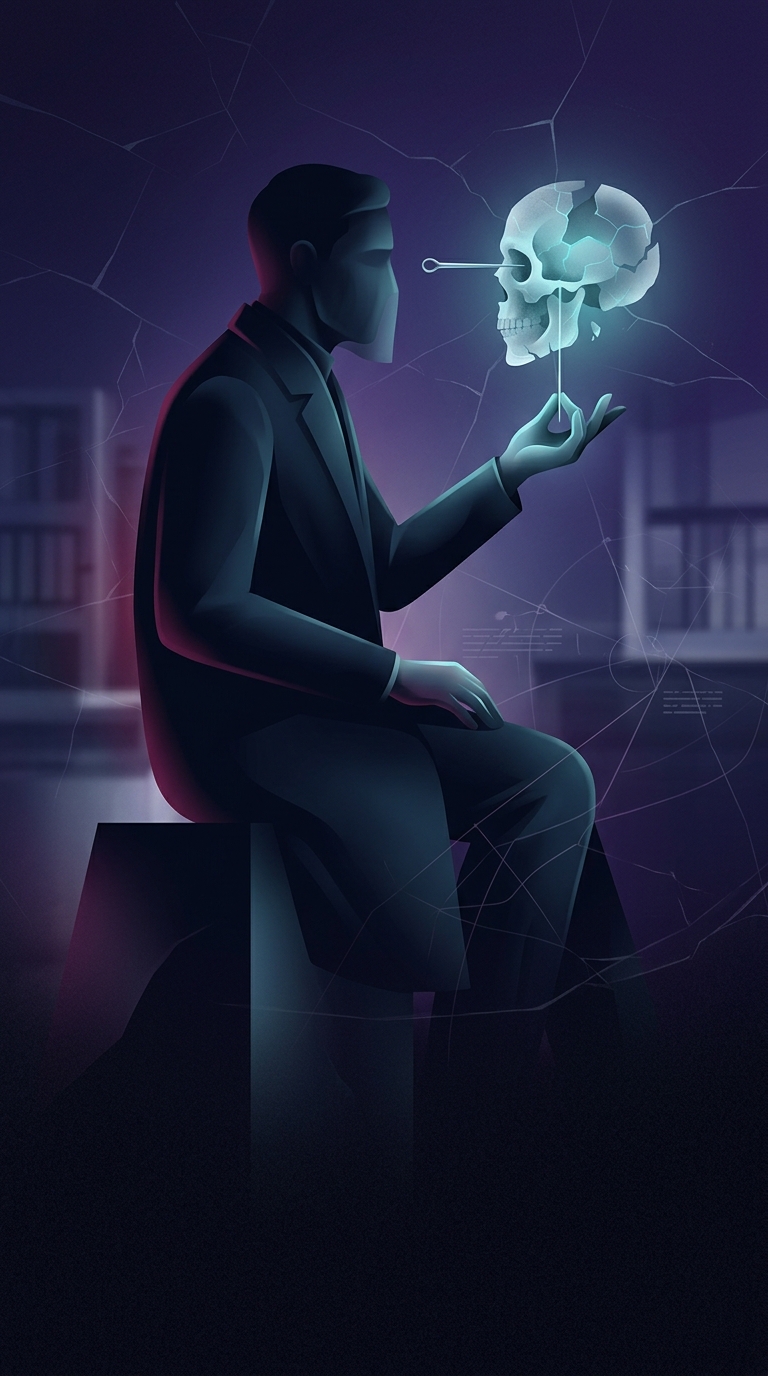
The “ice-pick lobotomy” was not simply a surgeon pushing an ordinary ice pick into the brain. It was a procedure Walter Freeman developed and promoted in the 1940s, building on earlier brain surgery and a technique devised by Italian psychiatrist Amarro Fiamberti. Freeman called his version a transorbital lobotomy: “transorbital” means going through the eye socket.
The idea behind lobotomy was to interrupt connections involving the frontal lobes, the front regions of the brain. At the time, doctors hoped this would quiet severe distress, agitation, or other symptoms. They had little ability to target or measure the effects precisely, however, and could not predict which abilities or aspects of personality might be lost along with the behavior they wanted to change.
How the Procedure Worked
Freeman used a slender instrument called an orbitoclast, designed for the operation. After making a patient unconscious with electroshock, he passed the instrument above the eyeball, through the thin bone at the back of the eye socket, and into the brain. He then moved it to disrupt tissue connections in the frontal lobes. The route avoided opening the skull, making the procedure quicker and easier to perform than conventional brain surgery—but not controlled or reversible.
Freeman had trained as a neurologist, not a surgeon. He initially worked with neurosurgeon James Watts on lobotomies performed through openings in the skull; their partnership ended as Freeman increasingly pursued the faster transorbital method. He toured hospitals demonstrating it, helping spread a procedure that could be performed without a full surgical team.
Speed Came at a Human Cost
Some patients became calmer, but that apparent improvement could come with profound changes: impaired judgment, reduced initiative, memory problems, or a diminished emotional life. The operation could also cause serious injury or death. Its rapid spread reflected the desperate lack of effective treatments for severe mental illness—and the era’s willingness to accept devastating uncertainty in exchange for visible quiet.
The shortcut through the eye socket made the operation easier to repeat. It did not make the damage easier to undo.