Designed to Borrow the Super Nintendo’s Controls
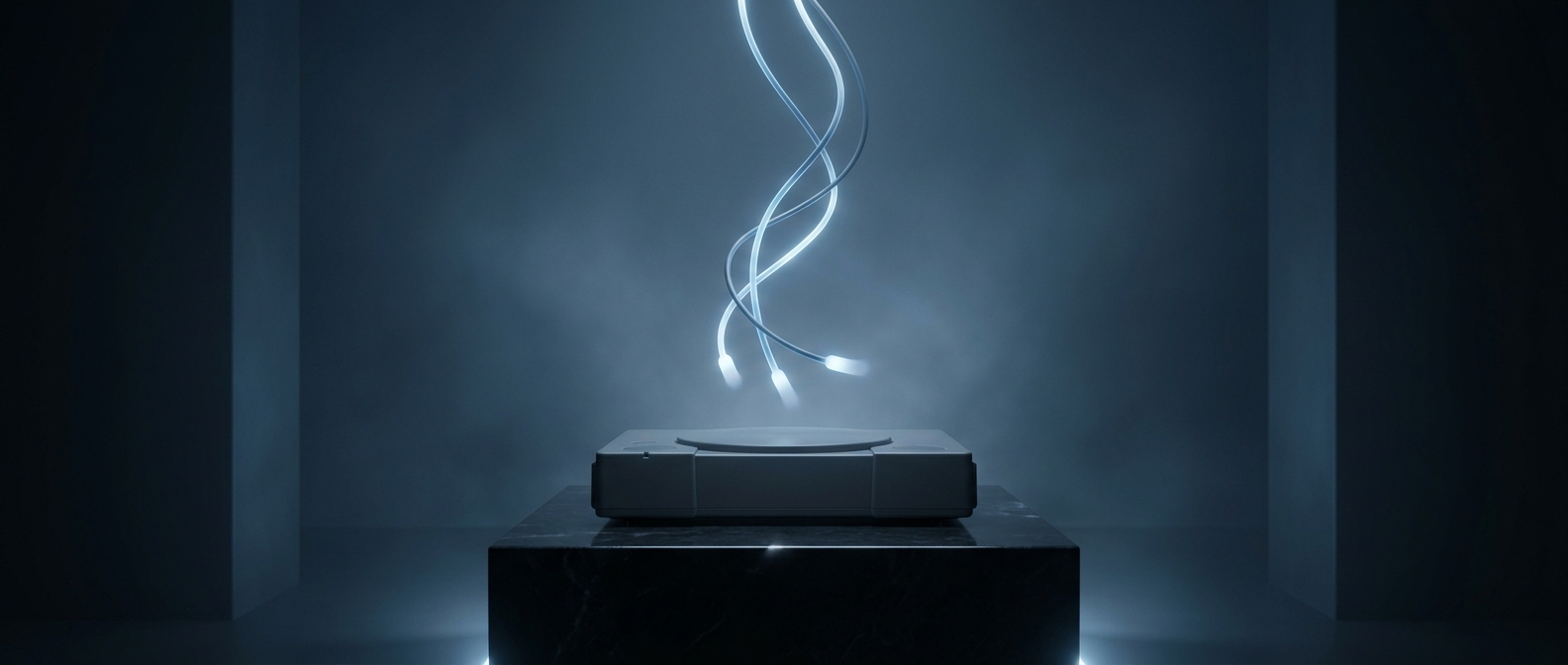
The earliest PlayStation mockups were conceived not as a complete console, but as a CD-ROM add-on for Nintendo’s Super Nintendo Entertainment System. That arrangement shaped the hardware: players would plug their controllers into the Super Nintendo, which would send their button presses to the game system. The add-on therefore had no need for its own controller jacks.
The same division of labor applied to the rest of the experience. The Super Nintendo was the host machine; Sony’s proposed device supplied the optical-disc capability. A port absent from the mockup was thus evidence of the planned connection between the two products, not simply an unfinished feature.
When the Add-On Became a Console
That design depended on Nintendo continuing the partnership. When the collaboration fell apart, Sony’s project could no longer rely on a Super Nintendo to provide the surrounding hardware. A standalone PlayStation needed to connect controllers directly and function as a complete system, so its design had to grow beyond the original add-on concept.
The missing jacks capture that turning point in miniature: the PlayStation began as a device meant to plug into a rival’s console, then became a console in its own right.