Why a Row of Teeth Starts a Tear
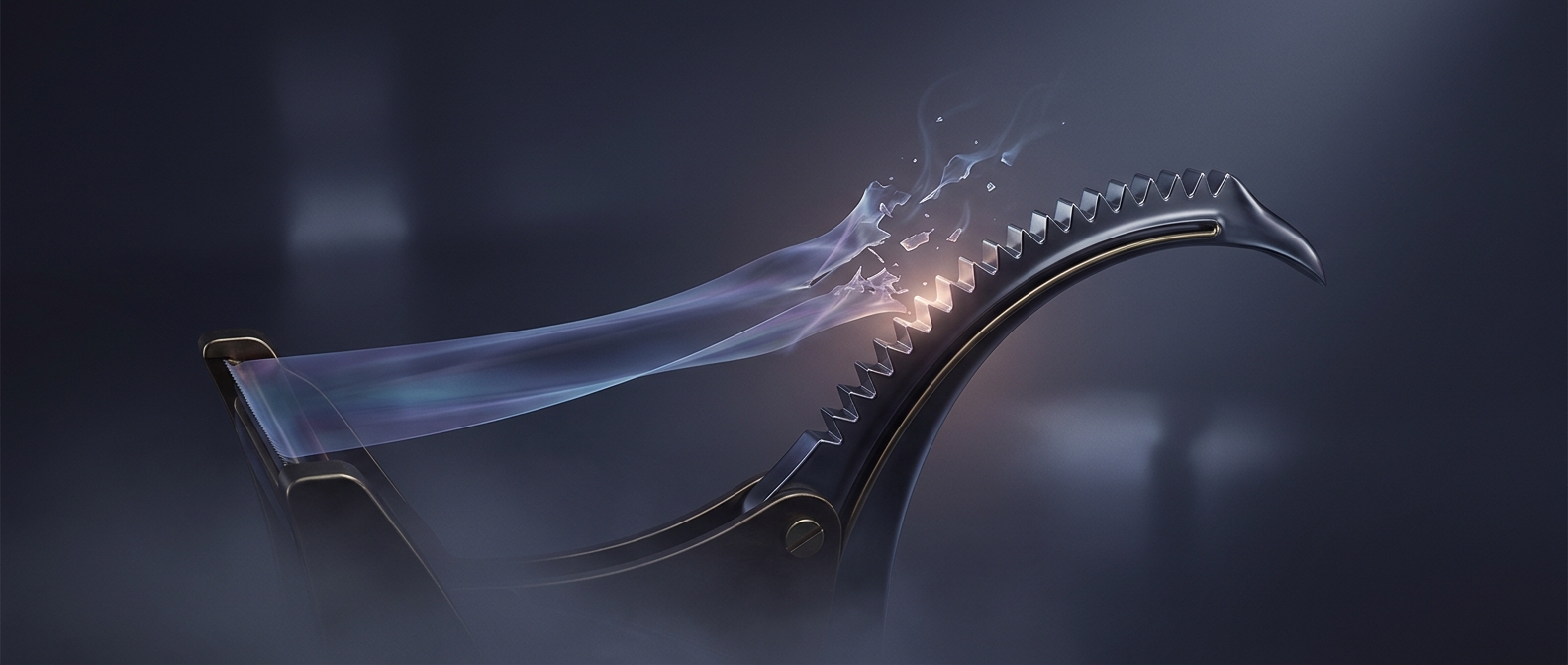
Adhesive tape is a thin, flexible strip, so pulling it against a smooth edge can make the backing stretch before it separates. The dispenser’s serrated edge changes where that pulling force acts. Each tooth presses into the tape at a small point, concentrating force there instead of spreading it evenly across the strip.
Those small punctures create starting notches. Once a notch begins to split the backing, the tear can travel from tooth to tooth across the tape’s width. That is easier than making the whole width separate at once, and it helps keep the strip from thinning into long, stretchy threads.
The Dispenser Helps Control the Break
The roll supplies the tape while the dispenser holds its loose end against a fixed edge. Pulling the tape across the teeth creates tension; a quick downward or sideways motion then drives the notches into a full tear. The teeth do not slice like a smooth knife. They initiate a tear that spreads through the backing.
Tooth spacing and sharpness affect how easily the tape separates, but the basic advantage is the same: the edge gives the tear several predictable places to begin. That is why a small plastic dispenser can let you tear off a strip with one hand rather than searching for scissors or tugging until the tape stretches.